Congo Faces Mounting Opposition to US Mineral Partnership Deal
President Felix Tshisekedi of the Democratic Republic of Congo is encountering escalating domestic resistance following his recent agreement to establish a strategic minerals partnership with the United States. The deal, which grants American companies access to Congo's vast mineral wealth, has sparked significant controversy within the nation, with critics accusing the government of compromising sovereignty and failing to address urgent security needs.
Strategic Partnership Amid Geopolitical Competition
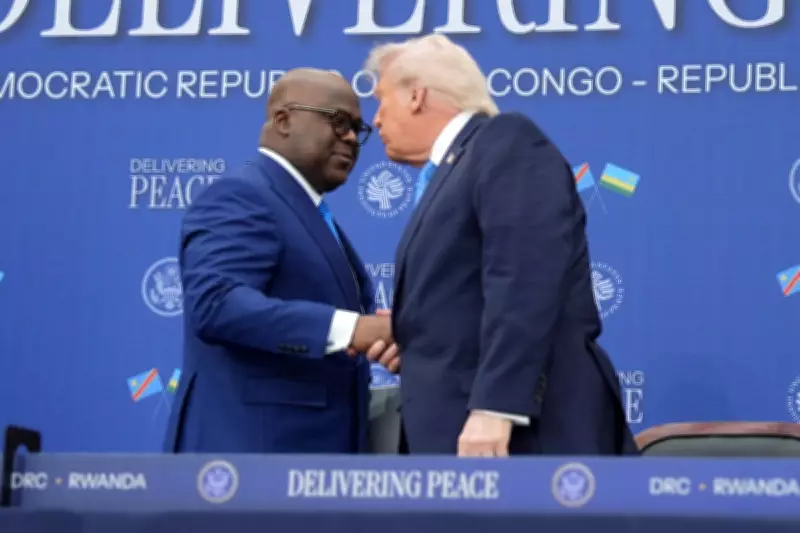
The partnership emerged from President Tshisekedi's participation in the Critical Minerals Ministerial summit in Washington D.C. earlier this month. During his visit, Tshisekedi received commendations from US President Donald Trump and congressional leaders, reinforcing the bilateral agreement signed in December. The Congolese delegation engaged in strategic discussions with senior Trump administration officials and members of Congress, focusing on investment opportunities in Congo's mineral sector.
"We are open for business and we are serious about doing business the right way," Tshisekedi declared during a meeting with the US Chamber of Commerce. The US State Department confirmed that discussions centered on reviewing a list of strategic assets submitted by Congo, which will help determine investment prospects for American companies.

This partnership is framed as a mutual benefit arrangement: the US secures supply chains for critical minerals like cobalt, copper, lithium, and coltan, while Congo receives American support for developing key infrastructure. However, the agreement occurs against a backdrop of intense geopolitical rivalry, as the Trump administration seeks to establish a minerals trading bloc among allies to counter China's dominance. China currently accounts for nearly 70% of global rare earth mining and controls approximately 90% of processing, while also being the most active foreign player in Congo's minerals sector.
Domestic Opposition and Sovereignty Concerns
In the capital Kinshasa, opposition to the mineral partnership is mounting from public figures, civil society leaders, and legal experts. A group of lawyers and human rights activists has filed a lawsuit arguing that the agreement threatens Congo's sovereignty. "We are assuming our responsibility as Congolese citizens to protect the sovereignty of our country and preserve our heritage for future generations," stated lawyer Jean-Marie Kalonji.
Critics accuse the Congolese government of underselling the nation's mineral wealth, estimated to be worth $24 trillion, particularly in the largely untapped eastern regions. Archbishop Fulgence Muteba, president of the National Episcopal Conference of Congo, likened the strategic partnership to "selling off the minerals of an entire nation to save a regime or a political system." He added, "This clearly amounts to sacrificing the development of the population and confiscating the happiness of future generations."
Within political circles, opposition leader Moïse Katumbi has raised concerns about implementing the deal given the precarious security situation in mineral-rich eastern Congo. Katumbi advocates for a national dialogue as a more prudent approach to engaging with foreign investors.
Security Challenges and Regional Instability
The partnership's implementation faces significant hurdles due to ongoing conflict in eastern Congo, where Rwanda-backed M23 rebels seized major cities last year and continue to control vast territories rich in minerals. This includes the Rubaya coltan mine, which produces around 15% of the world's coltan and recently witnessed a tragic collapse that killed at least 200 miners.
Analysts and residents express skepticism that US involvement will address Congo's most crucial need: permanent peace and stability in the east. "We think this agreement will generate more conflict instead of actually providing solutions because the actors are not sincere," remarked youth activist Christopher Muyisa from rebel-controlled territories.

American companies have historically avoided Congo due to high levels of insecurity and corruption, creating a void that Chinese companies have filled. Josaphat Musamba, a doctoral researcher at Belgium's Ghent University specializing in conflict and development, predicts: "The battle between China and the United States for access to and control of strategic minerals will intensify concretely on Congolese soil."
Political Implications and Future Prospects
For President Tshisekedi and his administration, the immediate benefits of the partnership appear primarily political. "The immediate gain is primarily political: strategic recognition from Washington," observed Yvon Muya, a research associate at Canada's University of Ottawa. The deal serves as a bargaining chip for US support in combating rebels and building critical infrastructure in conflict-affected regions.
However, the growing opposition could hamper the agreement's implementation. Critics argue that without addressing fundamental security and governance issues, the partnership risks exacerbating existing tensions rather than fostering sustainable development. As domestic resistance continues to mount, the future of this strategic minerals partnership remains uncertain, balancing geopolitical interests against local sovereignty and peace concerns.