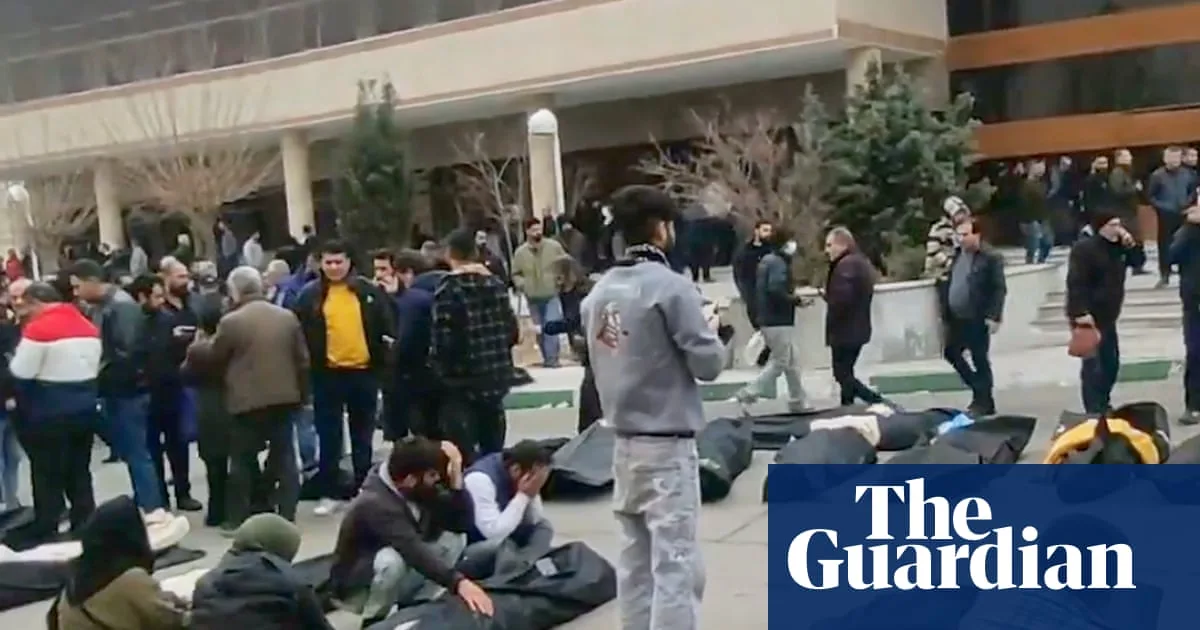
Medical professionals in Iran have reported a death toll far higher than official figures during the recent protests over the economic crisis, with estimates suggesting more than 30,000 people may have been killed. The Guardian has gathered testimony from doctors, morgue staff and graveyard workers across 12 provinces, revealing systematic efforts by authorities to conceal the scale of the violence.
One doctor, identified only as Dr Ahmadi due to fears of reprisal, described treating protesters with close-range gunshot wounds and severe stab wounds to the chest, eyes and genitals. He and a network of over 80 medical professionals documented deaths that they believe represent a severe underestimation in official counts. The Iranian government has acknowledged over 3,000 deaths, while HRANA reports more than 6,000 verified fatalities, with a possible total of 22,000. Other estimates range up to 33,000.
Witnesses described bodies being transported in ice-cream vans and meat trucks, with piles of the dead hastily buried in mass graves. Morgue staff reported being overwhelmed by the volume of corpses, with some trucks loaded with bodies disappearing without trace. One doctor said: 'From a medical standpoint, the injuries we observed demonstrate a brutality without limit – both in scale and in method.' Another doctor in Tehran said: 'I am on the verge of a psychological collapse. They’ve mass murdered people.'
The internet blackout has hampered efforts to verify the true death toll, but the testimonies suggest that officially registered deaths may represent less than 10% of the real number. The crackdown has left many young people avoiding hospitals for fear of arrest, with medical professionals treating the wounded in secret locations.