The Indian government banned the film 'Satluj' within 48 hours of its online release, citing threats to national security. Directed by Honey Trehan, the movie depicts police atrocities during the 1990s crackdown on Punjab's separatist movement. The censorship board had demanded 127 cuts before blocking its theatrical release entirely.
Director's Ordeal
Trehan described the process as 'dystopian,' accusing the Central Board of Film Certification (CBFC) of political interference under Prime Minister Narendra Modi's government. 'It is clear to me that there is no creative freedom in India today,' Trehan said. He claimed the board is 'hand in glove with the government,' used to control the film industry's narrative.
The Film's Subject
The film focuses on Jaswant Singh Khalra, an activist who exposed illegal cremations and killings by Punjab police and was murdered in 1995. Trehan grew up witnessing the devastation, calling it one of India's darkest modern periods. Originally titled 'Ghallughara,' the film was blocked for over three years before being released online under a new name.
Censorship Demands
The CBFC demanded removal of all references to Punjab police, killings, government, crematoriums, a former prime minister's name, dates of events, the Indian flag, and scenes showing police in a 'bad light.' They also sought to change the name 'Trilokpuri'—a real area where Sikhs were massacred in the 1980s—to 'Khanpuri,' a Muslim-associated name. Trehan noted, 'You could clearly see them trying to insert their Hindu-Muslim political agenda.'
Government Justification
A ministry of information committee backed the ban, arguing the film lacked 'balance' and 'whitewashed' separatist militants' acts, potentially inciting national security issues. Trehan countered, 'Show Muslims in a bad light and your film will get a standing ovation in parliament. But if you dare to tell an uncomfortable part of our history, suddenly you are a criminal.'
Industry Impact
Film journalist Anna MM Vetticad said the treatment of 'Satluj' exemplifies what many film-makers endure, creating 'an atmosphere of fear' and encouraging self-censorship. She described the effect on Indian cinema as 'potentially devastating.' Trehan noted that few in the industry speak out, fearing retribution, including police cases.
Public Response
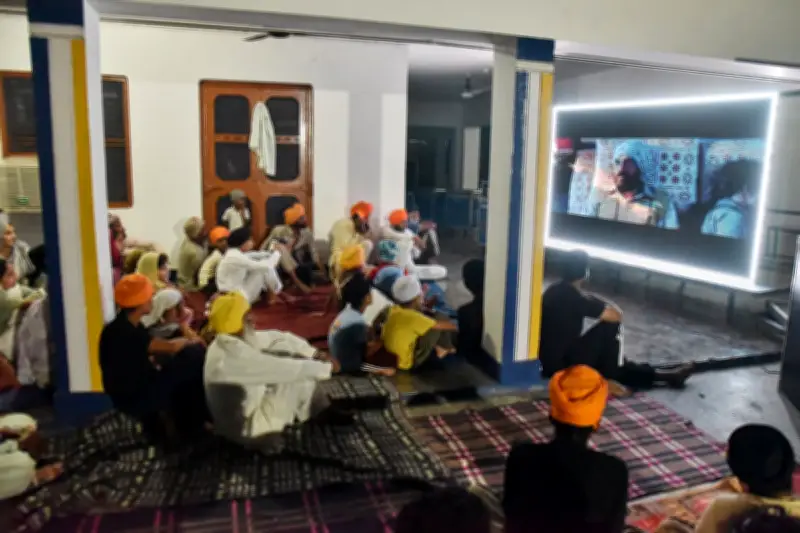
Since the ban, guerrilla screenings have been held across Punjab in village squares, gurdwaras, and fields, sometimes drawing thousands. 'It's become a revolutionary act to watch it,' Trehan said. At a remembrance event for Khalra, families of victims protested the ban. Ranjit Singh, whose father was tortured to death by police, said, 'This film is, for me, an archive of him—of the injustices he bore on his body.'