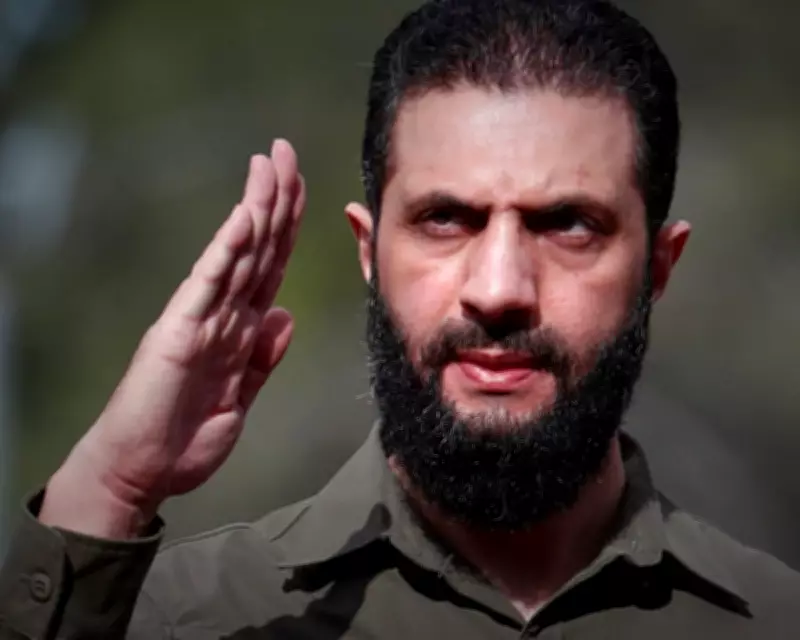
UN Report Uncovers Multiple Foiled Assassination Plots Against Syrian Leadership
A new United Nations report has revealed that five distinct plots to assassinate Syria's President Ahmed al-Sharaa and key government ministers were successfully thwarted throughout the previous year. The detailed document, focusing on the ongoing activities of Islamic State (IS), was published on Wednesday, shedding light on persistent security threats facing the Damascus administration.
President Sharaa Targeted Twice by IS Affiliate
According to the UN findings, President Sharaa was specifically targeted on two separate occasions by the militant group Saraya Ansar al-Sunnah, an identified front organisation for Islamic State. The first attempted assassination was planned in northern Aleppo, while a second plot was orchestrated in southern Daraa. This same group claimed responsibility for a devastating bombing at a church in Damascus during the summer of last year, highlighting its operational capacity.
Intelligence from a neighbouring country played a crucial role in preventing these attacks, as confirmed by a separate regional intelligence official last autumn. Syria's security apparatus received advanced warning about the plots, enabling them to intervene and neutralise the threats before they could be executed.

Islamic State's Strategic Focus on Destabilisation
The UN report emphasises that Islamic State remains intensely focused on destabilising the new government in Damascus, actively exploiting security vacuums and widespread uncertainty across Syria. President Sharaa is described as the "primary target" for IS within the country, with the group utilising various front organisations to enhance its operational flexibility and evade detection.
Since the ousting of former leader Bashar al-Assad in December 2024, IS has significantly intensified its recruitment efforts. The group has branded President Sharaa, who previously led an Islamist rebel faction, as an apostate. To substantiate this claim, IS has circulated photographs of Sharaa meeting with former US President Donald Trump at the White House in November, portraying these interactions as evidence of a shift towards Western alignment and a departure from his Islamist origins.
Persistent IS Threat Across Iraq and Syria
Islamic State continues to present a formidable challenge in both Iraq and Syria, with security analysts noting that the group has effectively regrouped in recent months. This resurgence has been facilitated by a security vacuum and an influx of weaponry into Syria following the disintegration of Assad's military forces. The UN estimates that approximately 3,000 IS fighters are currently active across the two nations, with the majority operating within Syrian borders.
In a significant development, Damascus formally joined the international coalition against IS in November. The Syrian government has subsequently assumed control over several prisons and camps in north-east Syria that detain suspected IS fighters and their relatives. Notably, Damascus now oversees the al-Hawl camp, which houses nearly 25,000 family members of alleged IS militants. Security experts have warned that this camp represents a "ticking timebomb" for radicalisation and future insurgent activities.
Recent Attacks Underscore Ongoing Violence
The persistent threat posed by Islamic State was starkly illustrated by a series of attacks in Syria following Assad's removal. Among these incidents was a mid-December assault on joint US and Syrian military personnel, which resulted in the deaths of three American soldiers and injuries to three Syrian troops. These events underscore the volatile and dangerous security landscape that continues to challenge the region.