Old Dominion University Shooter Released Early Despite ISIS Conviction
Court documents have revealed that the gunman who opened fire in a classroom at Virginia's Old Dominion University on Thursday had been released from federal prison less than two years earlier. Mohamed Bailor Jalloh was convicted in 2017 for attempting to provide material support to the Islamic State terrorist organization.
Timeline of Events and Release
Jalloh pleaded guilty in October 2016 to providing material support to a designated foreign terrorist organization. A federal judge sentenced him in 2017 to an 11-year prison term with credit for time served retroactive to his July 2016 arrest. However, Jalloh was released from federal custody on December 23, 2024, significantly earlier than expected.
It remains unclear why his release was moved up. Inmates can receive time off their sentences for various reasons, but it is not known if that occurred in this specific case. At the time of the attack, Jalloh was on supervised release, which is comparable to probation, and this supervision was scheduled to continue until 2029.

Previous Terrorism Investigation and Sentencing Debate
The October 2016 plea followed a three-month sting operation where Jalloh, then 26 years old, confessed to an undercover FBI agent about considering an attack similar to the 2009 Fort Hood shootings. Authorities initiated the operation after Jalloh made contact with Islamic State members in Africa earlier that year.
Court documents show Jalloh attempted to donate $500 to the Islamic State, though the money went to an FBI-controlled account. He also tried to purchase an AR-15 assault rifle from a Virginia gun store but was denied due to improper paperwork. The next day, he bought a different assault rifle that prosecutors said was rendered inoperable before he left the store, unbeknownst to him. He was arrested the following day.
During sentencing, the Justice Department requested a 20-year prison term, highlighting Jalloh's multiple attempts to join the Islamic State and acquire a weapon for a murder plot. Prosecutors noted his strong commitment to the terrorist ideology. In contrast, Jalloh's lawyers requested a sentence of six and a half years and placement in a residential drug treatment facility.
U.S. District Judge Liam O'Grady ultimately sentenced Jalloh to 11 years in prison. The judge also ordered participation in substance abuse testing, treatment, and mental health programs, with evaluation for the federal prison system's Residential Drug Abuse Program. Completing this program can reduce a sentence by up to one year, though inmates convicted of terrorism-related offenses are typically ineligible.
Background and Radicalization
Little is publicly known about Jalloh, a naturalized citizen from Sierra Leone. Court documents depict him as a troubled individual radicalized by Anwar al-Awlaki, a well-known American imam who became an al-Qaida propagandist. The Virginia Army National Guard confirmed he served as a specialist from 2009 until his honorable discharge in 2015.
Jalloh informed a government informant that he quit the National Guard after hearing lectures from al-Awlaki. In a letter to the federal judge overseeing his sentencing, Jalloh expressed deep regret for his actions, stating he was driven by emotions rather than intellect. He wrote that he started using drugs after a six-year relationship ended, turning to marijuana, cocaine, and mushrooms daily to cope with internal pain.
Aftermath and Political Response
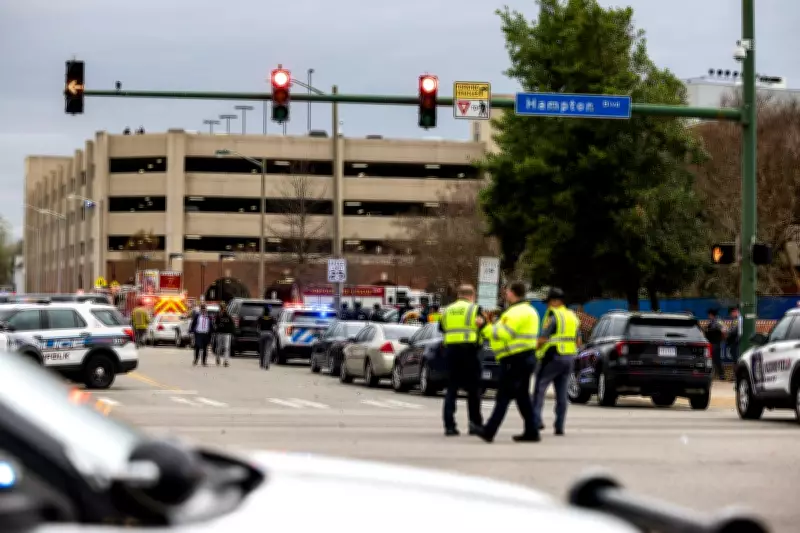
The shooting resulted in one person dead and two others injured before ROTC students subdued and killed Jalloh. The incident has raised significant questions about why Jalloh was imprisoned and the conditions of his release, with elected officials questioning how someone with known ties to the Islamic State could carry out such an attack.
U.S. Representative Jen Kiggans, who represents the congressional district neighboring the university, commented on the tragedy, emphasizing that such an event should never have occurred. The case underscores ongoing debates about sentencing, early release programs, and monitoring of individuals with terrorism-related convictions.