Florida Executes Man for 1990 Murder of Neighbor Set on Fire During Burglary
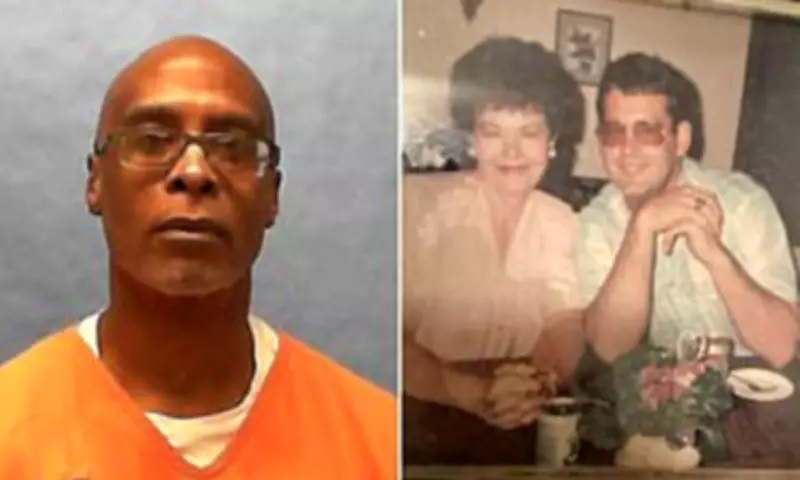
Chadwick Scott Willacy, a 58-year-old Florida man, has been executed by lethal injection for the horrific 1990 murder of his neighbor, Marlys Sather. The execution took place at Florida State Prison near Starke, with Willacy pronounced dead at 6:15 pm on Tuesday after receiving a three-drug injection starting at 6 pm.
Brutal Crime Details Emerge
Court records reveal that on September 5, 1990, Marlys Sather returned to her Palm Bay home during her lunch break from work and discovered Willacy burglarizing her property. In a violent confrontation, Willacy struck Sather in the head with a blunt object, fracturing her skull. He then bound her hands and ankles with wire and tape.
Investigators detailed that Willacy attempted to strangle Sather with a telephone cord. When that failed, he doused her in gasoline and set her on fire. An autopsy confirmed Sather died from smoke inhalation, indicating she was still alive when set ablaze. Willacy subsequently stole Sather's car and other items from her home, using her ATM card to withdraw cash.

Execution Witnessed by Victim's Son
Sather's only son, John, was present during the execution and watched Willacy draw his final breath. When Sather failed to return from her lunch break, her employer contacted her family. Her son-in-law went to check on her and discovered her body.
Willacy was sentenced to death in 1991 following a 9-3 jury recommendation after being convicted of first-degree murder, burglary, robbery, and arson. The Florida Supreme Court ordered a new sentencing in 1994 because the trial judge failed to allow defense attorneys to rehabilitate a potential juror who indicated she could not recommend the death penalty. Willacy again received the death penalty at resentencing in 1995 on an 11-1 recommendation from a new jury.
Florida's Execution Trends
This marks Florida's fifth execution of 2026, following a record 19 executions in the state last year. Republican Governor Ron DeSantis oversaw more executions in 2025 than any other Florida governor since the death penalty was reinstated in 1976. The previous record was set in 2014 with eight executions.
Department of Corrections spokesman Jordan Kirkland stated that Willacy awoke at 5 am on Tuesday and remained compliant as the execution hour approached. His last meal included chicken, tater tots, ice cream, and pie. Willacy received visits from his mother, two sisters, and a cousin but did not meet with a spiritual adviser.
Legal Appeals and National Context
The US Supreme Court denied Willacy's final appeal without comment on Tuesday afternoon. Last week, the Florida Supreme Court also rejected appeals filed by Willacy, who had made claims based on the state's refusal to grant public records requests about executions and lethal injection procedures.
Nationally, 47 people were executed in the United States in 2025. Florida led with numerous death warrants signed by Governor DeSantis. Alabama, South Carolina, and Texas tied for second with five executions each. Among these, three were by firing squad and five by nitrogen hypoxia, a method involving pumping nitrogen gas into a face mask to cause suffocation.
United Nations experts have denounced the use of nitrogen gas as a method of capital punishment, calling it cruel and inhumane. The death penalty has been abolished in 23 of the 50 US states, while three others—California, Oregon, and Pennsylvania—have moratoriums in place.
Political and Future Implications
Former President Donald Trump remains a proponent of capital punishment and has called for expanding its use for what he terms 'the vilest crimes.' Another execution is scheduled in Florida later this month. James Ernest Hitchcock, 70, is set to receive a lethal injection on April 30 for beating and choking his 13-year-old niece to death.
All Florida executions involve injection of a sedative, a paralytic, and a drug that stops the heart, according to the Department of Corrections. The case highlights ongoing debates about capital punishment methods, legal processes, and moral considerations surrounding state-sanctioned executions in America.