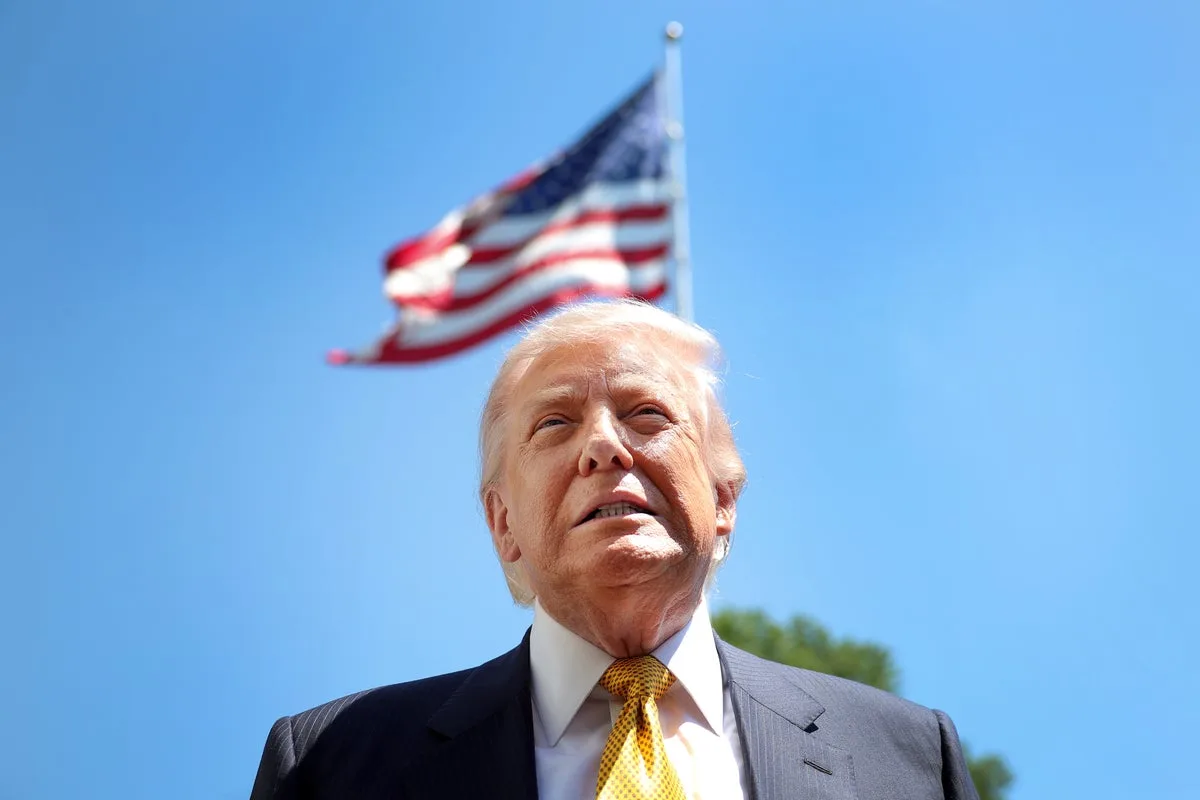
President Donald Trump's approval rating has fallen to a record low in his second term, driven by public discontent over the Iran war and rising costs, a new poll shows. The New York Times/Siena College survey of 1,500 registered voters found just 37 percent approve of Trump's job performance, while 59 percent disapprove.
The president's handling of the Iran war drew particularly harsh reviews, with 65 percent disapproving. More than half of respondents said he made the wrong decision to start the conflict in February. However, Trump's lowest marks came on the cost of living, with 69 percent of voters—including a third of Republicans—disapproving of his handling of it.
Despite campaign promises to lower everyday costs, inflation has risen over the past year. Gas prices exceeded $4 per gallon in April for the first time since 2022, averaging $4.51 by mid-May. These increases are linked to the Iran war, which has disrupted global oil supplies through the Strait of Hormuz, a key transit route for about 25 percent of the world's oil.

The administration has described high gas prices as a temporary side-effect of the war, but the conflict's end remains uncertain. Half of voters doubt the U.S. can end Iran's nuclear program, and most believe the costs of war outweigh the benefits. A majority also oppose resuming bombing campaigns even if negotiations fail.
Trump's approval among Republicans remains high at 82 percent, largely due to support for his immigration policies. However, he has lost ground with his party on the economy and cost of living. The Consumer Price Index showed consumer prices up 3.8 percent year-on-year in April, with grocery prices rising 2.9 percent and mortgage rates climbing after the Iran war began.
Other polls confirm the trend, with CNN/SSRS putting Trump's approval at 35 percent, CBS News/YouGov finding 70 percent angry or frustrated with his economic policies, and Reuters/Ipsos reporting 36 percent approval. The results reflect growing voter pessimism about the war and the economy.