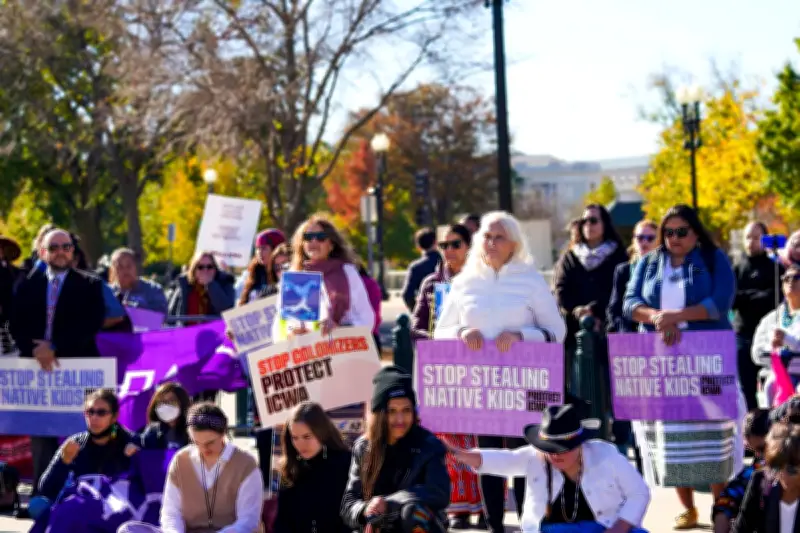
New Mexico's governor Michelle Lujan Grisham issued a directive in July 2025 mandating the state's child welfare department seek custody of all newborns exposed to drugs or alcohol in utero. The policy has sparked outcry from Native American tribes and advocates who say it undermines tribal sovereignty and violates the federal Indian Child Welfare Act (ICWA).
Conflict with Tribal Laws
Micha Bitsinnie, a policy manager at Bold Futures and a member of the Navajo Nation, noted that the directive appears to conflict with laws protecting tribal sovereignty. Those laws require immediate notification of tribes in child welfare cases involving Native children so tribes can assume jurisdiction. "How are we notifying families, tribes, nations, pueblos?" she asked.
The American Civil Liberties Union filed an emergency petition with New Mexico's supreme court, arguing the directive "erodes important procedural safeguards for Indian families" and "makes no reference to specific procedures and safeguards for Indian children and families established in state and federal law." Nine tribes joined the lawsuit. The state supreme court declined to pause the mandate but will hear arguments.
Contradiction with State Law
The directive also contradicts a law passed by the state legislature months earlier, which directed the state's healthcare authority – not its child welfare agency – to develop rules for treating drug use during pregnancy. Advocates say the policy was implemented without proper consultation with tribal nations.
Donalyn Lorenzo, from Acoma Pueblo and former director of tribal affairs at the state's children, youth and families department, said: "Child welfare would do well to learn from the values of our tribes. Safe children are created within safe communities."
Impact on Native Families
Since the directive took effect, at least 25 Native children have been flagged by child welfare, with tribes taking jurisdiction in only 10 cases. As of last month, 137 newborns had been taken into state custody, according to New Mexico CYFD spokesperson Jake Thompson.
Cynthia Chavers, a member of the Lumbee tribe and former tribal liaison for CYFD, said the directive harkens back to an era before ICWA when Native children were separated from their families en masse. Between 1860 and the mid-1970s, hundreds of thousands of Native children were sent to residential boarding schools; at least 1,000 died. In the 1950s and 1960s, the Indian Adoption Project placed hundreds of Indigenous children in white families. "I feel very strongly about stopping the genocide of our people by the continuous stealing of our children," Chavers said. "Native children belong in Native communities."
Broader Context of Opioid Epidemic
New Mexico has consistently reported among the highest rates of substance-exposed newborns in the nation – more than one-third of infants born between 2016 and 2019 were exposed to drugs, alcohol or tobacco. Despite the Comprehensive Addiction and Recovery Act (CARA) passed in 2016, which directed states to support families with voluntary plans of safe care, advocates say implementation has been poor. "Even if families were accepting plans of care, there were no resources," said Bitsinnie.
David Simmons, director of government affairs at the National Indian Child Welfare Association, said: "I don't think there's any state that is in what I would call really substantive compliance with the Indian Child Welfare Act. And New Mexico's no different."
Navajo Nation President Buu Nygren wrote in an April letter: "While the Navajo nation supports the intent of CARA to provide supportive, family-centered services, we have significant concerns that the proposed rule does not align with federal and state protections, including ICWA and the New Mexico Indian Family Protection Act. Additionally, the rule raises serious issues related to tribal sovereignty, jurisdiction, and the potential for unnecessary child welfare system involvement."