Police Shoplifting Crackdown Delayed Arrest of Future Triple-Killer, Inquiry Hears
Police failed to arrest a future triple-killer who was wanted for assaulting an officer because they were too busy with a shoplifting crackdown, a public inquiry has heard. The shocking revelation emerged during an investigation into the circumstances that allowed Valdo Calocane to commit a horrific stabbing rampage in Nottingham in 2023.
Missed Court Appearance and Bail Warrant
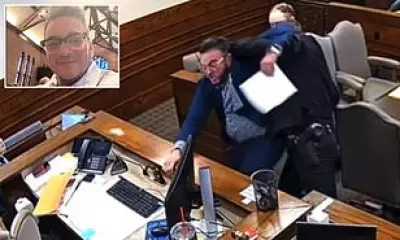
Valdo Calocane was supposed to appear in court charged with assaulting PC Barnaby Pritchard after Nottinghamshire Police attempted to section him under the Mental Health Act in September 2021. However, nobody pursued the matter when Calocane, who had a history of violent incidents, failed to turn up at the magistrates' court.
He was only apprehended months later, when police were called to a separate incident where he allegedly assaulted a factory worker. Officers then realised he was subject to an active bail warrant. PC David Myers, the officer handling PC Pritchard's assault case, stated he did not become aware of Calocane's missed court appearance until September 2022.

Shoplifting Priority Over Public Safety
When asked if he took steps to locate Calocane after discovering the warrant, PC Myers told the inquiry: 'No, because our entire team were given a new priority of "go and sort out the shoplifting in Clifton" and that took our entire team's efforts.' This admission highlights a critical failure in prioritising resources, with a shoplifting crackdown taking precedence over arresting a violent individual with a known history.
The inquiry also heard that Nottinghamshire Police drafted a press release explaining the warrant was not acted upon because Calocane lived a 'nomadic' lifestyle, a justification now under scrutiny.
Barriers in Accessing Medical Information
Officers investigating the assault on PC Pritchard faced significant obstacles in accessing Calocane's medical notes due to strict data protection rules. PC Myers recounted being told by psychiatrist Dr Ben Lomas that he could not provide Calocane's details without the suspect's consent, citing patient confidentiality.
PC Myers expressed frustration, saying: 'I have found the idea of asking for a consent form very peculiar. For a suspect to sign a medical consent form, it would be like stopping a car for drink-driving then saying would you mind giving me a breathalyser test, you don't have to.' This bureaucratic hurdle potentially delayed understanding Calocane's mental health condition and risk level.
History of Violence and Tragic Outcome
Calocane, 34, had a documented history of violence prior to the 2023 attacks. He was investigated for banging down two flatmates' doors over 24 hours, causing a woman to leap from a first-floor window to escape him, as well as stalking and assaulting a former housemate. Despite these incidents, he had not been convicted of any offences by the time he carried out the stabbing spree.
In June 2023, Calocane killed 19-year-olds Barnaby Webber and Grace O'Malley-Kumar, and 65-year-old Ian Coates during a rampage in Nottingham, leaving three others seriously injured. He was later handed an indefinite hospital order after admitting manslaughter on the grounds of diminished responsibility, having been diagnosed with paranoid schizophrenia.
Ongoing Inquiry and Systemic Failures
The inquiry is examining why Calocane was free to commit the atrocity, scrutinising failings in how he was managed by police, medical professionals, and his university. It aims to uncover systemic issues that allowed a dangerous individual to evade justice, with testimonies revealing a combination of misprioritised police work, legal barriers, and inadequate risk assessment.
As the inquiry continues, questions remain about whether earlier intervention could have prevented the tragic loss of three lives, underscoring the need for improved coordination between law enforcement and mental health services.