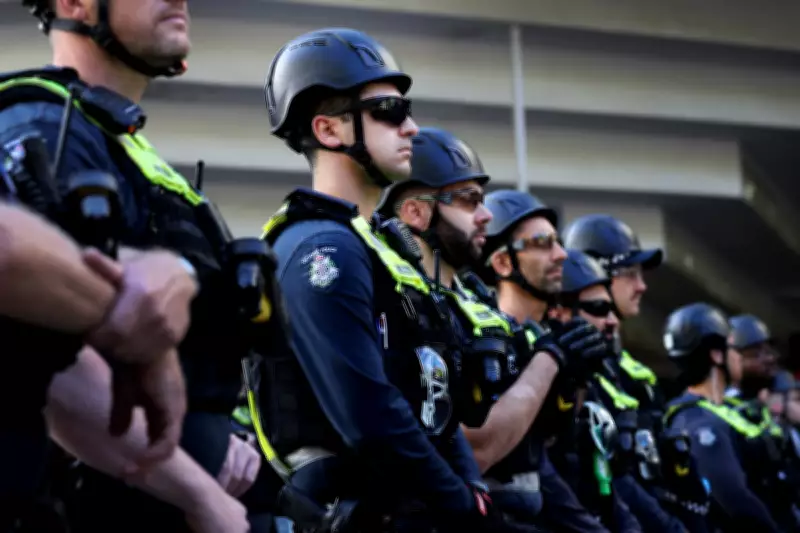
Australian Police Face Investigation Over Brutal Crackdown on Pro-Palestine Protest
Police in Sydney are under investigation by a state watchdog following their aggressive response to protests surrounding Israeli President Isaac Herzog's recent visit. Witnesses and human rights groups have described scenes of excessive force that have shocked the nation and raised serious concerns about police conduct during demonstrations.
Terrifying Experience for Legal Observer
Rebecca Payne, wearing a fluorescent pink vest clearly identifying her as a legal observer, was filming from the edge of the protest crowd when she experienced what she initially thought was an accident. "I felt it go into my right eye and land on my left cheek," she tells The Independent. "I literally could not see a thing. I was completely blind. My face was burning."
Only later, when reviewing footage, did Payne realize a police officer had deliberately reached over and pepper-sprayed directly into the packed crowd. "Without any warning at all, he suddenly just pepper sprayed a whole bunch of us for absolutely no reason that I could detect," she explains.

Moments after the spraying, police charged into the crowd. "Protesters were pushed and punched, people coughed and screamed," Payne recalls. "It was absolutely terrifying. My first feeling was shock – that police in Sydney would behave in this way. And then fear."
Contrasting Accounts of the Violence
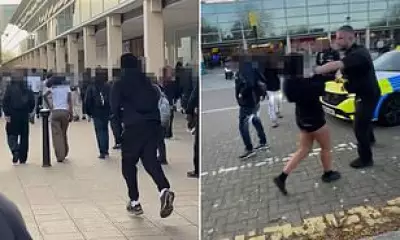
The protest on February 9th grew increasingly violent, with clashes between demonstrators and police spreading across social media. Police reported 27 arrests, with nine later charged, and claimed 10 officers were assaulted during the incident.
Assistant Commissioner Peter McKenna stated his officers were "threatened, jostled and assaulted" during what he described as "a number of melees, rolling fights" where police were "significantly outnumbered." State Police Chief Mal Lanyon defended the officers' actions, claiming they showed "remarkable restraint" and "did what they needed to do."
However, Payne disputes this characterization entirely. "I did not see one protester do anything that a police person could reasonably feel threatened by," she insists. "But I saw so many instances of police violence that were completely unprovoked."
International Standards and Human Rights Concerns
Human Rights Watch has verified video evidence showing officers punching people on the ground, dispersing individuals kneeling in prayer, and spraying protesters from close range. Annabel Hennessy, Australia researcher for the rights group, expresses particular concern about the apparent use of force.
"Under UN guidance on less lethal weapons in law enforcement, chemical irritants like pepper spray should only be used when a law enforcement official has reason to believe there is an imminent threat of injury," Hennessy explains. "In many of the videos, pepper spray appears to be used on protesters who do not appear to be behaving in a way that is violent."
Hennessy warns of broader democratic implications: "It can have a chilling effect on the right to public assembly when we see this kind of apparent excessive force used against protesters. It can deter others from exercising their right to public assembly and free speech."
Growing Pattern of Force at Protests
Research from civil society and legal groups reveals an alarming trend in police tactics at demonstrations:
- Pepper spray was used at 11 protests in 2023-24, compared to just seven in the previous five years
- In at least five incidents, spray was allegedly directed directly into protesters' faces
- More than 200 people required treatment by street medics after exposure over five years
- 51 incidents of excessive force in restraining protesters were recorded from 2019 to 2024
- Four children aged 16 and under were pepper-sprayed during protests
The research documented injuries including perforated eardrums, bruising, soft tissue damage, scarring, broken arms, and sprained fingers resulting from police actions at protests.

Political Response and Investigation
New South Wales Premier Chris Minns claimed police were "put in an impossible situation" and urged the public "not to look at a 10-second clip without the full context." He maintained officers had done "everything possible" to avoid violent confrontations.
Amnesty International Australia welcomed confirmation that the NSW Law Enforcement Conduct Commission would examine the clashes, noting the watchdog had received significant complaints. Mohamed Duar, the organization's Occupied Palestinian Territory spokesman, described the police conduct as "a serious assault on those rights and a deeply troubling display of state-sanctioned violence."
The watchdog stated it was "in the public interest" to investigate what happened in Sydney, "including incidents of alleged misconduct on the part of NSW police officers against persons attending that location for a protest." A government spokesperson confirmed cooperation with the investigation while emphasizing the need for independent review.
This incident has sparked renewed scrutiny over Australian police's use of crowd-control methods and their impact on democratic rights to assembly and free speech.