A federal judge has delivered a scathing rebuke to the Trump administration, ordering the immediate restoration of all slavery-related exhibits at a Philadelphia historical site while invoking George Orwell's dystopian novel 1984 in her ruling.
Judge Rufe's Orwellian Comparison
District Judge Cynthia Rufe, appointed by George W. Bush, issued her forceful order on Monday, directly comparing the Trump administration's actions to the fictional Ministry of Truth from Orwell's classic work. In her written opinion, she quoted the agency's chilling motto "Ignorance Is Strength" while rejecting government arguments that it could selectively present historical facts.
"As if the Ministry of Truth in George Orwell's 1984 now existed, with its motto 'Ignorance is Strength,' this Court is now asked to determine whether the federal government has the power it claims—to dissemble and disassemble historical truths when it has some domain over historical facts," Judge Rufe wrote. "It does not."

The Philadelphia Controversy
The controversy centers on Philadelphia's President's House on Independence Mall, which commemorates the nation's first official presidential residence and the people who lived there, including nine individuals enslaved by President George Washington. In January 2026, just before Black History Month began, the National Park Service removed all mentions of slavery and information about enslaved people from the site.
This removal followed President Donald Trump's executive order titled "restoring truth and sanity to American history," which directed federal agencies to review museums and historical sites that depict "founding principles and historical milestones in a negative light." The order has led to the removal of several exhibits addressing slavery's brutality and America's civil rights struggles.
Presidential Actions and Reactions
While issuing a belated proclamation recognizing Black History Month that omitted any mention of the fight against enslavement or discrimination, President Trump simultaneously posted a video depicting Barack and Michelle Obama as apes. The president has also criticized the Smithsonian Institution for focusing on "how bad slavery was" instead of America's "brightness" or "future," threatening to withdraw federal funding from museums he claims portray American values as harmful.
During a hearing last month, a Department of Justice lawyer argued that "the government gets to choose the message it wants to convey." Judge Rufe responded with sharp condemnation, calling the argument "dangerous" and "horrifying."
"That is a dangerous statement you are making. It is horrifying to listen to," she declared. "It changes on the whims of someone in charge? I'm sorry, that is not what we elected anybody for. You can't erase history once you've learned it. It doesn't work that way."
Exhibit Details and Removal
The President's House exhibit previously included biographical details about nine enslaved individuals: Austin, Paris, Hercules, Christopher Sheels, Richmond, Giles, Oney Judge, Moll, and Joe. After the Trump administration's removal of all materials about them, only their names remained engraved in a cement wall.
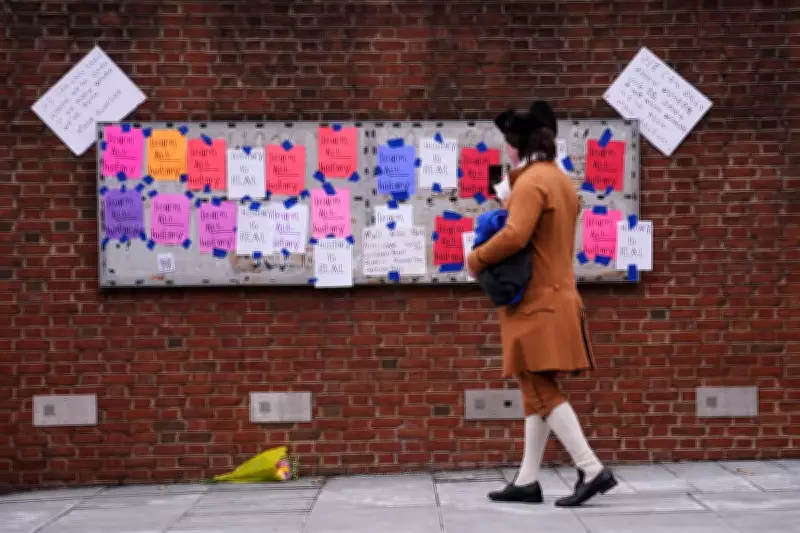
In January 2026, people were observed using crowbars to remove several panels from an outdoor display, including one titled "The Dirty Business of Slavery." The removal has sparked protests and legal action from city officials and advocacy groups.
Community and Organizational Responses
Philadelphia Council Member Kenyatta Johnson condemned the exhibit removal, stating, "Removing the exhibit is an effort to whitewash American history. History cannot be erased simply because it is uncomfortable. Removing items from the President's House merely changes the landscape, not the historical record."
The National Parks Conservation Association called the removal "an insult to the memory of the enslaved people who lived there and to their descendants." Ed Stierli, the group's Senior Mid-Atlantic Regional Director, emphasized that "being proud of our independence does not mean we should hide the mistakes of our past. National parks should help us grapple with the truths, complexities and contradictions of our history."

Stierli warned that removing such material "sets a dangerous precedent of prioritizing nostalgia over the truth." The Independent has requested comment from both the Interior Department and National Parks Service regarding the judge's order and the broader implications for historical preservation.