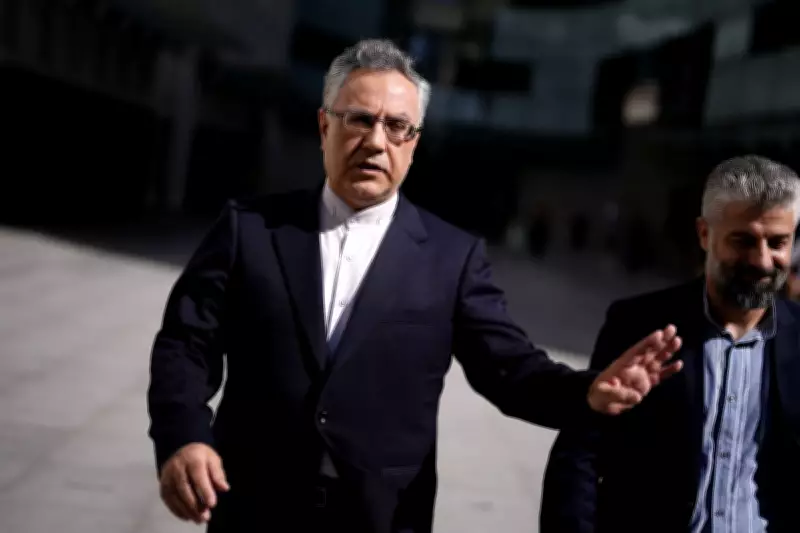
The Iranian ambassador to the United Kingdom, Seyed Ali Mousavi, has been summoned to the Foreign Office following what officials described as 'unacceptable and inflammatory comments' posted on the embassy's social media channels.
Diplomatic Rebuke
Middle East minister Hamish Falconer met with Ambassador Mousavi on Wednesday to condemn the online messages. The Foreign Office confirmed that the minister made clear these actions were 'completely unacceptable' and demanded the embassy cease any communications that could be interpreted as encouraging violence, either in the UK or internationally.
The diplomatic intervention came after a report in Metro highlighted a message on the embassy's Telegram channel. The post reportedly urged Iranian expatriates in the UK to 'sacrifice their lives for the homeland' and to 'lay down our lives' in defence of Iranian territory. It concluded: 'Let us all, one and all, give our lives in battle. Rather than surrender our country to the enemy.'

Further Controversial Posts
The embassy's profile on X (formerly Twitter) has also posted a series of comments regarding US-Israeli attacks on Iran. One post on Tuesday appeared to suggest Israel was a 'fake country'. Another message, about the natural landmark Jashak salt dome, stated: 'A real country's salt dome overcomes the iron dome of fake countries.' The Iron Dome is Israel's renowned air defence system.
The Foreign Office issued a statement saying: 'Iran's brutal and repressive regime will continue to be called out by the UK Government for its malign activities on UK soil, its reckless attacks against our allies in the Gulf, and its violence against its own people. The UK Government is clear that protecting national security remains our top priority, and we will take all measures necessary to protect the British people.'
Crisis Committee Meeting
Meanwhile, Prime Minister Sir Keir Starmer chaired a meeting of the Middle East Response Committee, the crisis body set up to address the ongoing conflict with Iran. The committee discussed contingency plans for the war's impact on the UK economy, public services, and domestic security.
Iran's control over the Strait of Hormuz, a critical shipping route for oil and gas tankers, has driven up prices and raised concerns about supplies of chemicals and fertilisers. Attendees included Chancellor Rachel Reeves, Health Secretary Wes Streeting, Transport Secretary Heidi Alexander, Energy Secretary Ed Miliband, and Chief Secretary to the Treasury Darren Jones.
The Prime Minister's official spokesman stated: 'We are ramping up planning for all different potential impacts on the UK economy and consumers, focusing on live monitoring of stock levels and plans for addressing supply chain disruption.'
When asked about the presence of Health Secretary Wes Streeting and concerns over medicine supplies, the spokesman said: 'We are monitoring the situation closely, with robust processes in place to manage any disruption across the health and social care sector. This includes holding buffer stocks, procuring alternative products, and adjusting reimbursement prices as needed. The overwhelming majority of products remain in good supply, and we will continue to work with industry partners to ensure continued availability and boost long-term resilience.'
Following the meeting, a Downing Street spokesperson revealed that the Chancellor had stressed any support for households must be 'targeted' and avoid a 'lasting impact on interest rates'. The spokesperson added: 'The Chancellor was clear that the Government needs to be responsive and responsible, learning the lessons of the previous government's response to the 2022 energy crisis.'