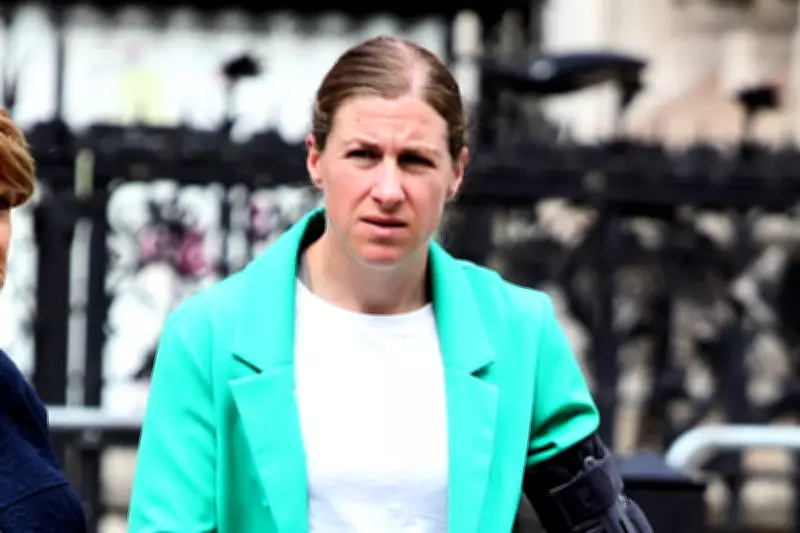
Invictus Games Champion Faces Prison Over Dishonest Disability Claim
The Ministry of Defence has accused former soldier and champion para-athlete Debbie O'Connell of telling "lies" about the extent of her injury, potentially leading to a prison sentence for contempt of court. This dramatic development follows a High Court judge's finding that her £1.74 million damages claim was "fundamentally dishonest."
The Injury and Subsequent Claim
Debbie O'Connell served in the Royal Horse Artillery's prestigious ceremonial unit, the King's Troop. In 2015, while training as a mounted gunner, she fell from her horse, shattering her left collarbone in four places. She claimed this injury rendered her left arm almost useless, causing chronic pain that severely limited her daily activities.
After being discharged from the army in 2017, O'Connell embarked on a remarkable para-athletics career. She achieved significant success, including winning gold medals for cycling at the 2018 Invictus Games and excelling in sprinting at world-level competitions. However, in September 2018, she launched a compensation claim against the MoD, initially seeking £2.4 million, later reduced to £1.74 million.

Court Findings of Dishonesty
Despite a judge acknowledging she was injured, her case was dismissed in 2025 due to "fundamental dishonesty." Judge Christopher Kennedy KC ruled that her evidence about ongoing pain "must be dishonest" after reviewing covert surveillance footage. This video showed her using her left arm for various tasks, including leading a horse and chopping vegetables—activities inconsistent with her claimed disability.
Judge Kennedy noted a "stark" contrast between her reported symptoms and her demonstrated abilities. He stated, "The claimant's presentation on the video is of someone with normal or near normal function in their left upper limb and shoulder." Consequently, he ordered her to pay the MoD's legal costs, exceeding £200,000.
Contempt of Court Proceedings
The case returned to the High Court on Friday, 13 February 2026, after the MoD applied to have O'Connell committed to prison for contempt of court. MoD barrister Niazi Fetto KC argued there is a "public interest" in pursuing the application, as her claim was "prosecuted on a false basis." Contempt of court carries a maximum sentence of two years' imprisonment.
O'Connell's lawyers, led by Ian Denham, contended she has "suffered enough already," having lost her case, faced substantial costs, and endured public scrutiny. They also argued that some allegations lacked evidence and that the original dishonesty finding was based on the civil standard of proof, not the higher criminal standard required for contempt.
Judge's Ruling and Next Steps
Mr Justice Coppel granted permission for the contempt case to proceed, emphasizing the "public interest" in addressing false claims. He referenced the "strong findings of fundamental dishonesty" against O'Connell and authorized a five-day hearing to determine if she is in contempt and whether imprisonment is warranted.
O'Connell, from Lincoln, maintains her innocence, denying dishonesty and asserting her damages claim was genuine. She explained that as a soldier, she was taught to "push through pain," and her athletic pursuits are an effort to make the most of her life despite her injury. She also defended her para-athletics classification, stating she simply "described my condition" when assessed.
Background on the King's Troop
The King's Troop is a ceremonial unit tasked with driving teams of six horses pulling First World War-era cannons during high-profile events. Troopers wear distinctive blue and gold uniforms dating to the Napoleonic wars and are responsible for firing royal salutes for state occasions, such as the monarch's birthday. O'Connell's claim alleged her fall resulted from ill-fitting boots and a horse prone to bucking, which the MoD disputed.
The upcoming contempt hearing will decide O'Connell's fate, with a potential prison sentence looming. This case highlights the serious legal consequences of dishonesty in compensation claims, even for individuals with notable achievements like Invictus Games medals.