A New Jersey college DNA team has identified a murder victim in a cold case dating back to 1979. The body was discovered in a shallow grave in a wooded area in Quinton Township, Salem County, 41 miles from Philadelphia. According to a statement from New Jersey State Police, the victim had suffered a gunshot wound to the head and died during the winter of 1978-1979.
Now, the victim has been identified as Robert Dean Irelan by a team at the Ramapo College Investigative Genetic Genealogy Center. Researchers used DNA technology to search for family connections in the case. Tracie Boyle, a case manager at Ramapo College, said: 'In this case, we knew that our John Doe was located in South Jersey. So we had been looking for any kind of connections to the Atlantic City area, and we were able to find them pretty quickly.'
New Jersey State Police are now searching for Irelan's killer. Officers have spoken to Irelan's family but are appealing to the public for more information. Boyle added: 'We're really hoping that the public will reach out and have something that they can give to the law enforcement agency and help figure out who did this.'

The victim was found wearing white painter's trousers, a plaid cotton shirt, and Pro-Keds sneakers. His distinctive blue jacket, made by Lee, featured a gold-plated letter 'R' on its right pocket flap and a small gold-plated cross on the left pocket flap. Irelan's body was also clothed in a black-and-white pullover sweater. According to police, he lived in Pleasantville, New Jersey, and was known for spending time in Atlantic City.
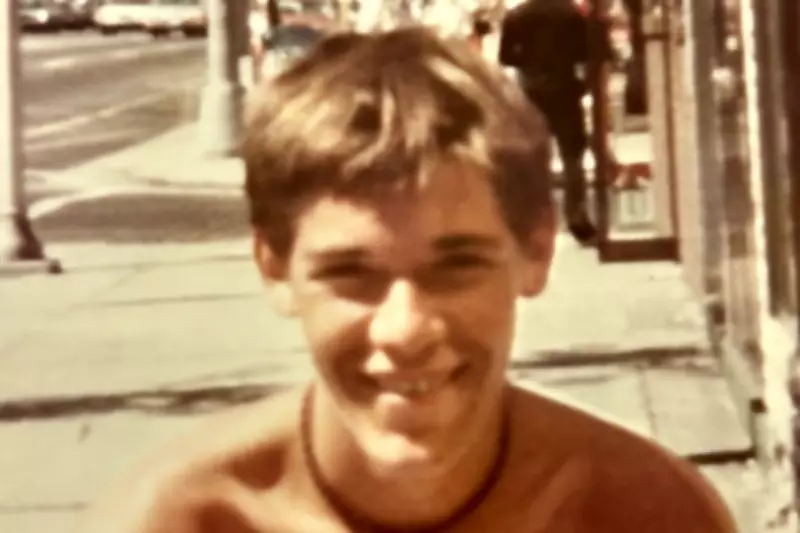
The case was reopened in March 2023, involving researchers who carefully built a family tree to identify the victim. Boyle told WPVI: 'We received a match list back from Match List Pro and Family Tree DNA, and we would just start building back the family trees of his genetic relatives, hoping to find common ancestors among them.' Before Irelan was identified, investigators released a composite sketch of the victim. Eventually, a photograph of Irelan, believed to be in his late teens or early twenties, matched the victim.
Herbert Ladner, a local resident who recalls hearing about the case when it first made headlines, told WPVI that the community is grateful for advances in genetic technology. 'I think it will keep the crime down a little bit and, if not, make it a little easier on the people that's got to process it,' he said.