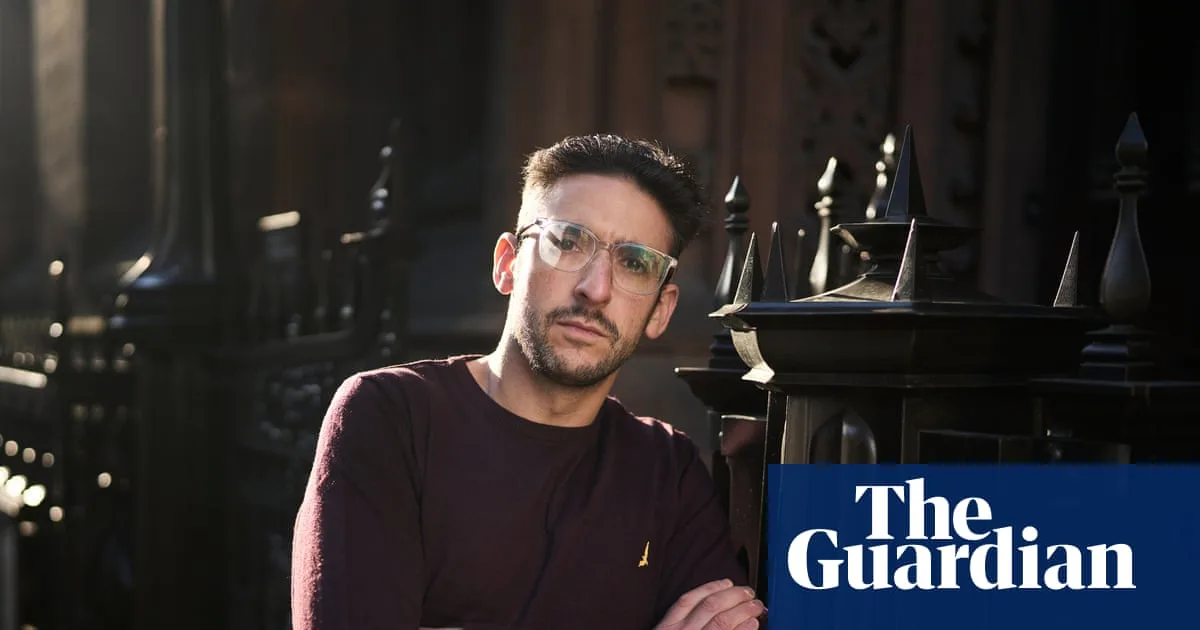
Yoni Finlay awoke before dawn with a sense of nervous anticipation. It was Yom Kippur, the holiest day in the Jewish calendar, and the 39-year-old was preparing to sing morning prayers before hundreds of congregants at Heaton Park synagogue in north Manchester.
After practising his verses, Finlay dressed in traditional white robes and headed to the synagogue. He exchanged cheerful greetings with security guard Bernard Agyemang before taking his place on the bimah, the central stage. The service began peacefully, like countless others before it.
Then everything changed with a single bang.
The Attack That Shook British Jews
Alan Levy, the synagogue's chair of trustees, ran inside shouting 'close the doors, close the doors'. Finlay rushed towards the entrance and through the reinforced glass, he saw Agyemang's body crumpled on the ground. Turning, he saw volunteer security guard Andrew Franks covered in blood.
The moment many in Britain's Jewish community had long feared had arrived. They were under direct attack.
Finlay, a father of four, helped barricade the doors as the assailant tried to force his way inside. 'He was pulling them as we were holding them, and they were buckling,' he recalled. Through the glass, he saw an enormous knife and what appeared to be explosives strapped to the attacker's waist. The man shouted threats about killing children.
In his first newspaper interview since the attack, Finlay told The Guardian he witnessed pure evil in that moment. 'I've never felt this before, I've never experienced it, but there was evil. We were in the presence of evil,' he said. 'He just wanted to kill Jews, and he was prepared to die for that.'
Unbeknown to those inside, the attacker - Jihad al-Shamie, a Syria-born Mancunian - had already called emergency services to claim responsibility for his assault and pledge allegiance to Islamic State.
Aftermath and Rising Tensions
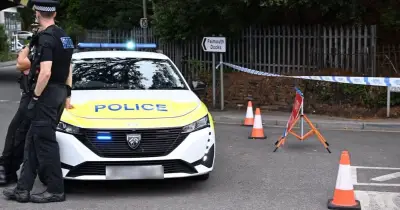
Armed police responded within seven minutes, shooting Shamie as he charged towards them. Remarkably, the attacker regained his footing and lunged again, forcing officers to fire additional shots that proved fatal.
Behind the synagogue door, Finlay felt what he described as 'a very hard punch to his chest' and collapsed. A police bullet had penetrated the left side of his chest and exited through his back. Behind him, 53-year-old Adrian Daulby was also struck by gunfire.
Daulby, described by his family as a quiet man and a 'tremendously strong hero', was pronounced dead forty minutes later. Another worshipper, 66-year-old Melvin Cravitz, died in hospital from stab wounds. This marked the deadliest antisemitic attack in Britain in recent memory.
Seven weeks later, Finlay continues to recover physically after a seven-hour operation and two weeks in hospital. The psychological wounds, however, remain raw.
'I've got what I've been told is survivors guilt,' he confessed. 'Whilst it was a miracle and I'm hugely grateful that I'm still here - I thank God every single day - but it doesn't take away from the lives that were lost. And that's very difficult.'
A Climate of Normalised Antisemitism
The attack provoked fury throughout Manchester's Jewish community and beyond. Many argued that warning signs had been visible for two years, with ministers accused of having 'blood on their hands' at a vigil where Justice Secretary David Lammy was heckled and booed.
Statistics from the Community Security Trust (CST) reveal a sharp increase in antisemitic incidents since Hamas's October 7 attack on Israel. While 100 incidents monthly would have been shocking a decade ago, the first half of 2025 saw more than 200 monthly. By June, July and August, that figure rose to 300 per month.
Dave Rich, head of policy at CST, explained that hostility towards British Jews for the actions of Benjamin Netanyahu's Israeli government - combined with insufficient government response - has normalised antisemitism across the country.
'People don't wake up in a morning and think I'm going to kill Jews, I'm going to attack a shul. It doesn't just happen in a vacuum,' Finlay said. 'It's the result of what happens in the weeks, months and years leading up to it.'
He pointed to recent decisions like banning Maccabi Tel Aviv fans from a match in Birmingham as examples of surrendering to antisemitism. 'How can it be that Jewish people can't go to a certain area in England? We're in 2025. How's that been allowed to happen again?'
'It's become normal to shout antisemitic things, to go on hate marches, and to be abusive towards Jews. Antisemitism has been allowed to fester in this country,' he warned.
Choosing Compassion Over Hate
Despite the trauma, Finlay emphasised he doesn't blame the armed officer whose bullet struck him and likely killed Daulby. 'They were doing their jobs. Their actions that day saved lives,' he stated.
He also highlighted the overwhelming support Heaton Park synagogue received - over 2,000 messages from people of all religions, including many Muslims. This 'silent majority', he believes, represents those who truly abhor discrimination and violence.
The utility manager and Manchester United supporter, who volunteers with the Friendship Circle charity supporting Jewish people with disabilities, stressed that building higher walls isn't the solution.
'The answer isn't to keep putting up more walls and gates and we go further and further behind the gates. We're not tackling the root cause of it,' he argued.
After careful consideration about speaking publicly, Finlay decided his experience should serve as a catalyst for change. 'I saw evil and that's something that in the moment was very powerful in the wrong way. But let's combat it. Let's bring light into the world,' he said.
His final message resonates with hope: 'Love, care, good. That overcomes hate. That ends hatred. We need to choose to learn and connect instead of dividing. Hope builds bridges, hate builds walls.'