Britain faces a profound challenge to its self-image as a tolerant nation, as a resurgence of antisemitism moves from the fringes into the mainstream, presenting a clear threat to national security.
A Surge in Hatred and Inconsistent Enforcement
Since the Hamas attacks of October 7, antisemitic incidents across the United Kingdom have escalated to levels unseen in decades. Jewish schools now operate under armed guard, synagogues face direct threats, and students on university campuses report systematic harassment. The community is living with a renewed sense of vulnerability, with questions over their loyalty and place in British society becoming commonplace.
This domestic tension mirrors a violent international pattern. The ideology that drove the Hanukkah massacre on Bondi Beach and the attack at Heaton Park synagogue in Manchester is the same ancient hatred. It was present in the murders of Yaron Lischinsky and Sarah Milgrim in Washington DC, and in the Molotov cocktail attack by Mohamed Sabry Soliman in Colorado.

The Met's Long-Overdue Policy Shift
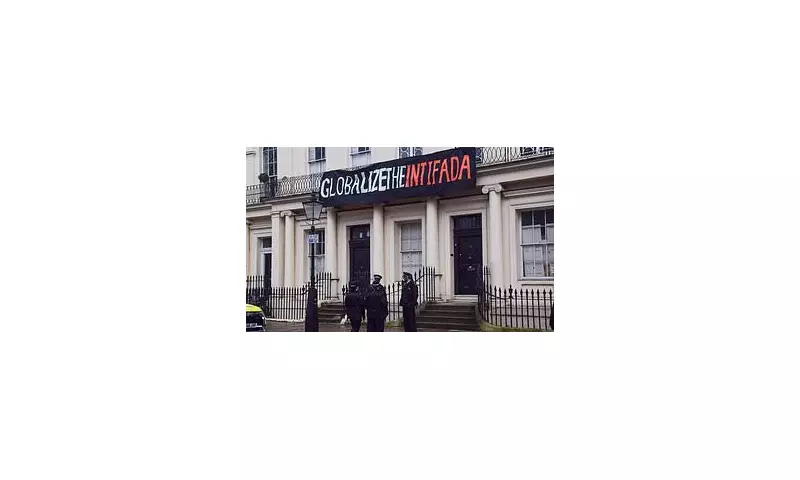
Against this backdrop, the Metropolitan Police's announcement that it will now arrest individuals chanting 'Globalise the Intifada' at protests is a welcome, if belated, development. The slogan is not new, nor is its meaning ambiguous. For decades, it has explicitly referenced campaigns of suicide bombings, stabbings, and shootings targeting civilians, including children.
The notion that such chants only recently crossed a legal threshold is not credible. What the policy change exposes is a deeper, systemic failure: inconsistent enforcement and damaging legal uncertainty. For months, officers have witnessed banners and heard chants that constitute clear incitement, yet responses have been sporadic and hesitant.
Britain has proscribed terrorist organisations like Hamas and Hezbollah. Supporting or glorifying them is illegal. Yet a dangerous chasm has opened between the law on the statute books and the law as applied on the streets.
Operational Failures and a Gateway to Extremism
Part of this failure is operational. Police managing large, volatile protests naturally fear that arrests could inflame tensions. Many frontline officers also lack the specialist training to identify coded slogans, symbols, or Arabic-language chants that meet the threshold for incitement. This points to an urgent need for better education, briefing, and intelligence-sharing.
However, a more serious issue is the disconnect between arrest and prosecution. Even when individuals are detained, securing convictions is fraught. The thresholds for proving incitement or intent in public order offences are complex and unevenly applied. Cases collapse, charges are reduced, and outcomes appear murky. This breeds a perception, shared by both Jewish communities and extremist organisers, that enforcement is weak and consequences are minimal.
This perception is a critical security vulnerability. Extremist movements test state boundaries and exploit hesitation. A tentative response to antisemitic intimidation signals that pressure works. Antisemitism acts as a gateway grievance, fostering an environment where conspiracy theories flourish, violence is rationalised, and minorities are painted as legitimate targets. History shows that unchecked antisemitism is a prelude to wider societal breakdown.
A Matter of National Resilience
Security agencies have long warned that radicalisation is a cumulative process, fed by permissive environments and repeated exposure to violent rhetoric. Normalising such language, even under the banner of protest, lowers the barrier to direct action. It also creates openings for hostile states and transnational movements to exploit divisions within democracies, destabilising societies that seem unwilling to uphold their own laws.
Addressing this threat does not require abandoning Britain's commitment to free speech and open debate. But free expression does not include the right to intimidate, glorify violence, or make a community fear for its safety. Peaceful protest cannot extend to deliberate law-breaking designed to probe how far the state can be pushed.

The Met's new stance is a necessary step. However, it must be reinforced by clearer legal guidance, consistent prosecution, and unwavering political resolve. Arrests without meaningful outcomes will only deepen public cynicism and embolden those who believe they can act with impunity.
British Jews are not seeking special treatment; they are demanding the equal protection of the law, applied consistently and without fear. Confronting antisemitism with the seriousness it deserves is not just a moral imperative but a cornerstone of national security. When this particular hatred flashes as a warning light, it signals a deeper malaise. Ignoring it risks damage that will spread far beyond one community.