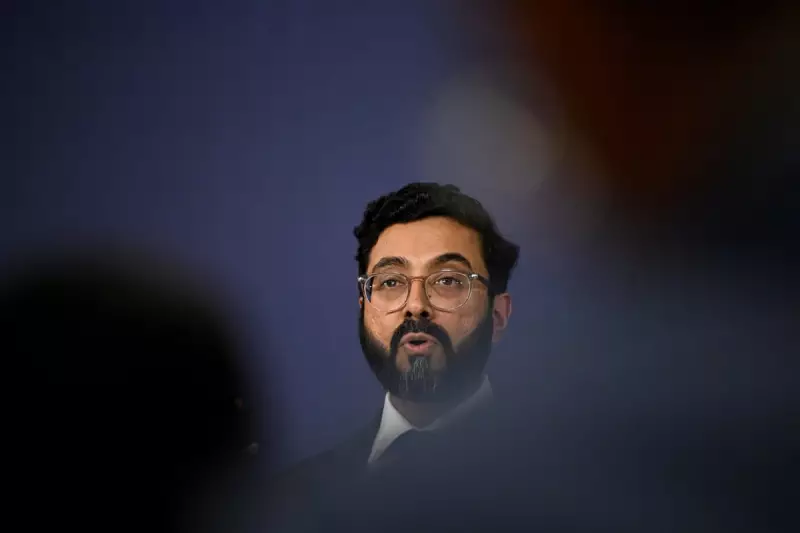
Australia's Special Envoy to Combat Islamophobia, Aftab Malik, has issued a stark warning about a dramatic surge in anti-Muslim hatred following the devastating Bondi Junction terror attack. He reveals that some Australians are conflating the jihadist group Islamic State (ISIS) with Islam, the global faith of nearly two billion people, leading to a wave of abuse directed at the nation's Muslim community.
A Tide of Hatership and Fear
In the wake of the attack on 14 December, community-led registers documenting Islamophobia have recorded an alarming spike in reports. The Islamophobia Register Australia has seen a staggering 740% increase in incidents reported since the tragedy at Bondi. Parallel organisation Action Against Islamophobia has also logged a significant rise.
These reports detail a disturbing pattern: mosques and Islamic centres vandalised across the country, a Muslim cemetery in New South Wales desecrated, individuals subjected to threatening phone calls, physical assaults, and a deluge of online hate. Muslim women are disproportionately targeted, reporting being spat at, abused, and threatened, leading many to alter their daily routines and movements out of fear for their and their children's safety.

The Dangerous Conflation: ISIS vs Islam
Malik emphasises that the core of the problem lies in a dangerous and false equivalence. Despite global Muslim leaders and Australian imams consistently denouncing the extremist group, social media following the attack was flooded with messages blaming Islam itself. Posts declaring "The common denominator in both Gaza and Bondi? Islam" or calling for its eradication illustrate a profound misunderstanding that fuels social exclusion and grants a "permission to hate."
This environment, Malik argues, undermines Australia's fundamental values of fairness, inclusion, and compassion by creating a divisive "us and them" dynamic. He cautions that in the vital fight against extremism and antisemitism, society must be careful not to unwittingly recreate the fertile ground for anti-Muslim hate that flourished after the 9/11 attacks.
Policing, Trust, and Collective Anxiety
The situation is further complicated by counter-terrorism operations. While Muslim leaders acknowledge the police's duty to act on intelligence, incidents like the arrest and subsequent release without charge of the "Liverpool seven" youths have bred frustration and anxiety. Many within the community perceive such "dramatic" actions as reinforcing the idea that Muslims are perpetual suspects, spreading paranoia and eroding trust.
Malik stresses that police must understand how such raids can fan public anxiety about Muslims and Islam, ultimately adding to prejudice. Muslim Australians should not have to bear collective responsibility for acts of terror or constantly prove their innocence, a situation they find exhausting and distressing.
A Call for Solidarity and Dignified Debate
Malik is clear that no Muslim leader seeks to diminish the profound suffering of the Jewish Australian community. There is a legitimate concern that speaking about Islamophobia now could be misconstrued as "competitive victimhood." However, he asserts that it is possible—and necessary—to stand in solidarity with Jewish communities against all forms of hate while also addressing the specific spike in anti-Muslim sentiment.
His final plea is for reasoned and dignified discourse. "Debate Islam all you like. Be critical, robust and challenging. But be dignified," he writes. He warns against doing the work of extremists by allowing society to rip itself apart. Quoting Marie Curie, he concludes: "Now is the time to understand more, so that we may fear less."