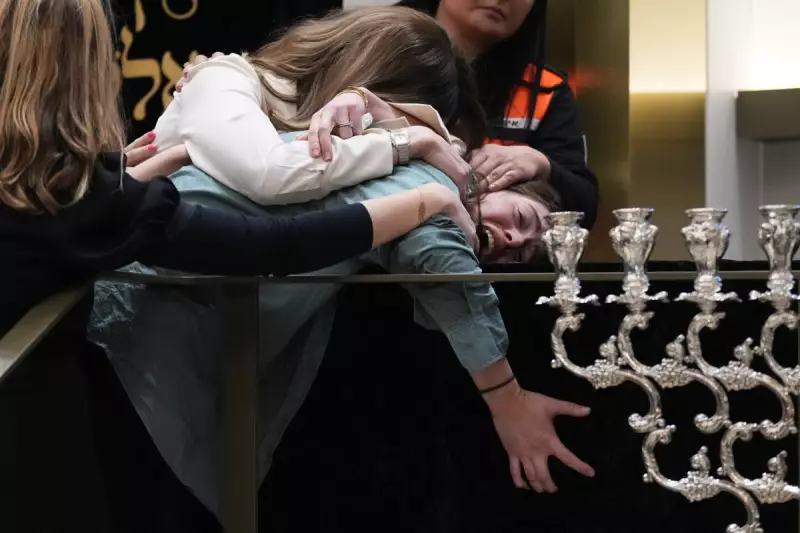
Grief, anger, and profound sorrow descended upon Sydney on Wednesday as hundreds of mourners gathered for the first funerals of victims slain in an antisemitic mass shooting. The attack, which targeted a Hanukkah celebration at Bondi Beach on Sunday, left 15 people dead and more than 20 others hospitalised, sending shockwaves across a nation now grappling with its deadliest hate-fuelled massacre in modern times.
A Community in Mourning Buries Its Dead
With harrowing expressions of grief and declarations of faith, families from Sydney's close-knit Jewish community began the painful process of burying their loved ones. The victims ranged in age from a 10-year-old girl to an 87-year-old Holocaust survivor. All of the victims identified so far were Jewish. Jewish custom usually requires burial within 24 hours, but proceedings were delayed by ongoing coronial investigations.
The first to be farewelled was Eli Schlanger, 41, a husband and father of five who served as assistant rabbi at Chabad-Lubavitch of Bondi. The London-born Schlanger had organised the 'Chanukah by the Sea' event and also worked as a chaplain in New South Wales prisons and a Sydney hospital. His father-in-law, Rabbi Yehoram Ulman, spoke through tears, expressing regret that he had not told Schlanger more often how loved and appreciated he was.

Among the other victims were Boris and Sofia Gurman, a husband and wife in their 60s who were fatally shot as they bravely tried to disarm one of the gunmen. Another man, Reuven Morrison, also in his 60s, was gunned down while throwing bricks at an attacker in an attempt to protect others, his daughter said.
National Reckoning on Antisemitism and Gun Laws
As the funerals commenced, a heavy police presence was visible on nearby streets, with officers checking identification of attendees—a stark reminder of the tense atmosphere. The attack has forced Australia into a deep social and political reckoning concerning rising antisemitism, the adequacy of gun controls, and whether police protections for Jewish events were sufficient.
Prime Minister Anthony Albanese, after Jewish leaders lambasted the government for not heeding prior warnings of violence, vowed to take whatever action was needed to stamp out antisemitism. He and state leaders pledged to tighten the country's already strict gun laws, proposing the most sweeping reforms since the 1996 Port Arthur massacre. This comes after it emerged the older suspect had legally amassed six weapons. Proposed measures include restricting gun ownership to Australian citizens and limiting the number of weapons one person can hold.
Investigation Points to Terrorist Inspiration
Australian federal police commissioner Krissy Barrett stated on Wednesday that the suspects—a father and son aged 50 and 24—had carried out "a terrorist attack inspired by Islamic State." The father, named by officials as Sajid Akram, was shot and killed at the scene. His Australian-born son, who has not been formally named, woke from a coma in hospital on Wednesday. New South Wales Police Commissioner Mal Lanyon said investigators expected to speak to and charge the younger suspect that day.
Authorities revealed the younger suspect had come to the attention of security services in 2019, though few details of prior investigations were given. A major line of inquiry is a trip the pair made to the Philippines in November. The Philippines Bureau of Immigration confirmed Sajid Akram and Naveed Akram, 24, travelled to Davao City from 1 to 28 November. While groups like Abu Sayyaf in the southern Philippines have previously expressed support for IS, Philippine officials said there was no recent indication of foreign militants in the region.
Meanwhile, a nation sought solace in practical acts of solidarity. Hours-long queues formed at blood donation centres, and a growing mound of floral tributes appeared at the attack site. At dawn on Wednesday, hundreds of swimmers formed a circle on Bondi sand for a minute's silence before running into the sea.

Rabbi Ulman vowed that the Hanukkah celebration, which has run for 31 years, would return to Bondi Beach. He said the attackers aimed to make Jews feel it was dangerous to live openly, but the community would respond by becoming greater and stronger. "We're going to show the world that the Jewish people are unbeatable," he declared.