
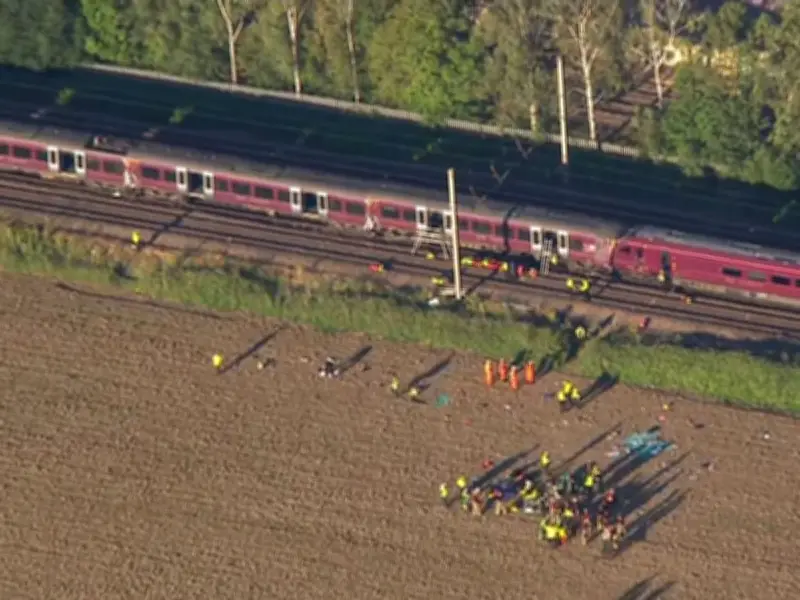
Specialist investigators are working to determine the cause of a train crash near Bedford that killed a driver and left 100 people injured, with numerous questions still unresolved. The collision involved two East Midlands Railway (EMR) services on the same line shortly after 5pm on Friday, June 19. Police confirmed 28 people remain in hospital, nine in critical condition.
Investigation Underway to Establish Cause
Transport Secretary Heidi Alexander stated that work is being carried out to understand the circumstances so that "lessons are learned." When questioned about the cause, she said: "It is too early to speculate and that's why it's so important that the inspectors from the rail accident investigation branch were there very quickly." British Transport Police Chief Constable Lucy D'Orsi expressed condolences to the driver's family, friends, and colleagues at EMR.
Key Unanswered Questions
1. Why was the leading train stopped or moving slowly?
Investigators are examining why the Nottingham-to-London service was stationary or nearly stationary on the main line when struck from behind. Early reports suggest a possible technical issue, but this has not been officially confirmed.
2. Why didn't the following train stop?
The biggest question is why the Corby-to-London service failed to avoid the train ahead. Modern British railways have multiple layers of protection designed to prevent such collisions.
3. Did the signalling system operate correctly?
The Rail Accident Investigation Branch (RAIB) will examine signalling records to determine if signals were functioning properly.
4. Did train protection systems fail?
Britain's rail network uses automatic safety systems intended to stop trains from passing danger signals or approaching hazards too quickly. Investigators will examine whether these systems functioned.
5. Was there a problem with one of the trains?
One train involved was a relatively new Aurora fleet train. Investigators will download data recorders ("black boxes") and inspect both trains for mechanical issues.
6. What role did human factors play?
As in any major rail accident, investigators will examine driver actions, fatigue, and procedural compliance.
7. How severe was the impact and why were so many people injured?
The trains reportedly remained upright, likely reducing casualties, but investigators will examine the circumstances of the crash to understand injury patterns.
East Midlands Railway's managing director Will Rogers described it as a "profoundly sad day for the railway community" and confirmed the company is supporting the investigation. He said: "Our thoughts and heartfelt condolences are with family, friends, and colleagues of our driver and everybody else who has been injured or affected by this tragic incident." Further details about the driver, including name and age, have not yet been released.




