A ‘forensic’ Greater Manchester Police review into the 1996 IRA bombing came tantalisingly close to a breakthrough, the Manchester Evening News can reveal. Amid accusations from survivors that 'politics' was behind a decision to close a 30-year investigation into the attack, which injured more than 200 people, it is understood Crown lawyers thought there was a 'fighting chance' of a conviction had a prime suspect been charged. But this suspect died while preparations were underway to arrest him.
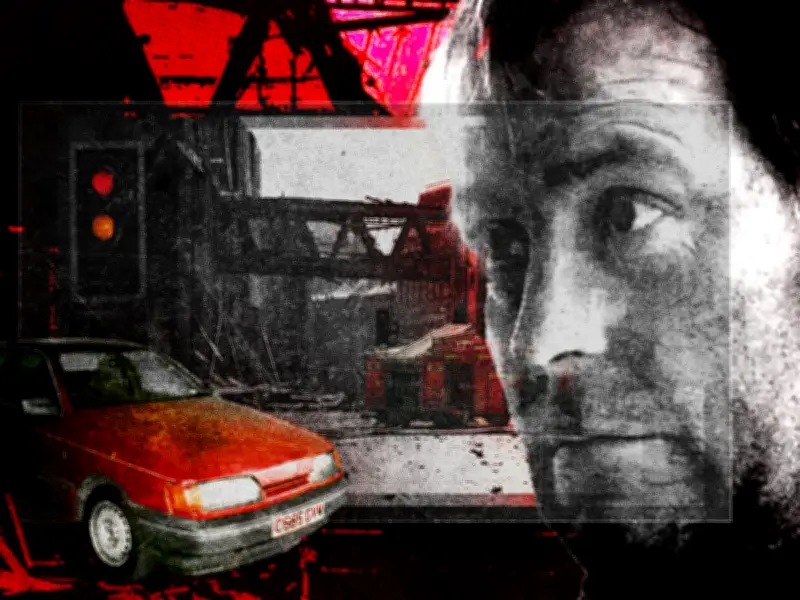
He was a known criminal with alleged links to Irish paramilitary groups, and was suspected of having a 'hands on' role in the attack. This weekend, he was named for the first time ever by the Manchester Evening News as Cyril McGuinness - also known as ‘Dublin Jimmy’. A source close to the investigation revealed police suspected that the man, who died aged 57 following a police raid at his Derbyshire home in 2019, was waiting in a burgundy Ford Granada on the day of the attack. Two other men entered this vehicle after a Ford Cargo box van, containing the 3,300lb bomb, was left at the corner of Corporation Street and Cannon Street in Manchester city centre. The Granada was later found abandoned in Preston.
Although not believed to be a member of the IRA, McGuinness, who was raised in Cloghran in County Dublin, was a criminal with alleged links to Irish paramilitary groups. He’s reported to have supplied vehicles to the Provisional IRA and been involved in smuggling activities with paramilitaries. McGuinness had dozens of convictions to his name including smuggling, theft and transporting illegal waste. In 2008 he was described in a European extradition warrant as an active member of an Irish criminal organisation.
A second suspect was arrested at Birmingham Airport in September 2022. He had been travelling back to Ireland from a holiday, but the flight route was via the Midlands. He was flagged to police due to an arrest on sight order on his record should he ever set foot in the UK. He was then interviewed by GMP officers over the blast, which caused an estimated £700m-worth of damage. But, the M.E.N. understands, he did not say a word and was released without charge.
The Day of the Attack
Barry Laycock, now 87, was working at Victoria Station on the day of the attack as driver standards manager for North Western Railway. It was a job he told the MEN he was good at and loved. The silent shockwave before the boom when the 3,300lb device was detonated came through his open office window and threw him against a wall of lockers. He suffered injuries to his leg and spine which ultimately ended his career.
This week he was in Manchester to make what is an annual pilgrimage on the anniversary of the attack. He attended a remembrance service for those affected by the atrocity. He was asked to speak at the service but instead chose to pay his own quiet respects at the spot on Corporation Street where the lorry loaded with the bomb was parked. Three days prior to Mr Laycock’s return to the city, Counter Terrorism Policing North West issued a statement - all lines of enquiry had been exhausted and that the investigation into the 1996 had been declared 'no longer active'.
'I went to the cathedral, to the memorial service. I was really glad there were no police there because if I had come face to face with them I would have given them a piece of my mind,' he said. 'I am really annoyed,' Mr Laycock added, alleging the failure to bring anyone to prosecution has 'all been political'. He alleged: 'No one will ever convince me that this is not political. I believe the police are under the thumb. They are frightened of taking the initiative and saying something out of line. I am very bitter because I have put 20-odd years of effort into this.'
'I do feel that there is sufficient evidence to carry on the investigation. These days the police are going back 50 years and arresting people for murder and other offences due to improvements in DNA technology. Yet we have a situation where they destroy the heart of Manchester here - you can't tell me they don't have the ability - they have but they will not used their initiative for political reasons.' His mental and physical scars, caused by the IRA bomb, triggered a three-decade quest for justice.
Mr Laycock claimed: 'For 30 years it has taken over my life. I have been fighting for justice for all that time - I am not going to stop now. I need some good legal advice but I am thinking of taking my case to the Independent Office of Police Complaints - I don't think the police are justified in stopping the investigation.' Separately, Mr Laycock was one of three men who brought a legal case against Gerry Adams, which was discontinued in March.
He sued Mr Adams along with John Clark, a victim of the 1973 Old Bailey bombing in London, and Jonathan Ganesh, a 1996 London Docklands bombing victim. Sadly, Mr Clark died two weeks after the trial was stopped. As part of their civil case, they alleged that Mr Adams was a leading member of the Provisional IRA on those dates, including of its army council. They were seeking £1 in damages. Mr Adams told the court in London during a two-week trial that he had 'no involvement whatsoever' in the bombings and was never a member of the Provisional IRA, with his lawyers claiming the case should be thrown out as an abuse of the court system. On March 20, 2026, the last day of the trial, lawyers for the victims said the claim against the former Sinn Fein president had been 'discontinued' with 'no order as to costs'. The case ceased after Mr Adams' team implied that the claimants were treating the court as a vehicle for a public inquiry and the judge raised the issue that the case may have been an abuse of process. There was then a serious risk that the claimants could face personal liability for legal costs. Mr Laycock said at the time he was 'completely devastated' by the collapse.
Key Suspects
The Manchester Evening News reporter, Steve Panter worked on an investigation into the IRA bombing which named another individual believed to be a key suspect in the attack. It was published in April 1999 - the year after the Good Friday Agreement which brought an end to years of violent conflict in Northern Ireland. The story emerged amid evidence Special Branch officers observed the suspect walking around the scene of the bombing six months after the blast outside Marks & Spencer. Although GMP did not arrest the suspect in spite of what was described at the time as 'compelling evidence', police did arrest Detective Inspector Gordon Mutch, for alleged misconduct in public office, accusing him of leaking a report on the investigation to Panter. Mr Mutch was prosecuted but acquitted at Manchester Crown Court.
Steve Panter believes politics affected the progress of the first GMP investigation into the bomb. He told the MEN: 'The political peace process was going on at the time, commenced by John Major and then continued by Tony Blair. The IRA thought the government were dragging their feet a bit. So they bombed Manchester to make a statement aimed at economic warfare. They gave that warning with that in mind, giving enough time to evacuate the city. There is no doubt that had there not been any warning hundreds would have been killed. They probably thought that if they killed so many people the peace process would have collapsed. It was a way of reminding the government we are still here. Even though many were injured and traumatised If people had died I think there would certainly have been attempts to make arrests. But the peace process was the barrier. It was the bigger picture and ultimately for the greater good.'
Investigation Review
In 2016, a review of the investigation into the Manchester IRA attack was commenced by a senior officer in GMP's Cold Case Unit. A consequent report made a series of recommendations and identified a piece of outstanding potential evidence. Contrary to claims the investigation had been shelved, checks were made regarding DNA evidence. But instead of identifying a suspect, this ruled out a line of inquiry. Prior to being closed in 2026, the review was unable to produce evidence which would have reached the charging threshold against anyone who is alive, the MEN now understands.
Police believe at least three people were involved in the planting and detonation of the bomb, all of whom then fled from Manchester. Recalling the day which changed his life, Mr Laycock said: 'I had been at Manchester about ten or twelve years. I was in my office at Victoria Station on the first floor. I was in charge of all train driver activities. It was a beautiful sunny morning. The ironic thing about it was I had a mobile home at Fleetwood at the time. I drove from there and arrived at my office at 7am - that was the time [the bomb] van was parked outside Marks and Spencer. At about 10.50am I could hear a tannoy going and people being told to leave the Arndale Centre.'
'We had no prior warning but we had a system in place for evacuation. In the past we had received hoax calls - as they loved to disrupt services. I looked out of the window and could see all these people coming from the Arndale. Two supervisors went down to keep people away from the platforms so we could continue services. By 11.05am a bleeper I had was going mad. People at our control centre in Piccadilly wanted to know what was going on. I thought I will have to go back to my office to get my mobile phone. I bent down to get it out of a case and my back was to the window. The blast came through the window before the bang.'
'I was about four feet away from a wall of lockers and it just swept me up and banged me against them. Nearly every window in the building was broken. I fell to the floor and momentarily I was semi-conscious. I sat up, looked out the window and saw the mushroom cloud from the bomb rise in the sky. I got to the window and could not believe the devastation caused. People were running out of the concourse of the station onto the turf outside Chetham's School of Music. People were coming out in droves and many were bleeding. There was so much glass on the staircase I had to be careful as I left with two first aid boxes from the office.'
'I was dazed and had a pain in my back. But I had no visual injuries and knew I had to help tend to others. The first person I came across was a lady who was lying under the right hand arch when you leave the station. She looked like she had a main artery in her ankle severed. We finally got someone to put a tourniquet on the lady. We did eventually transport people out on trams via the Bury line.' Married with two children at the time, Mr Laycock then called his wife as he knew she would have seen what happened on the news. He had suffered a compression of the spine and a left leg injury. After 18 months, he had to have his leg operated on which led to a new replacement knee. He still wears morphine patches for his spine pain.
'In 2002 my wife had a massive heart attack and I do think what happened to me was a contributing factor,' he told the M.E.N. 'At the time of the bomb I had a good position at work, I had an open cheque book to make as much money as I wanted as long as I put the effort in. I lost everything. One week I was making good money the next I was on £67 sick money. I was only 57 and was then on sick money for eight years. But British Rail were brilliant with me. The company doctor knew I had to be 100 per cent fit to do my work as I was out and about with drivers. I had to sell a lot of my assets. I had to sell my caravan, and motorhome. At that time we had a £30,000 mortgage and I had to do everything to keep a roof over our heads. We were hand to mouth all those years until I got my retirement. I continued to need injections into my spine.'
He added: '[Since police announced the investigation into the attack was over], I have been on a bit of a downer. They did ask me to say a prayer in the Cathedral but I had to say I was not up to it. I have a new partner who says I should let go. But to be honest it is hard to let go of something you have been doing for 30 years.' When contacted by the Manchester Evening News, Counter Terror Police North West declined to comment. Neither Counter Terror Police or Greater Manchester Police have confirmed or denied that Cyril McGuinness was a suspect in the investigation.