Elvira Notari: The Lost Pioneer of Italian Cinema Rediscovered in New Documentary
Elvira Notari, Italy's first and most prolific female film director, created a bold cinematic legacy that was systematically erased by fascist censorship under Mussolini's regime. Now, a compelling new documentary titled Elvira Notari: Beyond Silence, directed by Valerio Ciriaci and produced by Antonella Di Nocera, is bringing her groundbreaking work back into the spotlight, offering a voice to a filmmaker who died in obscurity in 1946.
A Cinematic Vision Silenced by Fascism
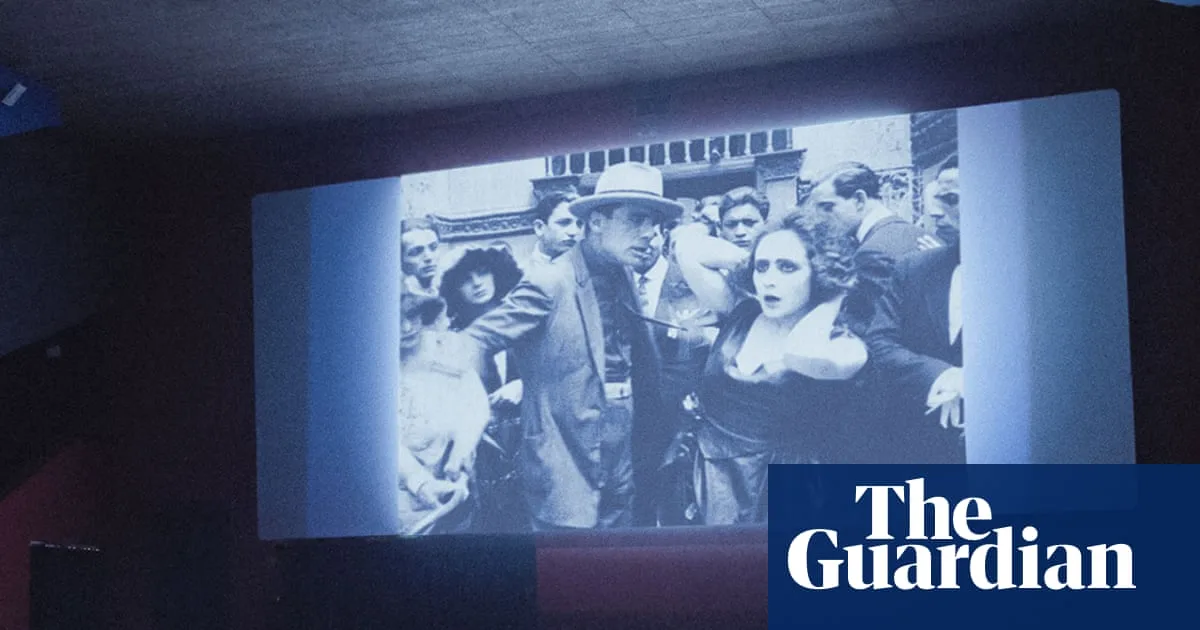
Notari directed an astonishing 60 feature films, many hand-coloured, alongside hundreds of documentaries and shorts through Dora Film, the company she ran with her husband and cameraman, Nicola. Her movies, such as È piccerella (1922) and 'A Santanotte (1922), depicted the raw, unvarnished reality of early 20th-century Naples—a world of gritty squalor, sexual deviance, and social turmoil that clashed violently with the fascist ideal of a unified, wholesome Italy.
Giuliana Bruno, author of the 1992 book Streetwalking on a Ruined Map, which reconstructed Notari's suppressed career, explains: "The fascists didn't want to see films about Neapolitan society in which a son takes money from his mother, but Notari didn't hide it. She wanted to show that Italy isn't this perfect place of white telephones, but a place that has all kinds of sexual and social deviant behaviours."
Due to Mussolini's stringent censorship laws, which specifically targeted depictions of "stallholders, beggars, urchins, dirty alleyways, and people dedicated to dolce far niente," only three of Notari's features and fragments of others survive today. This erasure was part of a broader fascist campaign to promote propaganda films and centralise the film industry in Rome, marginalising regional voices like Notari's.
The Enduring Influence on Modern Cinema
Despite the loss of most of her work, Notari's cinematic DNA persists in the films of iconic Italian-American directors such as Francis Ford Coppola and Martin Scorsese. Her pulsating street festival scenes, filled with chaotic energy and visceral detail, prefigure key moments in The Godfather and Goodfellas, while the sordid, heaving urban landscapes echo in Taxi Driver's Times Square sequences.
Coppola's Neapolitan grandfather, Francesco Pennino, a film exhibitor and songwriter, imported Notari's sceneggiata-style silent melodramas—films accompanied by live musicians interacting with emotional beats—to American audiences. This cultural exchange is subtly referenced in The Godfather Part II, where songs written by Pennino evoke the acute nostalgia of emigrant communities, mirroring the impact of Notari's exported films.
Rediscovery Through Artisanal Inspiration
Elvira Notari: Beyond Silence takes an innovative approach to exploring Notari's legacy, given the scarcity of firsthand accounts from the director herself. The documentary collaborates with modern "artisans"—including a photographer, visual artist, novelist, and musicians who score silent films—who draw inspiration from her work. This strategy highlights Notari's artisanal production methods and her enduring relevance.
Antonella Di Nocera, the producer, notes: "Elvira speaks to us like a contemporary because of her films' carnality and sensuality. The texture of silent film makes you feel so close to that sensuality." Notari's films, with their anthropologist's eye for detail and empathy toward marginalised communities, particularly women, resonate powerfully today.
Cristina Jandelli, a member of the Elvira Notari National Committee, adds: "Beyond Notari's images and the empathy they convey toward the social reality she depicts, the intertitles of her sceneggiata films speak volumes: she likely possessed a class consciousness, as well as an awareness of the marginal and demeaning role of women in the society of her time."
A Feminist Symbol Reclaimed
Researchers in women's film studies are increasingly parsing Notari's work for signs of a feminist consciousness. Scenes of violence against women, such as the breast-stabbing in 'A Santanotte, are interpreted as critiques of patriarchal oppression, likened to the historical Neapolitan practice of sfregio—face-cutting punishments for women who defied societal norms.
Di Nocera emphasises the timeliness of Notari's rediscovery: "We need symbols, and she is a symbol of the right to memories. Notari was silenced by history. Making the documentary was meaningful because women are silenced now, and we don't hear them even if they scream."
The documentary Elvira Notari: Beyond Silence is set to screen at the Film Forum in New York on 6 April, followed by a UK tour in April and May, offering audiences a chance to reconnect with a visionary filmmaker whose work was once lost to political repression but now speaks anew to contemporary struggles for voice and memory.