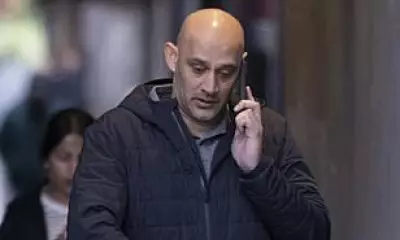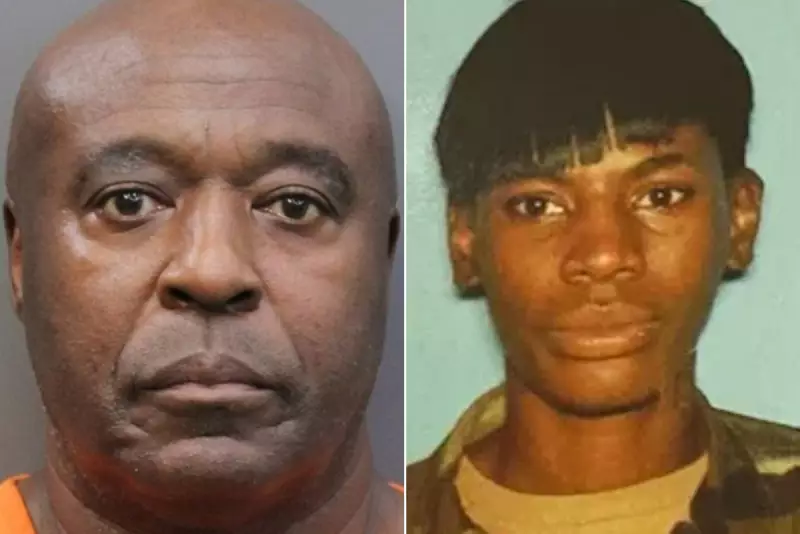
A former Florida state trooper has been formally charged with the brutal murder and dismemberment of a woman whose remains were discovered along Gilgo Beach in New York nearly three decades ago. Prosecutors allege the killing was an attempt to conceal an extramarital affair and a resulting child.
Decades-Old Mystery Linked to Notorious Beach
Andrew Dykes, 66, entered a plea of not guilty on Thursday to the murder of Tanya Denise Jackson in 1997. He was ordered to be held in custody following a brief court hearing, with his next appearance scheduled for 16 January. The case had long been shrouded in mystery, with Jackson's unidentified remains earning her the moniker "Peaches" due to a distinctive peach tattoo.
For years, the killing was considered a potential part of the infamous Gilgo Beach serial murder investigation. Former architect Rex Heuermann has been charged in connection with seven of those deaths. However, authorities now state there is no apparent link between Heuermann and Dykes, asserting that a different man was responsible for Jackson's death.

DNA Breakthrough from a Discarded Straw
Investigators say a major breakthrough in this cold case came through significant advances in DNA technology. According to the prosecution, genetic material recovered from Jackson's torso in 1997 was finally matched decades later to DNA extracted from a plastic straw used by Dykes.
The crucial evidence was allegedly retrieved from a Charley's Cheesesteaks restaurant in Tampa, Florida, in October 2024. The straw, discarded in a plastic cup, was collected by investigators and subsequently provided the forensic link to Dykes, who had been living in Florida.
Dykes' defence attorney, Joseph Lo Piccolo, has indicated he will challenge this DNA evidence, describing his client as a "law-abiding" citizen who served in law enforcement and the military. Nassau County Police Commissioner Patrick Ryder countered this characterisation, stating, "He might have worn that uniform; he may have served, but he was a homicide subject. He's a murderer."
A Mother, a Child, and a Grisly End
Prosecutors outline a tragic narrative behind the crime. They allege that Dykes, who was married with children at the time, killed 26-year-old Jackson after she expressed a desire to start a new life with him. Their affair had resulted in the birth of a daughter.
Jackson's remains were first discovered in a Long Island state park in 1997, but she could not be identified. In 2011, during a search of the beachfront near Gilgo Beach, authorities uncovered additional skeletal remains, including those of her two-year-old daughter. The toddler's remains had been found years earlier in a separate location.
While Dykes has not yet been charged in the death of the child, prosecutors and police have stated they believe he is responsible for both deaths. Commissioner Ryder delivered a stark account: "He threw a baby out like the trash into the weeds. He cut the other body up and dumped it in a container and threw it into a sump."
Tanya Jackson, a Gulf War veteran originally from Alabama, was largely estranged from her family and living in Brooklyn with her daughter at the time of her disappearance. The area along Gilgo Beach, where a total of ten sets of human remains have been found, is now believed by police to have been used as a dumping ground by more than one killer.