An Australian court has finally delivered justice for a horrific crime that shattered a Sydney family more than two decades ago. A man has been sentenced to prison for deliberately setting a house fire in 1998 that killed a 13-year-old boy who was on his very first sleepover.
A Night of Horror in South Coogee
The tragic events unfolded in the early hours of 28 November 1998 in South Coogee, a suburb of Sydney. Thirteen-year-old Corey James was enjoying his first-ever sleepover at a friend's house on Oberon Street. The night turned to terror when the property was deliberately set alight.
Corey, trapped inside the burning home, suffered catastrophic injuries. He was rescued by firefighters but succumbed to his wounds in hospital two days later, on 30 November. The senseless act of arson robbed a young boy of his future and left a family in perpetual grief.

The Long Road to a Conviction
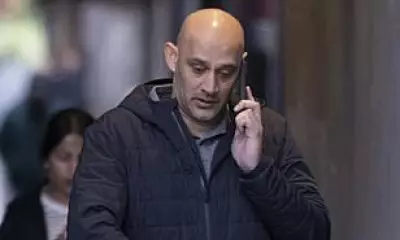
For years, the case remained unsolved, a cold case haunting both the community and investigators. The breakthrough came with a renewed investigative effort. David Michael Quinn, now 46 years old, was ultimately charged with Corey's murder.
In the New South Wales Supreme Court, Justice Julia Lonergan presided over the case. The court heard that Quinn had a history of conflict with the homeowner, Corey's friend's father. On the fateful night, Quinn poured petrol on the front porch and ignited it, fully aware that people were inside the dwelling.
Justice Lonergan described Quinn's actions as a "grave example of the offence of murder". She highlighted the extreme cowardice of attacking a home at night and the profound vulnerability of the victims who were asleep. The judge sentenced David Michael Quinn to 24 years in prison, with a non-parole period of 18 years.
A Legacy of Loss and a Family's Anguish
The sentencing brings a painful chapter to a close, but it cannot heal the wound left by Corey's death. In a powerful victim impact statement, Corey's mother, Donna James, laid bare the family's enduring suffering. She spoke of the unimaginable pain of losing a child and the void that has defined their lives since 1998.
"You took away my son's future, his dreams, and his life," she addressed Quinn in court. Her statement painted a picture of a family forever broken, haunted by memories of a vibrant boy whose life was brutally cut short.
The conviction serves as a sombre reminder of the devastating consequences of arson and violent crime. While the sentence provides a measure of accountability, the story remains, at its heart, a tragedy of a young life lost during what should have been a simple childhood rite of passage.