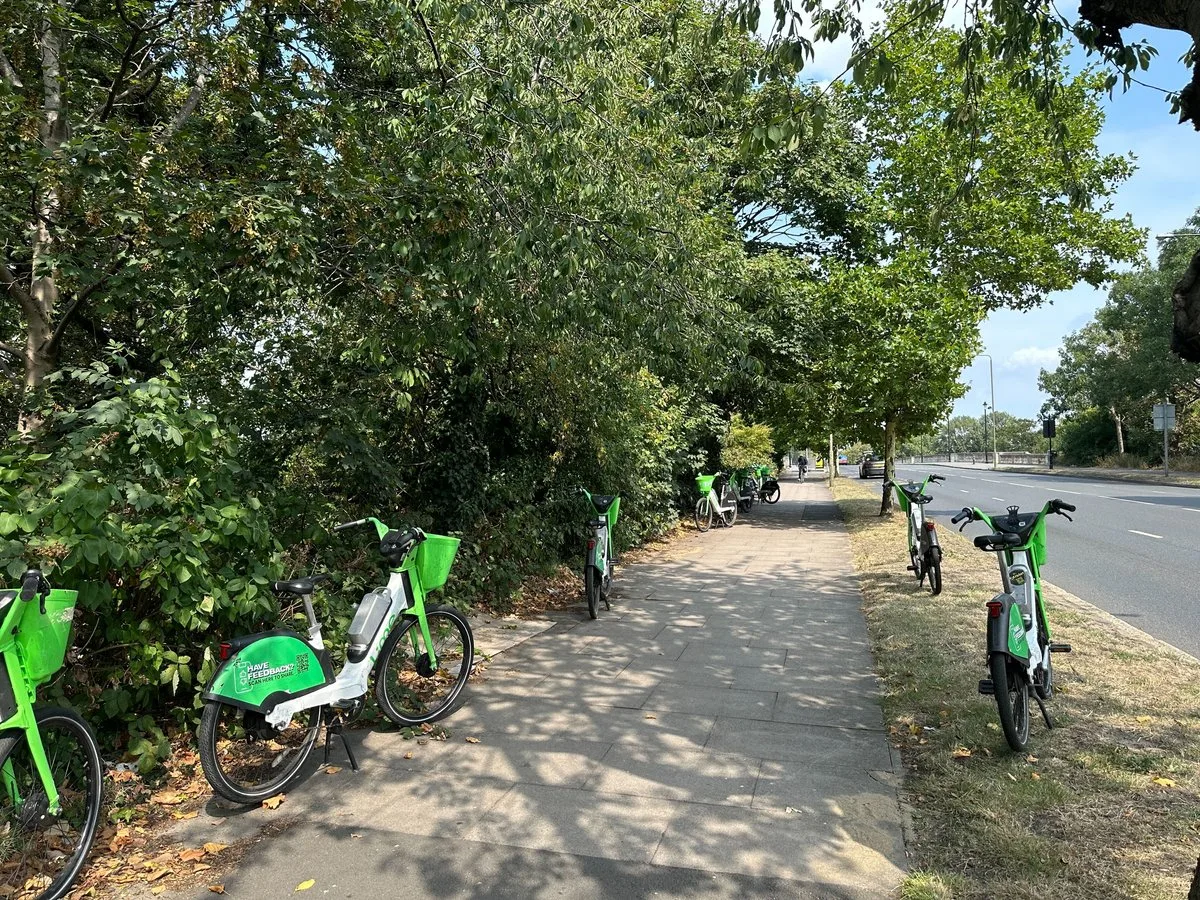
Lime Bikes Set for Expulsion from Richmond as Forest Secures Exclusive Deal
Lime's distinctive green e-bikes are poised to vanish from another London borough, with rival operator Forest emerging victorious in the ongoing battle for urban micromobility supremacy. Residents of affluent Richmond-upon-Thames in southwest London may soon witness the disappearance of Lime's fleet, following revelations that Forest is set to sign an exclusive tender agreement with the local council.
Council Decision Favors Forest Despite Lime's Service Quality
The proposed arrangement, which would prohibit Lime bikes from being hired or parked anywhere within Richmond's boundaries, materialized after Forest outperformed competitors during a formal bidding process. Council documents obtained by the Times indicate that Lime actually achieved higher scores than both Forest and e-scooter provider Voi in the 'service quality' assessment category. However, Lime ultimately lost the competition due to its pricing proposal failing to meet council requirements.
Richmond council employs a specific scoring methodology where 25 percent of the evaluation depends on the 'concessionary fee to the council,' with the remaining 75 percent determined by user pricing considerations. Official council papers state clearly: 'Officers consider the submission from Forest (as sole provider) represents the best overall proposal.' A separate confidential document contains the precise financial details of Forest's winning bid.
Potential Impact on Southwest London's Transport Landscape
Should the deal proceed as recommended, it would deliver a significant setback to Lime, which currently operates as the exclusive e-bike provider in Richmond. The borough recorded an impressive 1.5 million Lime trips during the previous year alone. This development would further restrict Lime's operational territory across southwest London, where the company already faces prohibitions in neighboring Kingston-upon-Thames and Sutton boroughs.
Richmond would consequently become London's only borough with a single e-transport provider, contrasting with other councils that maintain at least two operators. The decision will undergo formal discussion at the borough's transport committee meeting scheduled for Monday, March 16, where councillors retain the authority to select an alternative operator or permit multiple providers.
The Great Lime Green Wall and Border Disruptions
This latest development intensifies the ongoing rivalry between Lime and Forest, two green e-bike companies competing aggressively across key London boroughs. Since August 2025, Hounslow and Richmond councils have been engaged in what amounts to a rental bike war, with Hounslow banning Lime while exclusively permitting Forest operations, and Richmond currently prohibiting Forest while allowing Lime—a restriction likely to be reversed imminently.
This tit-for-tat prohibition has created what locals describe as a 'Great Lime Green Wall' along the Thames border separating the two boroughs. The technological restrictions prove particularly problematic: e-bikes automatically lose electrical power when crossing into prohibited territories, resulting in substantial accumulations of discarded cycles at boundary points.
The famous Royal Gardens surrounding Kew, situated within Richmond, have become littered with abandoned green electric bikes as riders crossing from Hounslow must abruptly switch transportation modes. Comedian and former Mock the Week host Dara O Briain has notably compared the Kew and Chiswick situation to 'Checkpoint Charlie,' highlighting the absurdity of the divided micromobility landscape.
Industry Response and Regulatory Context
A Lime spokesperson expressed disappointment, stating: 'We've served tens of thousands of Richmond residents weekly since 2021, providing a hugely popular service that connects people across London. Our bid was rated as the highest quality offer by the Council. All other London boroughs are moving toward systems with minimum two operators to ensure resident choice. We hope Richmond councillors follow that model.'
The spokesperson further emphasized: 'Shared e-bike schemes must prioritize maintaining access to high-quality, popular cycling options rather than reducing them. This should take precedence over financial commitments from companies, which often prove unsustainable. Otherwise, we risk creating dysfunctional schemes that decrease cycling rates and undermine London's net-zero objectives.'
Currently, e-bike policies remain determined individually by each borough, though this could change if Transport for London succeeds in bringing e-bike regulation under its jurisdiction. This potential shift depends on whether the English Devolution Bill passes into law later this year. The Daily Mail has contacted both Forest and Richmond Council for additional commentary regarding the impending decision.