Glasgow Central Station Faces Prolonged Closure Following Major Union Corner Blaze
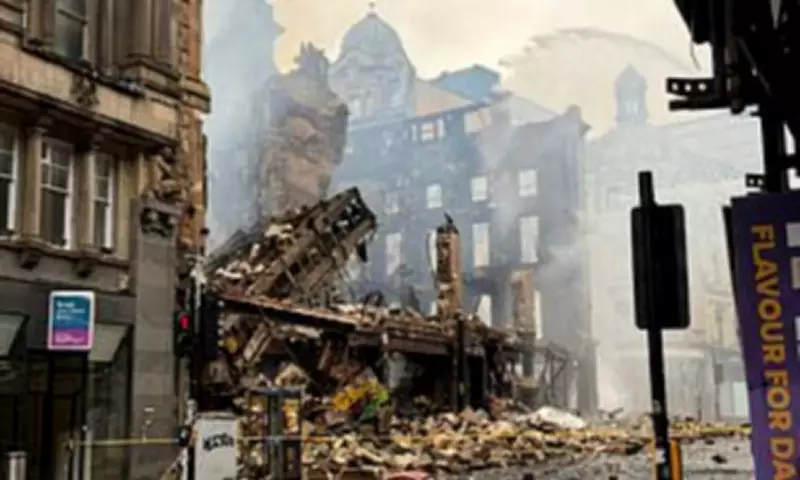
Scotland's busiest railway station, Glasgow Central, will remain closed for most services throughout the remainder of the week following a devastating fire that gutted the neighbouring Union Corner building. Network Rail has confirmed that the high level section of the station cannot reopen due to significant instability in the facade of the historic site, much of which collapsed during the intense blaze on Sunday.
Commuters Face Significant Disruption
The extended closure creates substantial commuter chaos, affecting up to 80,000 passengers who use the station daily, making it one of the busiest transport hubs in the United Kingdom. Only the facade of the Gordon Street portion of the building remained standing after fire completely destroyed the 19th-century landmark, famous for its distinctive dome that was consumed by flames.
Firefighters are hoping to transition to a recovery phase quite soon, which would allow a full investigation into the cause of the fire, believed to be linked to a blaze that originated in a vape shop on Union Street. Concerns have been raised about potential damage to Central Station's quarter-mile-long glass roof from the fire's intensity, potentially necessitating a more prolonged closure period.

Partial Reopening Announced
Network Rail has confirmed that the low level section of Glasgow Central will reopen on Wednesday morning, but the high level platforms will remain closed indefinitely. Ross Moran, route director for Network Rail, expressed gratitude to Scottish Fire and Rescue teams while acknowledging the inconvenience to passengers.
"Our priority is to make sure that we can reopen Glasgow Central as soon as it is safe to do so," Moran stated. "We must enable the emergency services and Glasgow City Council to complete their critical work to secure the Union Corner site and make it safe."
Structural Concerns and Recovery Efforts
Architect Alan Dunlop, who worked on the station's refurbishment over twenty-five years ago, warned that Glasgow Central's glass roof may require complete rebuilding following the fire. "I can't imagine how the roof of Central Station, which is glass, won't be significantly affected by the damage caused by the fire," Dunlop remarked.
However, Network Rail has countered these concerns, stating that the station building is "structurally independent to the one that was on fire." As of Tuesday afternoon, four fire appliances and one high reach vehicle remained at the scene, with Deputy Assistant Chief Officer Ian McMeekin confirming that significant resources continue to be deployed.
Political Response and Financial Support
First Minister John Swinney has promised that Glasgow will receive financial support to rebuild and "flourish again" following the devastating fire. Speaking at Holyrood, Swinney acknowledged "difficult decisions" regarding how much of the 175-year-old Union Corner building could be salvaged while pledging government support for recovery costs.
Justice Secretary Angela Constance will lead a ministerial oversight board on the project, with Glasgow Labour MSP Paul Sweeney questioning whether surviving parts of the facade could be preserved and faithfully reinstated. Swinney responded that "every effort" would be made, but warned of immediate challenges in stabilizing the vulnerable site to enable access to Central Station.
Business Impact and Recovery Calls
The fire has destroyed approximately twenty business properties and severely disrupted dozens more, prompting the Federation of Small Business in Scotland to call for a dedicated recovery fund to help affected traders. The organization has requested hardship rates relief similar to that offered to businesses impacted by the Glasgow School of Art fire in 2018.
The blaze, which began in a Union Street vape shop on Sunday, spread through the building and around onto Gordon Street, causing extensive damage to the historic structure that has been a landmark for generations of Glaswegians. No trains have operated to or from the high level platforms since Monday, with services passing through the low level section without stopping.