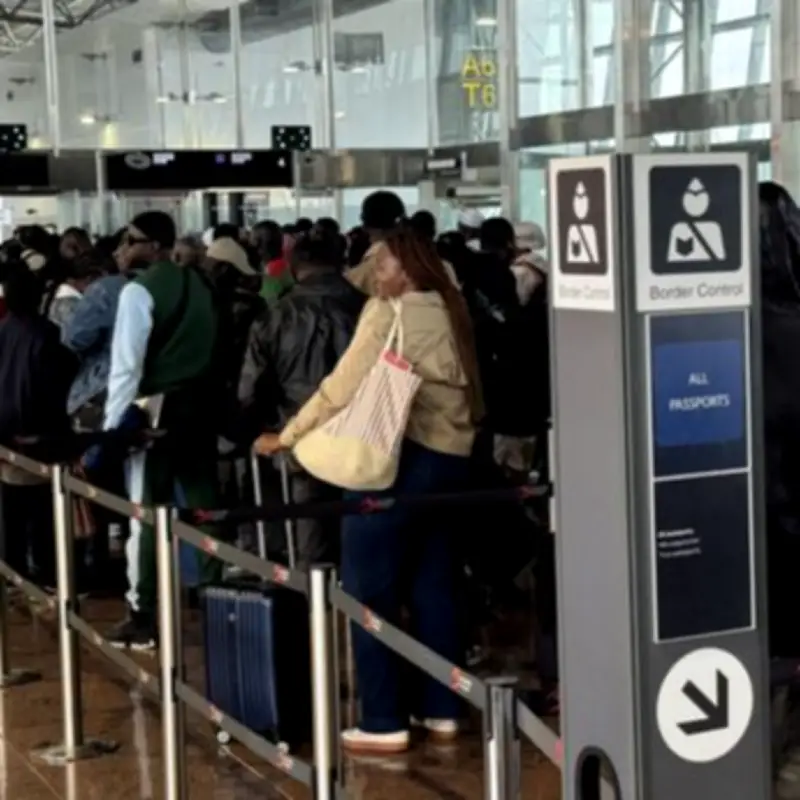
UK travellers have been warned that the European Union's new border control system may not 'stabilise' for up to two years, raising concerns about lengthy queues this summer. The Entry/Exit System (EES), officially rolled out on April 10, has received mixed reviews, with some passengers experiencing smooth passage while others face queues of up to three hours.
EES implementation challenges
The EES requires passengers from third-party countries, including the UK, to scan fingerprints and facial images when entering or leaving the Schengen area, which comprises 29 European countries. Full registration occurs on first use, with details stored digitally for three years to expedite future travel. However, some travellers report having to register multiple times.
Deputy executive director of EU border agency Frontex, Uku Sarekanno, stated that some member states are 'struggling' to adopt the system. The worst-affected airports are reportedly in France, Spain, Portugal, and Italy. Sarekanno noted: 'We expect that the situation will stabilise in one or two years.'
Summer travel concerns
The International Air Transport Association (IATA) has warned that border queues could reach up to six hours this summer as thousands of Brits travel to sunny destinations. In response, the EU allows temporary halts to checks at airports during peak periods to prevent excessive queues. However, this measure is not always implemented.
Tim Alderslade, chief executive of Airlines UK, criticised the situation: 'If the EU’s own expectation is that queues will last up to two years, that’s not a teething problem – that’s a serious policy failure. Member states must make use of the flexibilities available to them, right now, to protect airline passengers this summer and beyond.'
Airlines are advising passengers to arrive at airports three hours before departure to reduce the risk of missing flights. With around 1,700 border crossing points now requiring EES, the system's full stabilisation remains a distant goal.