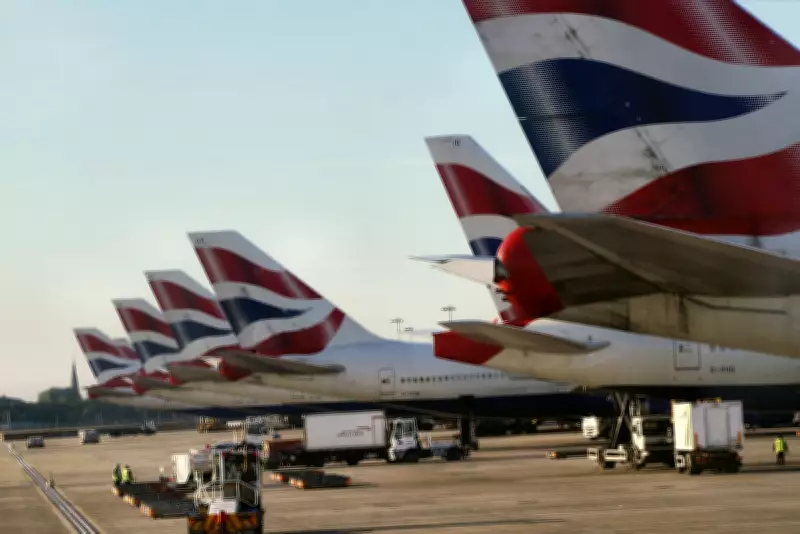
The escalating military conflict in the Middle East, involving Iran, the United States, and Israel, has thrown Easter travel plans into significant turmoil. British Airways announced on Tuesday the cancellation of all its flights to and from the region, citing severe airspace instability and ongoing security concerns.
Widespread Flight Cancellations and Route Suspensions
In a major operational shift, British Airways has indefinitely suspended services to several critical hubs. All flights to Amman in Jordan, Bahrain, Doha, Dubai, and Tel Aviv are cancelled until at least 28 March. Furthermore, these routes will remain closed for new bookings from 29 March through to 15 April, directly impacting the peak Easter travel period.
The airline has also scrapped its seasonal flights to Abu Dhabi, with services not scheduled to resume until October 2026. A spokesperson for British Airways stated, "Due to the continuing uncertainty of the situation in the Middle East and airspace instability, we've had to temporarily reduce our flying schedule in the region." The company emphasised that the situation is under continuous review.

Repatriation Efforts Wind Down Amid Falling Demand
Concurrently, British Airways will pause its dedicated repatriation flights from Muscat, Oman, to London after Thursday, 12 March. The airline attributed this decision to "reduced demand", noting that only limited seats remain on the final departures scheduled for Wednesday and Thursday. These services were specifically for customers with existing bookings from Middle Eastern locations like Abu Dhabi and Dubai.
However, with regular commercial flights still operating via carriers such as Etihad and Emirates, many stranded travellers are opting to depart from the nearest available airport rather than undertake the five-hour desert journey to Muscat for a dedicated repatriation flight.
Geopolitical Tensions and Military Escalation
The flight cancellations come as the United States intensifies its bombing campaign within Iran, initiated on 28 February with the stated aim of regime change. US Defence Secretary Pete Hegseth declared that Tuesday would witness the most intense day of strikes since the conflict began.
"We will not relent until the enemy is totally and decisively defeated," Hegseth asserted. "But we do so on our timeline and at our choosing. For example, today will be yet again our most intense day of strikes inside Iran." He confirmed the deployment of additional fighter jets and bombers.
Iran's Defiant Stance and Regional Implications
Iran has shown no signs of capitulation. Foreign Minister Abbas Araghchi signalled continued resistance, telling PBS, "We are well prepared to continue attacking them with our missiles as long as needed and as long as it takes." Military analysts suggest Iran may be engaging in a war of attrition to deplete expensive US munitions before deploying its own advanced systems.
The conflict has also disrupted vital maritime traffic. Former President Donald Trump issued a stark warning, threatening Iran with "death, fire and fury" if it continues to interfere with shipping in the Strait of Hormuz—a chokepoint for approximately 20% of the world's oil supply.
UK Military Deployment and Travel Advisory Impact
In a separate but related development, the UK government has deployed the Type 45 destroyer HMS Dragon from Portsmouth to the eastern Mediterranean. The warship, capable of intercepting drones and ballistic missiles, is tasked with protecting Cyprus as the regional crisis deepens.
The British Foreign Office's updated travel advice, including warnings for destinations like Dubai, has left many holidaymakers "stranded in paradise", uncertain of their return options. This perfect storm of airline suspensions, military action, and official advisories has created unprecedented uncertainty for travellers and businesses reliant on Middle Eastern routes, with the Easter holiday period now facing severe disruption.