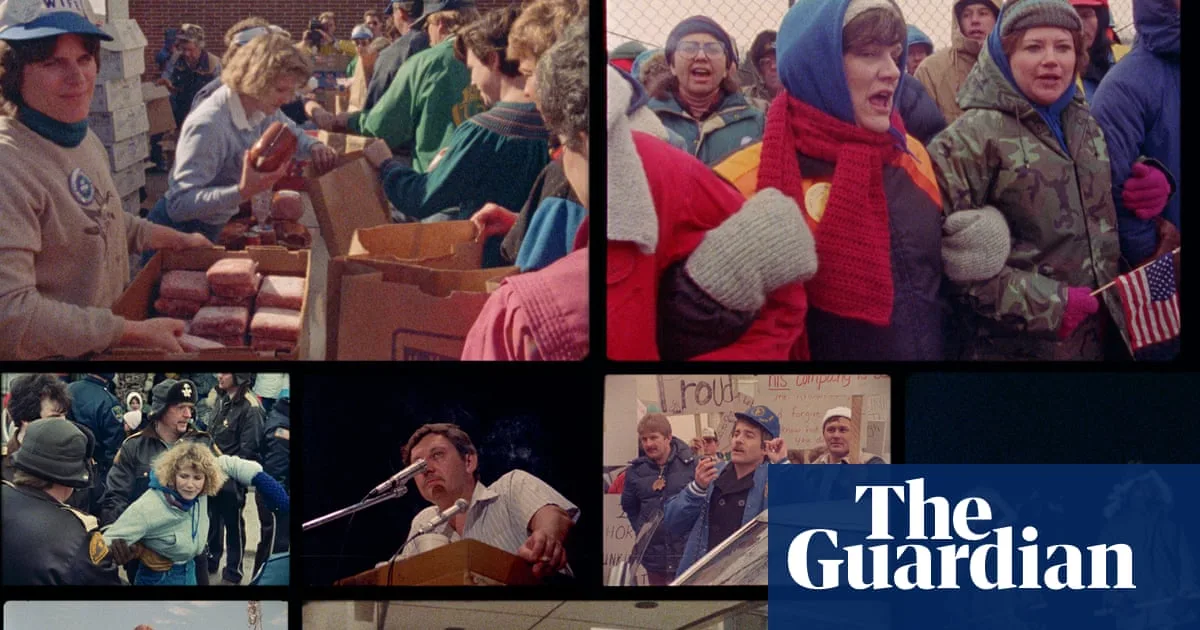
Since the release of the defining 1970s documentary Harlan County, USA, filmmakers have captured workers' tenacity and solidarity. A new article explores what 50 years of labor union documentaries have shown us.
The Legacy of American Dream
Barbara Kopple's 1990 documentary American Dream follows meat packers in Austin, Minnesota, during the 1985-86 labor crisis at Hormel Foods Corporation. The film portrays the strike as symbolic of organized labor's state in the United States during the Reagan years, a period marked by aggressive anti-union policies. President Reagan threatened striking air traffic controllers with termination, private companies increasingly replaced striking workers, and unions lost 2.7 million members from 1980 to 1984.
From Harlan County, USA to Modern Struggles
Kopple's earlier work, Harlan County, USA, celebrated its 50th anniversary, offers a more empowering perspective on the 1973 Brookside strike in a Kentucky coalmine. Both films use cinema verite camerawork to capture frustration and perseverance. The DNA of Harlan County, USA appears in later documentaries like Final Offer (1984 GM negotiations), American Standoff (Teamsters strike against Overnite Transportation), and the recent Union (Amazon Labor Union's attempt to unionize a Staten Island warehouse). The upcoming Who Moves America surveys UPS drivers preparing to strike.
Recurring Themes and Changing Landscape
Strike documentaries feature predictable scenes: organizers rallying workers, concerns about family impact, picket line tensions, corporate spokespeople, and scabs. These reflect the rigorous processes of union action and corporate tactics. While the essential labor crisis remains constant, each film's ground-level focus shows a changing landscape. Early union activity is highlighted in archival documentaries like With Babies and Banners, The Wobblies, and American Agitators.
In Who Moves America, the 2023 UPS contract negotiations are contrasted with the historic 1997 strike. Many older workers remember the strike, but younger generations are ignorant of its significance. Modern companies employ more part-time workers less likely to organize, and working for Amazon or UPS may be one of several jobs held by a worker. This points to a vulnerability in union solidarity.
Corporate Makeovers and Union-Busting
American Dream contains seeds for corporate makeovers that altered discourse around unions. In Harlan County, USA, mining company representatives avoided the camera. By the 1980s, executives were camera-ready, dismissing union campaigns. By the 2020s, C-suite discussions are sophisticated in condescension; in Who Moves America, UPS CEO Carol Tome compares Teamster negotiations to arguing with her husband about a puppy. In Union, union-busting involves consultants with PowerPoints, a far cry from the armed posse that killed miner Lawrence Jones in Harlan County, USA.
The Ongoing Collaborative Project
Documentaries make it harder to critique unions' political value when they include real, impassioned voices, especially of immigrant and undocumented workers. However, Hollywood is not a savior for unions; guilds like SAG-AFTRA, WGA, and IATSE exist, but business politics remain. Union was forced to self-distribute when buyers feared jeopardizing relationships with Amazon MGM Studios, denying it the publicity of a best documentary Oscar. Yet, watching a half-century of these films showcases organizers' tenacity, proving the union documentary is an ongoing, collaborative project—both an archive and a manual.






