Everest Pioneer Howard Somervell: Left for Dead Then Saved Thousands
Everest Pioneer Howard Somervell Left for Dead, Saved Thousands

At 25,000 feet on the slopes of Mount Everest, Howard Somervell sat down in the snow and prepared to die. Succumbing to the extreme cold and lack of oxygen, the pioneering mountaineer realised he could go no further. He could only watch as his climbing partner on the 1924 Everest expedition, Edward Norton, stumbled on into the darkness.

Somervell, then 34, wrote: "When darkness was gathering, I had one of my fits of coughing and dislodged something in my throat which stuck so that I could breathe neither in nor out. I could not make a sign to Norton or stop him, so I sat in the snow to die whilst he walked on, little knowing that his companion was awaiting the end only a few yards behind."

At the last moment, Somervell's medical training, honed on the battlefields of the Somme during World War I, took over. He pounded frantically on his chest, cleared his frostbitten throat, and breathed freely again. It is hardly surprising the cold was so deadly. In 1924, mountaineers climbed Everest in heavy wool clothing and leather boots, using basic ropes, paper maps and a compass, carrying oxygen cylinders, tinned food and Thermos flasks.

Wide Pickt banner — collaborative shopping lists app for Telegram, phone mockup with grocery list

Today's climbers have technical layered clothing systems, double or triple boots, regulated bottled oxygen systems, GPS navigation, satellite phones, real-time weather forecasting, fixed ropes and ladders on main routes. They have structured high-altitude support teams, helicopter evacuation capability and lightweight freeze-dried high-calorie food systems.

Graham Hoyland, author of a new book about the extraordinary life of his cousin Howard Somervell, said: "His bravery and determination got him through. Howard had that northern streak of determination and bloody-mindedness."

Early Life and Climbing Career

Born to a well-off family in Kendal, Cumbria, in 1890, Howard became one of the country's finest mountaineers and one of the first to attempt Everest. Discovering a love for climbing in the Lake District, he climbed the UK's toughest peaks and the dangerous Alps before trying the Himalayas. Graham said: "Like all climbers, he was addicted from a very early age."

In 1904, Howard joined Rugby School, where his first report described him as "unbusinesslike and forgetful." After a bout of scarlet fever, he returned to school, finding a new interest in his studies and excelling at science. Going to Cambridge, he was a brilliant student, obtaining a first-class degree in natural sciences, before studying medicine at University College Hospital, London, until his training was interrupted by the outbreak of the First World War.

War Service and Medical Training

A member of the Royal Army Medical Corps, Howard was posted at a field hospital on the Somme, fighting to save the lives of the endless stream of battlefield casualties. The clearing station built for 100 wounded received thousands in the first two days. He wrote: "All around us, lying maimed and battered and dying, was the flower of Britain's youth - a terrible sight if ever there was one, yet full of courage and unselfishness and beauty."

He hoped that the terrible scenes might lead to a more peaceful world, adding: "The spirit of man is a call to the nations to renounce war and give love a chance to bring forth the best that is in mankind." His medical skills made Howard ideal for an Everest expedition. After missing out in 1921, he was accepted in 1922. Graham laughs: "He almost missed a couple of connections on the boat over to India, because every time it docked in port he would nip off and climb something."

Meeting George Mallory

On this expedition he met George Mallory, the legendary climber and veteran of previous Everest expeditions, and they became friends. Howard wrote: "George Mallory was the man whom I always felt that I knew the best, and I have seldom had a better or more intimate friend."

The expedition reached a record altitude of 27,000 feet, paving the way for further attempts. But on the north face, the party was hit by an avalanche. Although Howard struggled free, seven Sherpas were killed, an event that haunted him. He wrote: "I would gladly, at that moment, have been lying there dead in the snow, if only to give those fine chaps who had survived the feeling that we had shared their loss, as we had indeed shared the risk."

Pickt after-article banner — collaborative shopping lists app with family illustration

Life in India and Medical Mission

After the expedition, Howard travelled in India from north to south and, shocked by the poverty, quit London life and moved to India permanently. A devout Christian, his work was his calling. He said: "I decided, without hesitation, that this should be my life's work."

Before he began his medical work in earnest, Howard joined the 1924 Everest expedition that almost cost him his life and killed his friend Mallory. After making it down to camp, Howard was recovering as Mallory set off for his attempt. But Mallory never came back, dying along with his climbing partner Sandy Irvine.

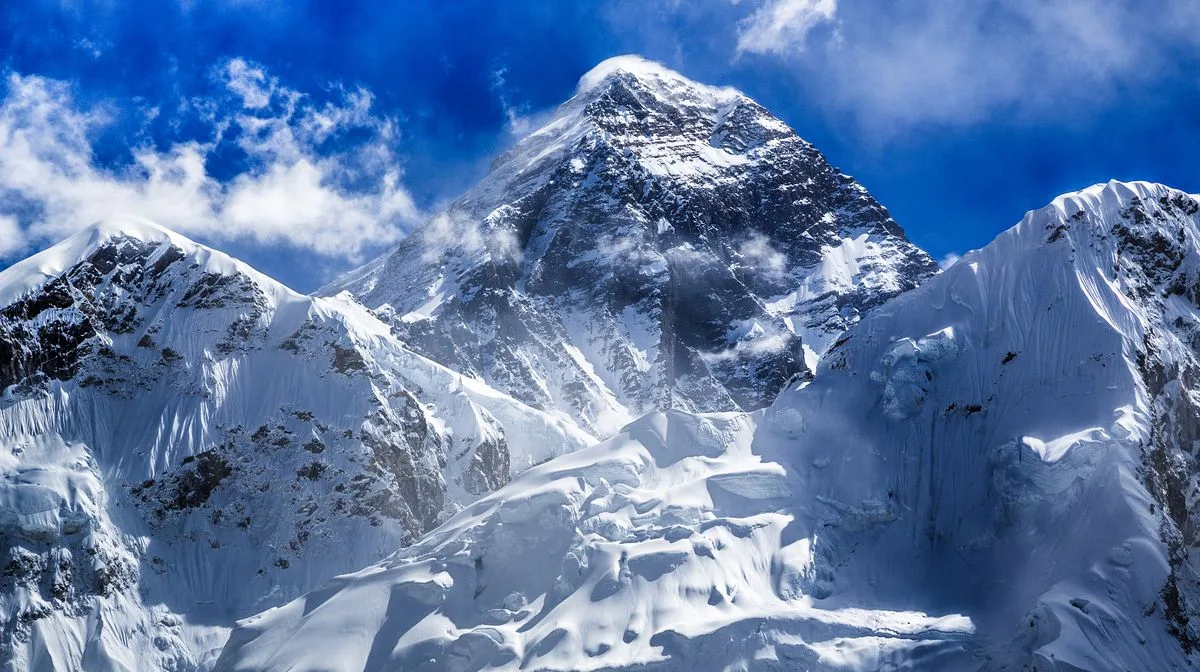
Standing 29,031 feet high on the border between Nepal and Tibet, Everest was finally conquered by Edmund Hillary and Tenzing Norgay in 1953. More than 6,000 people have now reached its summit, but the mountain has also claimed over 300 lives. Graham, who organised a successful expedition to find Mallory's body in 1999, said of Howard: "He often said there were things he was too scared to write about, and I think that's how he felt about the death of Mallory."

Following the expedition, Howard devoted more than 10 years to a hospital in Neyyoor, Tamil Nadu, India, serving as surgeon and later superintendent. He introduced an X-ray unit, pioneered radium treatment for cancer, and performed thousands of operations, while expanding care into other hospitals. His wife Margaret, whom he married in 1925, joined him there with their three sons, supporting the mission work.

He left in 1945, returning for further service at Neyyoor and as associate professor of surgery at the Christian Medical College in Vellore, until his retirement in 1961. Howard was awarded an Olympic gold medal for Alpinism and a Kaiser-i-Hind Medal, a prestigious honour, for his work as a doctor, as well as an OBE in 1953.

Artistic Legacy and Final Years

He also left a legacy of hundreds of his paintings, some exhibited at the Royal Academy. Graham said: "He was a true polymath - a mountaineer, painter, musician, and doctor. But that love of climbing shone through his whole life. As an older man, he said he still couldn't look at a cliff or a mountain without trying to work out a way to climb it."

After returning from India, he settled in the Lake District with a home near Ambleside and died of a heart attack in 1975, aged 84, after a short walk in the hills of the Lakes. A fitting end for the great mountaineer. Howard's love of mountaineering shines through in a letter to Mallory's widow Ruth in 1924, saying: "I have the prospect of a possible death in bed or from old age - a dismal prospect when one lifts up one's eyes to the hills. I have always wanted to die on a mountain."

First on Everest: The Life of Howard Somervell by Graham Hoyland will be released in hardback on May 14 by The History Press, priced £22.

Everest: Facts & Figures

  • Time to climb: 6-10 weeks (typical expedition)
  • Summit push: 10-20 hours from final camp to summit and descent
  • Youngest summiteer: Jordan Romero - USA, 2010 (age 13)
  • Oldest summiteer: Yuichiro Miura - Japan, 2013 (age 80)
  • Wind speeds at upper altitude: can go above 100mph
  • Temperature extremes recorded: below -60°C