

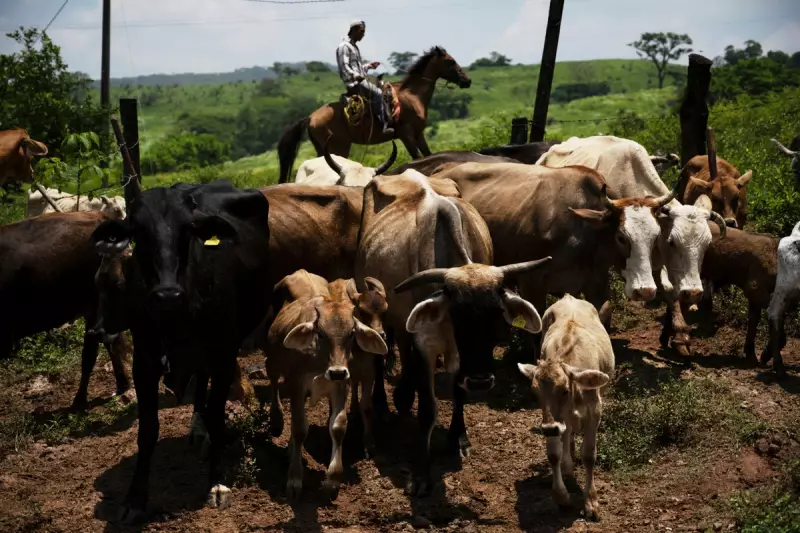
A dramatic collapse in US imports of Mexican cattle, driven by fears of a resurgent flesh-eating parasite, is pushing ranchers and border communities into an economic crisis. The flow of livestock, which typically sees around 1.2 million animals cross the border annually, has fallen to approximately 230,000 after the US imposed strict bans.
The Screwworm Threat: A National Security Priority
The cause of the trade disruption is the New World screwworm, a parasite whose maggots infest and consume the flesh of warm-blooded animals, creating fatal wounds. This pest had been eradicated from the US in 1966 and Mexico in 1991, but it re-emerged in North America in 2023 after migrating through Panama.
Although no cases have been found in US cattle this year, the discovery of an infected cow in southern Mexico in November 2024 triggered immediate action. The US Department of Agriculture (USDA) initiated a ban on Mexican cattle imports that month, a policy it has intermittently lifted and reinstated since.

In a September statement, US Secretary of Agriculture Brooke Rollins framed the issue in stark terms, calling protection from the screwworm "non-negotiable" and a "national security priority." She asserted the Trump administration would not rely on Mexico to defend the American food supply.
Economic Catastrophe for Border Communities
The consequences for Mexican ranchers and US border towns reliant on the trade have been severe. Jorge Maldonado, the mayor of Nogales, Arizona, who also operates a ranch in Mexico, told the Washington Post he lost an estimated $10,000 on a single batch of cattle he could not sell.
He warned the crisis extends far beyond individual ranchers. The city of Nogales has seen bed tax revenues fall by up to 15 percent due to a lack of visitors who usually stay overnight for trade negotiations. Maldonado described the situation as a "catastrophe" for local businesses.
One of those affected is Juan Manuel Fleischer, who facilitates cattle movements from small Mexican ranches to larger US yards. Upon learning of the prolonged border closure, his reaction was dire: “I said, ‘Oh, my god, it’s going to kill us. This will break us.'”
A Long Road Back to Eradication
The USDA and Mexican authorities plan to combat the parasite using the same sterile insect technique that eliminated it decades ago, releasing sterile female flies to collapse the population. However, such projects take considerable time.
The USDA states on its website that it is supporting response activities in Mexico and Central America and has teams bolstering defences along the US border, ready to act aggressively if the screwworm crosses over. Officials told Mayor Maldonado the borders would likely remain closed at least until the end of the year.
Mexican President Claudia Sheinbaum has called for the US to reopen the border, labelling it a "top priority." For now, however, the stark divide between US biosecurity concerns and Mexican economic desperation defines a trade relationship suddenly brought to a shuddering halt.






