

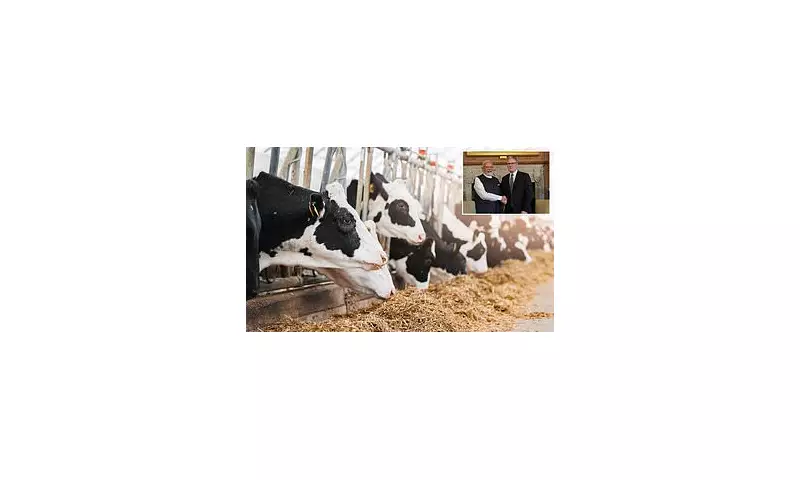
The UK's dairy industry has been deliberately "sacrificed" to secure a broader trade agreement with India, the president of the National Farmers' Union (NFU) has told a parliamentary committee. Tom Bradshaw issued a stark warning that British dairy farmers have been used as a "bargaining chip" during negotiations, resulting in a one-sided deal that harms their prospects.
A One-Sided Market Access Deal
Appearing before the House of Commons Business and Trade Committee on Tuesday, Mr Bradshaw detailed the imbalanced terms of the landmark trade deal signed by Prime Minister Sir Keir Starmer and India's Narendra Modi in July. While the government hailed the pact as a major win for Britain, the NFU boss highlighted a critical flaw for agriculture.
He explained that under the agreement, India gains tariff-free access to the UK's dairy market. In contrast, British exporters aiming to sell dairy products into India will still face prohibitive tariffs exceeding 30 per cent. This lack of reciprocal access represents a significant "missed opportunity" to boost a key UK industry, Bradshaw argued.

Massive Potential Market Remains Closed
Bradshaw pointed to the substantial economic potential being locked out. He noted that India is the world's largest dairy producer but is not self-sufficient, importing around $60 million worth of dairy products annually. The value of current UK dairy exports to India is "relatively small," but he stressed there is "massive scope" for growth as the Indian economy develops.
"On dairy, we have lowered our tariffs for imports from India without achieving any access into the Indian market," Bradshaw told MPs. "That is a missed opportunity. There was a real opportunity there, particularly for some of our specialist cheese makers, to access the Indian market."
A Pattern of Sacrificing Dairy Interests
The NFU president framed this as part of a damaging pattern, stating this is the third consecutive free trade deal where the UK failed to secure better access for dairy. He referenced similar issues in negotiations with the United States, creating a "compound impact" that risks signalling the sector does not deserve preferential treatment.
"At the moment it feels like our dairy sector is one we're willing to sacrifice to try and get other sectors over the line," Bradshaw said. "We were very optimistic about dairy within this trade negotiation... Instead what we've done is not get any improved access and we've negotiated away access to our own dairy industry. So it feels like dairy is a sacrificial lamb."
He warned that this strategy undermines investment and the future resilience of the UK's food system. Crucially, Bradshaw suggested there is little hope of renegotiating the dairy terms, as India now has the access it wanted. "There's no negotiating around dairy now. India, why do they need to come back to the table? They've got access to our market," he concluded.






