
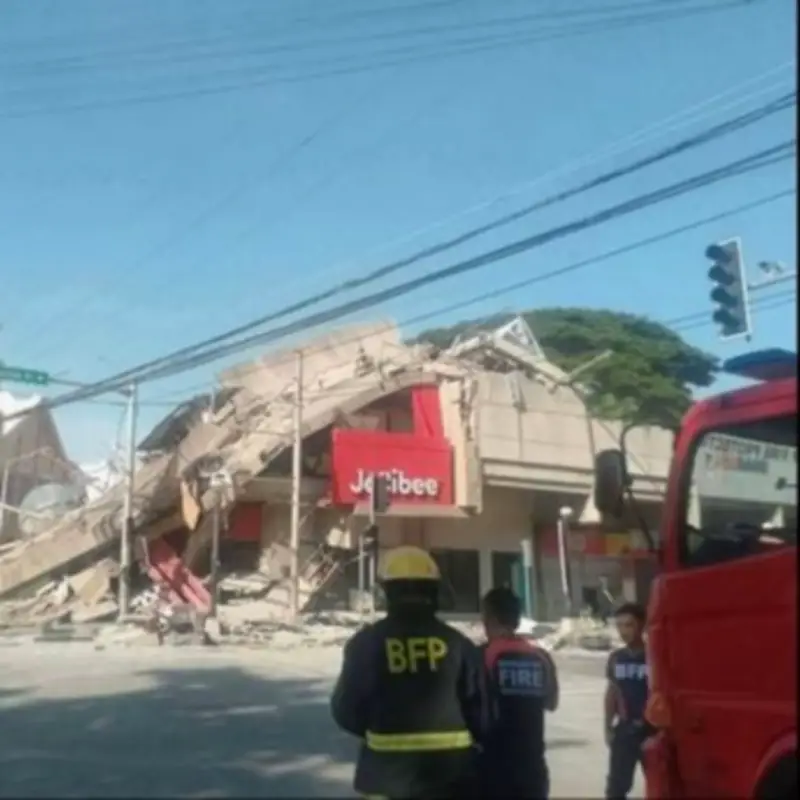
The UK Foreign Office (FCDO) has released urgent travel advice for British travellers following a powerful 7.0 magnitude earthquake that struck Mindanao, the second-largest island in the Philippines, on Monday, June 8. The earthquake resulted in at least 12 deaths and 200 injuries, with tremors felt in Davao City just before 7:40 am local time.
Earthquake Details and Tsunami Alerts
Initially reported as a magnitude 8.2 earthquake, the Pacific Tsunami Warning Centre later revised the magnitude to 7.0. Following the quake, tsunami alerts were issued for several regions, including the Philippines, Indonesia, Japan, Palau, Yap, Taiwan, Papua New Guinea, and the west coast of the United States. The Philippine Institute of Volcanology and Seismology (PHIVOLCS) has issued a tsunami threat and advised residents and visitors in affected coastal areas to evacuate to higher ground.
Advice for UK Travellers
The FCDO advises UK travellers in the affected area to:
- Follow the advice of local authorities and emergency services.
- Move to higher ground if you are in coastal areas.
- Be aware of the risk of aftershocks.
- Avoid damaged buildings and infrastructure.
- Monitor local media and official sources for updates.
- Stay informed via PHIVOLCS and the National Disaster Risk Reduction and Management Council (NDRRMC).
Essential Items and Communication
If caught in a natural disaster, collect essential items such as your passport, travel insurance documents, and prescription medicines. Follow instructions from local authorities and stay updated through local radio, television broadcasts, and official social media channels for the latest information, including evacuation orders. Contact your embassy or consulate to let them know you are safe and to register your location. They may provide support or repatriation assistance if commercial transport is disrupted. Also, inform your travel provider—tour operator, airline, and travel insurance emergency helpline—as soon as possible so they can record your details and help find alternative travel options.
FCDO Support
The FCDO may assist British nationals during a crisis abroad, depending on the situation. According to the FCDO, “depending on the crisis and your location, you may be able to request our help on a range of channels. For example, you may be able to contact us by phone, online or text message. In some crisis situations, you may be able to speak to a member of our crisis team on the ground.” You should contact your airline, tour operator, and insurer; learn emergency procedures at your accommodation; follow local authorities' advice; and decide whether to leave the country if it is safe to do so.
If You Have a Trip to the Philippines Booked
The FCDO currently advises against all travel to western and central Mindanao and the Sulu archipelago. If you choose to travel, your travel insurance might not be valid. Insurance should cover your itinerary, planned activities, and emergency expenses, so check your policy documents carefully. Natural disasters like earthquakes and tsunamis can seriously disrupt travel plans. If your upcoming trip to the Philippines is affected, there are several ways you may be able to recover costs or rearrange your travel.
Tim Riley, Managing Director of travel insurer True Traveller and Chairman of the UK Travel Industry Association, representing all major UK travel insurers, says: “There is currently an FCDO advisory against travel to much of the Philippines due to ongoing terrorist conflict in the region, however my advice to any tourists whose travels may be affected by natural disasters such as earthquakes is to firstly contact your tour operator or travel agent. If a flight is cancelled or a package holiday is disrupted due to a natural disaster, first seek assistance from your airline, tour operator or accommodation provider. It's also vital to follow FCDO travel advice, as travelling against official guidance could invalidate your cover. Finally, not all policies treat natural disasters in the same way, so it's important to check your individual policy wording carefully and understand exactly what protection is provided before you travel.”
In the first instance, contact the travel company or holiday provider you booked with. They might offer an alternative holiday, move your booking to a later date, or give you a refund, depending on the situation. If your provider cannot help or won't reschedule your travel, the next step is to contact your bank. If you paid by credit card, you might be able to recover some or all of your costs through a chargeback claim.




