Provence in Bloom: A Fragrant Journey Through Flower Festivals and the Perfume Capital
As I settle into Galimard's Studio des Fragrances in Grasse, Provence, I prepare my nostrils for an olfactory adventure: crafting a personal scent from 126 bottles of exotic aromas. From amber and musk to ginger and saffron, the options are vast, but my focus is on capturing the sunny essence of the Côte d'Azur, a welcome escape from the grey British winter.
In the hills north of Cannes, vibrant colours dominate the landscape. Bright yellow mimosa flowers blanket hillsides, violets peek from flowerbeds, and oranges weigh down branches over garden walls, all before spring officially arrives. This scene offers a perfect antidote to gloom back home, and the opportunity to bottle these scents is a true delight.
Creating a Personal Perfume in Grasse
Over two hours, with guidance from perfumery expert Manon Zamoun, I blend my own perfume, naming it "Mimosa trail." The scents, including natural essences and synthetic aromas, are arranged on three shelves: top for high notes, bottom for base notes, and middle for heart notes. Sniffing, blending, and decanting become the most rewarding chemistry lesson of my life.

With bottle labels turned away, my choices are guided by my nose rather than my brain. Surprisingly, I favour parma violets and patchouli, while rose d'orient and fleurs de lilas don't make the cut.
Galimard, established in 1747, is Grasse's oldest perfume house. The industry originated from the town's leather tanning trade, where scents were developed to mask odours, earning Grasse the title "perfume capital of the world." Other notable houses like Molinard and Fragonard opened in 1849 and 1926, later joined by giants such as Dior, Guérlain, and Chanel.
Beyond perfume, Grasse is a charming maze of yellow-hued streets, shaded by towering palm trees and often graced by blue skies, though a slight chill lingers. At 10 degrees warmer than home, it's an ideal setting for a pre-spring road trip through lesser-known Côte d'Azur villages.
Exploring Violet Traditions in Tourrettes-sur-Loup
En route to Grasse, I visited Tourrettes-sur-Loup, renowned for its violet cultivation. The village, a cluster of terracotta-roofed houses on a clifftop, has supplied the perfume industry since Queen Victoria's visit in the late 19th century while wintering in Nice, 18 miles southwest.
The queen inspired a violet variety cultivated by 40 families in her day, traditionally given in posies between Christmas and Valentine's Day due to its long stalk.
At La Bastide aux Violettes, a small museum on the village outskirts, I learned about the flower's history and inhaled its sweet scent in a greenhouse where they grow in vertical columns. Today, only three producers remain, including Jérôme Coche and his family, who transform petals into products like crystalised violet sweets.
The village celebrates the end of the season with La Fête des Violettes in late February or early March, attracting about 12,000 visitors with carnival floats, dancing, music, and a flower market. Off-season, it's quieter, but wine bar-restaurant La Cave de Tourrettes buzzes with life, offering dishes like beef tartare and pork filet mignon.
Mimosa Celebrations in Mandelieu-la-Napoule
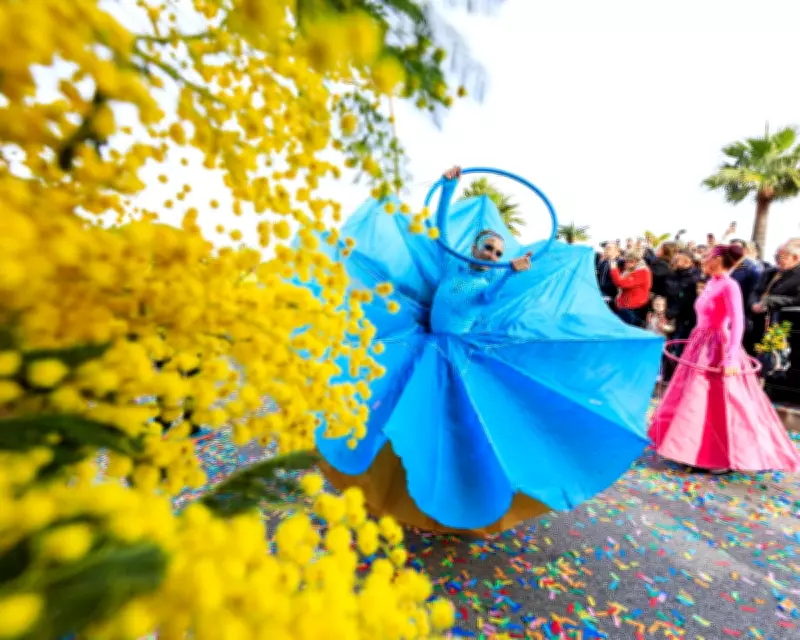
My final stop was Mandelieu-la-Napoule on the coast, where mimosas were in full bloom. La Route du Mimosa, an 80-mile trail from Bormes-les-Mimosas to Grasse, showcases impressive blooms, with Mandelieu-la-Napoule hosting the Fête du Mimosa in February to mark the season's start.
Tourist offices organise group hikes, farm visits, and shops selling mimosa-based products like jams, cordials, candles, and soaps.
For an immersive experience, I booked a three-hour tour with La Grande Vadrouille, riding in a side-car motorbike with local guide Daniel Saffioti. We explored routes from Mandelieu to Tanneron, where mimosas thrive abundantly.
Along La Corniche d'Or, we enjoyed stunning views of Cannes and snow-capped Mercantour mountains, with mimosas bursting between palm trees and over villa walls. In Tanneron, the landscape featured olive groves, eucalyptus trees, and lavender fields, while mimosa trees displayed fern-like leaves and tiny yellow flowers.

Daniel explained how mimosas, introduced from Australia by the British, are managed by council workers to prevent overgrowth in the Provençal climate.
After the tour, I relaxed at Biskota cafe with mimosa-infused lemonade, followed by the Fête du Mimosa opening, complete with street performers and fireworks over a waterside chateau.
This trip was supported by Côte d'Azur Tourism and Mandelieu-La-Napoule Tourism, with accommodations like La Borgarda in Tourrettes-sur-Loup and the Pullman hotel available. Perfume blending at Galimard's Studio des Fragrances costs €99 per person.