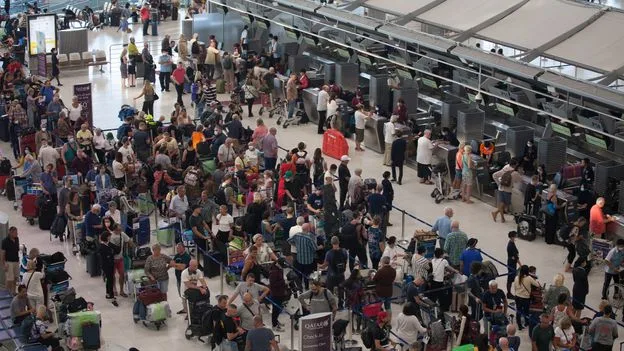
The escalating conflict between US-led forces and Iran has severely impacted travel across the Middle East, with major airports in Dubai, Abu Dhabi, and Doha closed or operating at reduced capacity. The Dubai International Airport, the world's busiest for international travel, was closed for three days after drone debris damaged the facility, stranding hundreds of thousands of passengers. A projectile also struck the luxury Fairmont The Palm hotel in Dubai, causing a widely shared fire.
The UAE government has stated it will cover food and accommodation for the 20,200 travellers currently stuck in the country. Airlines such as Emirates and Etihad have resumed limited flights, offering free rebooking options. However, the US, UK, Canada, and Australia advise against all but essential travel to the UAE, with the US State Department urging American nationals to depart from 14 Middle Eastern nations, including Egypt.
Dr John Rose, Chief Risk Advisor at ALTOUR, noted that the retaliation against the UAE surprised many, as the region was considered relatively safe. He emphasised that safety remains paramount and that no airport will reopen if under realistic threat. The UK government has begun flying British nationals out of Oman, with additional flights from the UAE starting 4 March.
In Qatar, the Doha Hamad International Airport remains closed due to airspace shutdowns, and the US and UK have issued shelter-in-place advisories. Many travellers are driving from the UAE to Oman, where flights still operate and risks are slightly lower. The situation remains fluid, with US President Trump expecting strikes to continue for several weeks.