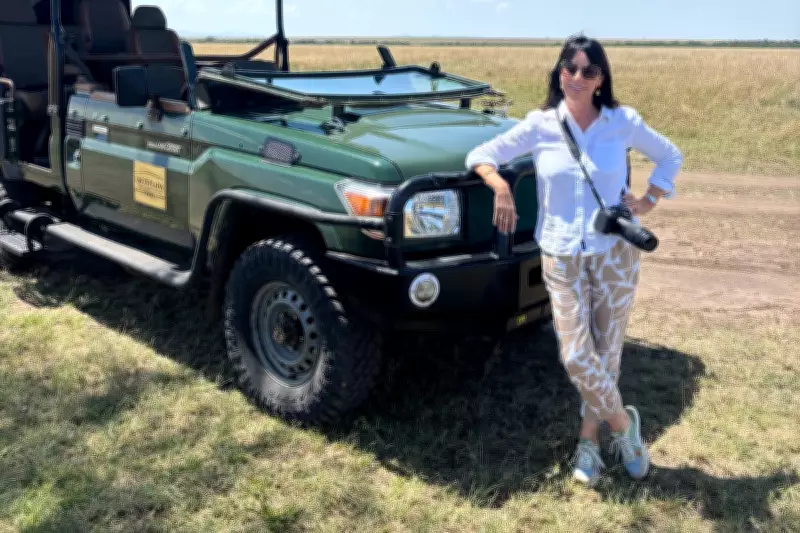
Three decades have passed since my initial journey to Kenya's Masai Mara National Reserve, a destination widely regarded as the world's premier location for wildlife safaris. Returning after thirty years reveals a landscape transformed, not just by nature's rhythms but by the profound pressures of human activity. The reserve, once characterized by a handful of modest tented camps and thriving wildlife populations, now grapples with the significant challenges of overtourism. This issue has been exacerbated by the arrival of a highly controversial Ritz Carlton development, which conservationists widely believe blocks a crucial migration corridor for the region's iconic animals.
The Changing Face of the Masai Mara
During my recent expedition, I witnessed both the breathtaking beauty and the troubling realities of modern tourism in the Masai Mara. One morning, under the guidance of Francis Siamon from Great Plains Conservation, we encountered a female leopard and her playful four-month-old cub near a river. This extraordinary sighting was made even more remarkable by the absence of crowds; only one other vehicle shared this intimate moment with these typically elusive cats. We observed for an hour, captivated by the leopard pair, alongside a mob of banded mongoose and a hurried warthog trailed by her young.
However, the scene shifted dramatically later that day. From a distance, we counted eighteen safari vehicles aggressively pursuing what Francis identified as likely a cheetah. The irony was palpable: a hunter became the hunted, not by traditional means but by a barrage of zoom lenses. This traffic visibly impeded the cat's ability to secure a meal, creating a scene devoid of pleasure and filled with discomfort. The problem intensifies during the annual migration from July to August, when up to two hundred vehicles crowd river crossings, severely disrupting the natural behaviors of cheetahs and other wildlife.

The Impact of Unethical Tourism
Footage from this year's migration, showing unethical tourists and guides blocking river crossings, went viral, highlighting a critical management breakdown in what was once hailed as a conservation success story. The disruption of wildebeest migratory patterns represents just the tip of the iceberg. Today, the National Reserve hosts over one hundred and fifty accommodation options, ranging from low-key tented camps to larger lodges, including the contentious Ritz Carlton. Additionally, fifteen bordering conservancies—land leased from Maasai landowners for tourism—further complicate the landscape.
Justin Francis OBE, executive chair and co-founder of Responsible Travel, emphasizes the importance of choosing accommodations wisely. "Leaders in conservation tourism within the region are Great Plains Conservation, Kicheche Camps, and Saruni Basecamp, all of which place conversation and community at the heart of their operations," he states. "Although the reserve does face difficulties, I'm feeling positive for the future of the Masai Mara because of the conservancies, which are a huge conservation success story."
Conservancies: A Beacon of Hope
Conservancies play a pivotal role in mitigating the effects of overtourism. These areas, where lease fees provide sustainable income for the Maasai people, also conserve vital migration corridors. Kenya Wildlife Service rangers collaborate with the National Reserve, while privately employed rangers in conservancies act as frontline conservationists, encouraging guides and drivers to prioritize wildlife welfare. One ranger shared, "We understand the tourist's desire to see the Big Five, but the pressure in delivering this can lead to bad behaviour. Responsible tourists should refuse to engage in activities that are clearly harmful."

Great Plains Conservation, owned by National Geographic filmmakers Dereck and Beverly Joubert, exemplifies this approach. They reinvest all tourism revenue into wildlife and community projects, including protecting 1.1 million acres, planting 60,000 indigenous trees, funding mobile clinics for 2,500 children, reintroducing 101 elephants, training 29 female rangers, and sponsoring 45 teachers. Dereck Joubert warns, "When tourism is done well, it greatly benefits local communities. But we are seeing the emergence of mass tourism with lower revenues that doesn't trickle down, spawning overcrowding and encouraging bad behaviour."
Experiencing Responsible Tourism Firsthand
My stay at Great Plains' Mara Toto Tree Camp, which opened in summer 2024, showcased sustainable luxury. Built on a platform above a hippo-filled river with minimal environmental disturbance, the camp runs on solar power and offers four tented suites. Each day began at 5:30 AM, with game drives that balanced the pursuit of the Big Five with appreciation for smaller wonders, like Pied Kingfishers or Thompson gazelles. Francis Siamon noted, "The pressure guides feel is real. Top of most lists is to see a big cat hunting." Instead of joining vehicle scrums, we enjoyed serene vistas of elephants and storks wading near a sleeping crocodile.
Moving to Mara Nyika Camp in the Naboisho Conservancy, I explored a 53,000-acre private area home to the Masai Mara's largest lion pride. Established in 2010, Naboisho supports around 500 Maasai landowners through land leasing, allowing the land to recover from farming while serving as an unhindered migration corridor. With only seven camps in its 200 square kilometers, strict rules limit vehicles to five per location, ensuring wildlife isn't overwhelmed. We observed lionesses and cubs with a wildebeest kill, a scene managed responsibly without disruption.
Practical Advice for Responsible Travel
To combat overtourism, experts recommend avoiding the peak migration season and visiting during the shoulder period from mid-October to March. Choosing a responsible safari company that combines National Reserve exploration with conservancy stays is crucial. Francis advises, "Don't be afraid to ask questions. When it comes to policies about responsible tourism, ask to see them. If the camp isn't happy to share, think again."
As I reflected on my journey, the highlight wasn't the dramatic lion kill but a serene moment of a baboon grazing on delicate Rain lilies. The Masai Mara's crown may have wobbled under the weight of overtourism, but through the efforts of conservancies and responsible travel, it certainly hasn't fallen. By making informed choices, tourists can help preserve this iconic destination for generations to come.