The quiet lanes and historic timber-framed villages of Herefordshire are experiencing a remarkable surge in visitor interest, all thanks to the cinematic adaptation of Maggie O'Farrell's bestselling novel, Hamnet. While the story centres on William Shakespeare's family in Stratford-upon-Avon, the film's production sought authenticity without the crowds, turning its lens to a picturesque corner of rural England.
Weobley: The Serendipitous Stand-In for Stratford
Faced with the modern bustle of the real Stratford-upon-Avon, location scouts for the film embarked on a search for a perfectly preserved Tudor alternative. They found it in the "black and white" village of Weobley, nestled in Herefordshire some 60 miles from Shakespeare's hometown. The village's unspoiled Elizabethan architecture provided the ideal backdrop for the 16th-century tale.
"It was a serendipitous sliding doors moment," Jo Hilditch, Chair of Visit Herefordshire, told The Independent. "They couldn't possibly go to Stratford, because it's too modern and has too much going on. Whereas in the sleepy little village of Weobley, it was possible to come in and transform it into something historic."
During the summer of 2024, the production crew masterfully transformed Broad Street, Bell Square and Church Road, laying down straw and mud and concealing modern features. A local cafe, The Wobbly Badger, served as the exterior of Shakespeare's family home, with its door becoming Agnes Hathaway's front door in key scenes.
The Hamnet Effect: A Quiet County Steps into the Spotlight
Herefordshire is now actively capitalising on what industry insiders are calling the "Hamnet effect." The county, long overshadowed by the colossal popularity of the Cotswolds, sees a golden opportunity. While the Cotswolds reports around 25 million annual visitors, Herefordshire welcomes approximately six million.
This quieter disposition is now being framed as a major asset. Reports of overcrowding in some Cotswolds villages have begun to tarnish their idyllic charm, whereas Herefordshire offers similarly bucolic landscapes—rolling hills, meadows, and historic villages—without the coachloads of tourists. "I really think that we can look forward... to people who really want to soak up that Shakespearean atmosphere," Ms Hilditch said, highlighting the county's timber-framed buildings and pastoral scenes that feature prominently in the film.
Following in the Footsteps of Agnes and Will
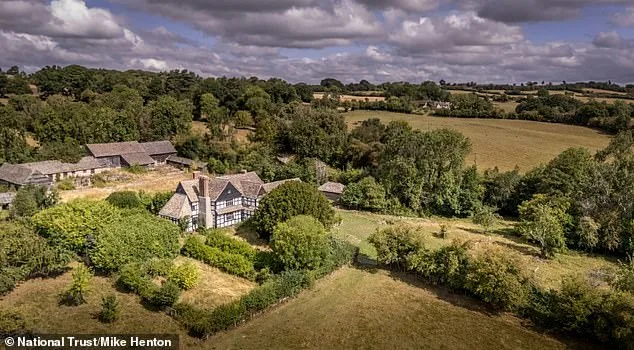
Beyond Weobley, the film's production also utilised Cwmmau Farmhouse, a Grade-II listed National Trust property near the Welsh border, to stand in for Anne (Agnes) Hathaway's family home, Hewlands Farm. Dating from the early 1600s, the farmhouse is so in demand that the National Trust is taking bookings for stays from March 2026, with early interest already high.
Visit Herefordshire has created dedicated experiences for fans. Visitors can try Tudor falconry at Wye Valley Falconry, echoing Agnes's skill, or learn about plant medicine with a local herbalist. For those wanting a broader tour, the established Black and White Villages Trail takes in Tudor gems like Pembridge and Eardisland, while a specific Hamnet-inspired walking trail starts in Weobley.
Whether this cinematic spotlight will have a lasting impact remains to be seen. But for now, Herefordshire is embracing its moment, offering a peaceful, historically rich alternative for travellers seeking the essence of Shakespeare's England without the modern-day crowds.