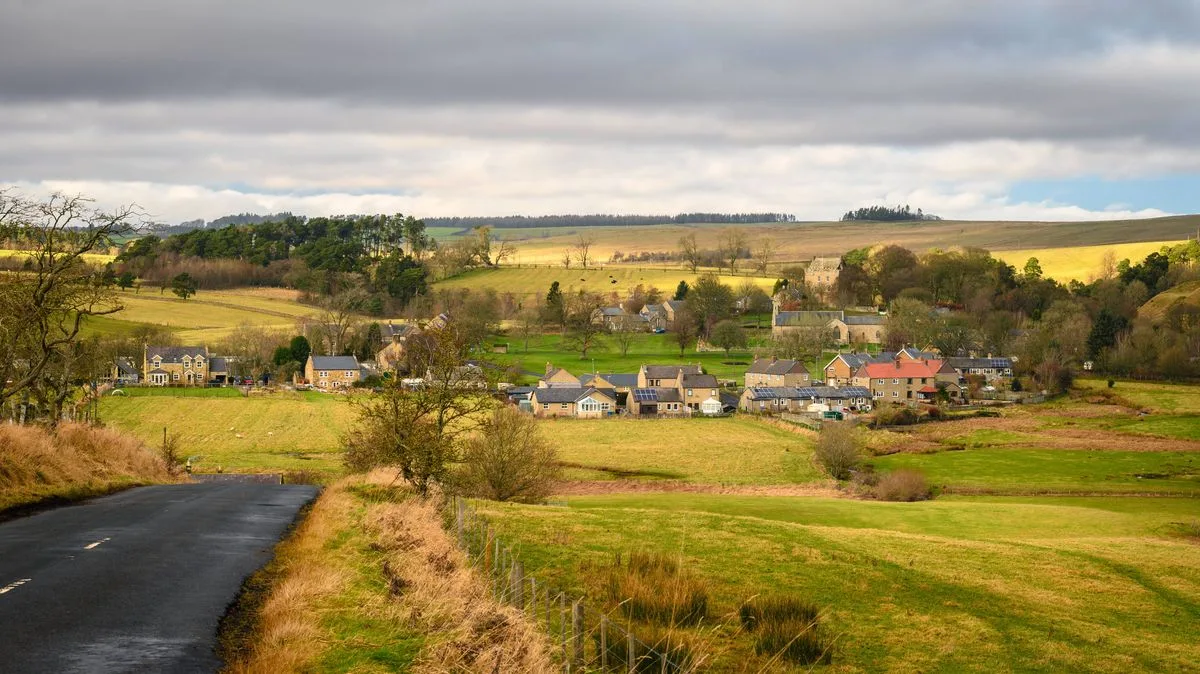
Elsdon, hailed as "the perfect Northumbrian village" by Northumberland National Park, offers a quintessential English countryside retreat. The village's teardrop-shaped green, surrounded by honey-hued stone buildings, forms a natural amphitheatre that delights visitors. Its name derives from Old English, meaning 'Elli's valley'. Located three miles east of Otterburn and ten miles south-west of Rothbury, Elsdon once served as the capital of Redesdale and was a key stop on the medieval route between Newcastle and Edinburgh.
The village is rich in historical sites, including the Mote Hills—the remains of a motte and bailey castle built by Robert de Umfraville around 1080. Although no significant castle structure survives above ground, the earthworks are considered among the best-preserved examples in Northumberland. Nearby, Elsdon Tower, a medieval pele tower converted into a rectory and now a private residence, boasts Grade I listed status. The tower was reconstructed in the 1500s and later modified in the 17th and 19th centuries.
St Cuthbert's Church, adjacent to the tower, is one of many churches dedicated to the saint and is said to have once housed his remains. During 19th-century restoration, workers discovered a mass burial believed to be from the Battle of Otterburn. The church is notably larger than most Northumbrian churches, underscoring its historical significance.
Today, Elsdon caters to visitors with the Bird in Bush pub, offering food, drinks, and accommodation. The Elsdon Tea Room also serves as a visitor information point, while The Coach House tea room nods to its coaching past. As the largest settlement within Northumberland National Park, Elsdon provides an excellent base for walkers and explorers seeking to discover the surrounding countryside.