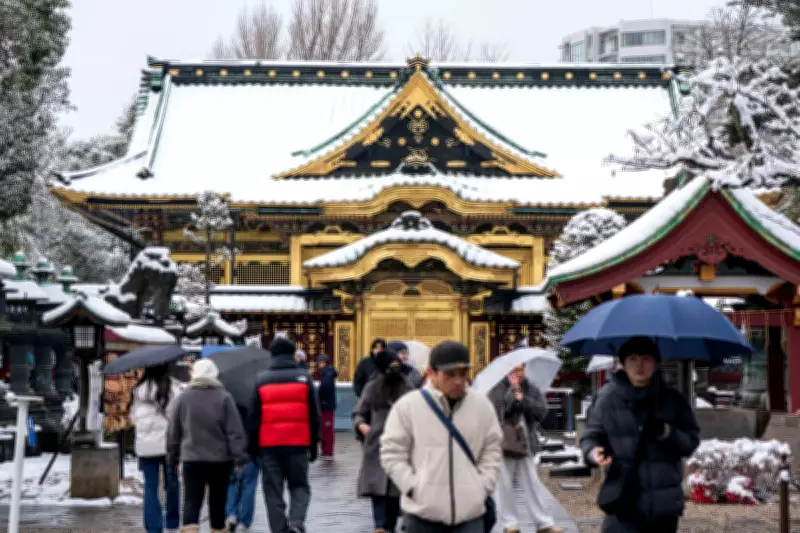
The number of Chinese tourists visiting Japan during the lunar new year holidays is anticipated to decline dramatically, with projections indicating a drop of up to 60% compared to the previous year. This significant downturn reflects a deepening diplomatic rift between Tokyo and Beijing, primarily centred on the contentious issue of Taiwan.
Diplomatic Tensions Fuel Tourism Slump
Japan has experienced a sharp reduction in Chinese visitors since late last year, as political disagreements intensify. The conflict escalated following remarks by Japanese Prime Minister Sanae Takaichi, who suggested that Japan's self-defence forces could be deployed if China attempted to invade Taiwan. China, which claims Taiwan as part of its territory, responded with strong criticism and issued travel warnings, urging tourists and students to avoid Japan.
Impact on Tourism Rankings and Regional Shifts
As a result of these tensions, Japan has fallen out of the top ten destinations for Chinese travellers celebrating the lunar new year abroad. Instead, South Korea is expected to become the most popular overseas destination, with an estimated 250,000 Chinese visitors—a 150% increase from the previous year. Other regional countries like Thailand, Singapore, Vietnam, and Russia are also projected to attract more Chinese tourists than Japan during this period.

Official data from Japan's transport ministry underscores the trend, showing that Chinese tourism to Japan nearly halved in December compared to the same period in 2025. This decline is particularly notable given Japan's tourism boom, partly driven by a weak currency that typically makes travel more affordable.
Escalating Rhetoric and Historical References
The dispute has intensified, with Chinese officials accusing Japan of reviving militarist tendencies. Chinese Foreign Minister Wang Yi recently criticised Takaichi at the Munich Security Conference, warning that Japan risks self-destruction if it continues on this path. In response, Japan protested through diplomatic channels, denying the allegations and stating that its defence enhancements are a reaction to broader security threats, not targeted at any specific country.
Further escalating the situation, Liu Xiaoming, China's special representative on Korean peninsula affairs, referenced historical events like Japan's attack on Pearl Harbor, suggesting that Japan harbours ambitions to colonise Taiwan again. These exchanges have heightened tensions, with Beijing repeatedly warning Chinese nationals about safety risks in Japan, despite no reported incidents targeting tourists.
Mixed Responses from Travellers
While official travel advisories persist, some Chinese tourists are disregarding the warnings. For instance, a Chinese man emphasised the importance of fostering goodwill between ordinary people, and a woman from Shanghai planned to visit Japan with her family, dismissing the alerts as politically motivated. However, such cases appear to be exceptions, as the overall trend points to a substantial reduction in travel.
Recent events, such as a fatal stabbing in Osaka that prompted the Chinese consulate to reiterate travel warnings, have further complicated the situation, although the incident did not involve Chinese nationals. This underscores the broader impact of diplomatic strains on tourism and bilateral relations.