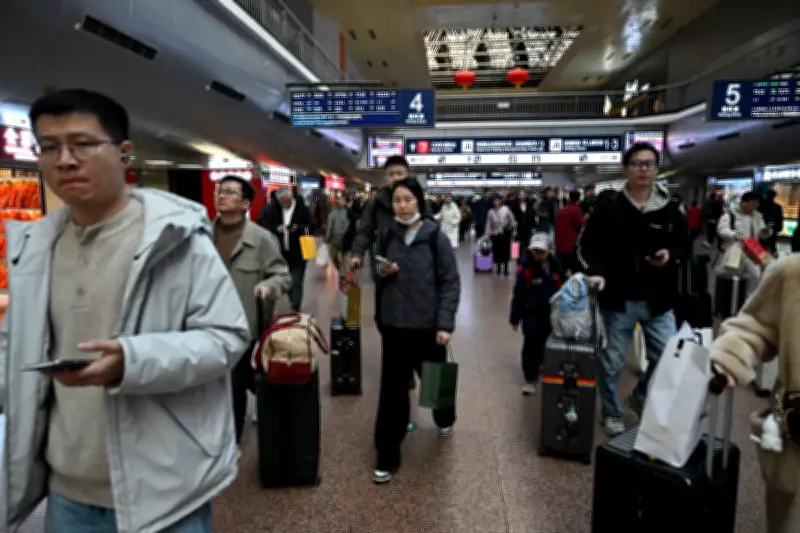
Chinese New Year Holiday Sparks Record Overseas Travel Surge
Chinese tourists are embarking on a historic wave of overseas journeys during the extended Lunar New Year break, with travel agencies reporting a significant uptick in bookings to destinations like Russia, Australia, Thailand, and South Korea. However, in a notable shift, Japan has experienced a marked decline in appeal among holidaymakers, reflecting broader geopolitical strains.
Extended Festival Fuels Travel Frenzy
This year's Spring Festival, celebrating the Year of the Horse, spans nine days from February 15, one day longer than usual, providing an extended window for travel. Traditionally, millions of Chinese citizens journey home for family reunions during this period, a custom that boosts spending across various sectors domestically and internationally. Officials anticipate a record 9.5 billion passenger trips during the 40-day travel rush, up from 9.02 billion last year, hoping the longer holiday will encourage more domestic visits and international adventures.
Top Destinations and Economic Drivers
Thailand has reclaimed its position as the top outbound destination, attributed to its warm weather while much of China remains cold, according to Zhou Weihong, deputy general manager at Shanghai-based Spring Tour. Amid an uncertain economic outlook, with a prolonged property downturn eroding household wealth and uneven post-pandemic growth fueling job insecurity, many Chinese consumers are prioritising spending on experiences. Consultants McKinsey noted in an August market update that consumers have "quietly moved on," highlighting deeper shifts in consumption patterns.

Domestic leisure demand is split between warm and snowy locales, with popular trips to Hainan's tropical island and northeastern Changbai Mountain. On the international front, bookings to Russia on Spring Tour's platform have more than doubled from last year, a trend mirrored in northern Europe. Sienna Parulis-Cook, marketing and communications director of Dragon Trail Research, attributed Russia's rising popularity to Moscow's December move to waive visas for Chinese visitors, noting that increased travel to Russia is likely to continue throughout the year.
International Market Expansion
China's largest travel booking site, Trip.com Group, reported a rebound in long-haul travel, driving visitors to Australia up by over 100% compared to the previous year. Aviation intelligence firm IBA indicated that seat capacity on international flights during the holiday period, both inbound and outbound, has risen 9% annually. In a report ahead of the break, IBA emphasised that the international market is playing an increasingly important role in Spring Festival travel, with available seat kilometers on international flights now constituting about half of total capacity.
Japan's Decline Amid Political Tensions
While many destinations thrive, Japan faces a starkly different scenario. Simmering political tensions have eroded its appeal for Chinese visitors, who previously ranked it among top choices. Flight data for 2026 shows travel to Japan has dropped sharply amid strained ties and China's safety warnings to travellers, prompting airlines to broaden refund and change policies for Japan routes. In the week starting February 2, flights between China and Japan were down 49.2% from a year earlier, according to travel data provider Flight Master.
Furthermore, all flights have been cancelled on 58 routes that operated during last year's Spring Festival, when Trip.com ranked Japan among the most popular overseas destinations alongside Thailand and other regional markets. This decline underscores how geopolitical factors can significantly impact tourism flows, even during peak travel seasons.