Canary Islands to Impose Hefty Fines on Negligent British Tourists Requiring Rescue
British holidaymakers visiting the Canary Islands are now at risk of facing substantial financial penalties if they require emergency rescue from the sea or other hazardous situations due to their own negligence. The regional government is advancing a legal amendment designed to shift the burden of costly bailouts away from local taxpayers and onto those whose reckless actions precipitate such incidents.
New Sanctions Regime Under Civil Protection Law
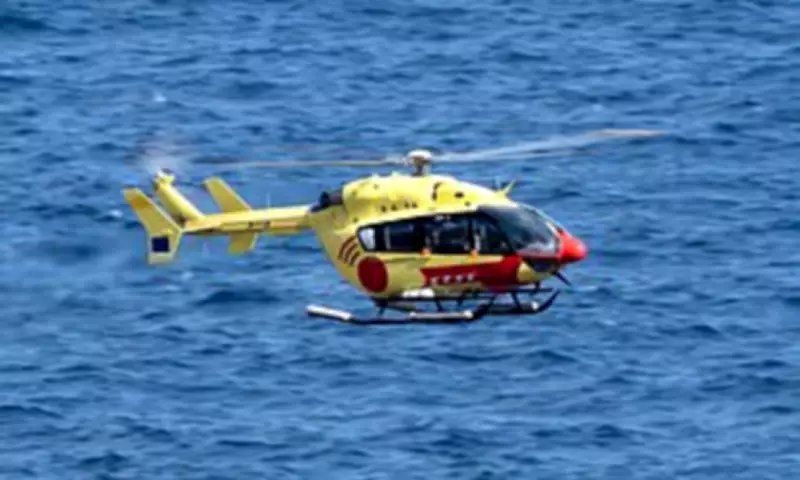
The forthcoming Civil Protection Law will introduce a formal sanctions framework specifically targeting rescue operations that involve lifeguard teams as a direct consequence of visitor recklessness. While exact fine amounts remain undisclosed, authorities anticipate they could reach thousands of pounds per rescue. For instance, a typical mission utilising an emergency helicopter might incur a charge of approximately €6,000, equivalent to £5,220.
This legislative move comes in response to a series of perilous and expensive rescue missions across the archipelago, largely attributed to tourists disregarding safety protocols in natural areas. Two particularly tragic events have underscored the urgency of this measure.

Recent Tragic Incidents Prompting Action
On December 7, four tourists lost their lives and another was injured after being swept away by powerful waves at the Isla Cangrejo natural pool in Santiago del Teide, southern Tenerife. All victims had ignored barrier tape and warnings prohibiting access due to an active bad sea alert.
Similarly, on January 25, an American tourist died and two companions were injured by a sea surge at Los Charcones in Lanzarote. Despite clear alerts and posted danger signs at this coastal spot—where two other fatalities have occurred in the past five months—the group ventured into hazardous conditions.
Historical Fee Structure and Implementation Challenges
The Canary Islands Law on Administrative and Fiscal Measures, enacted in 2012, already stipulates fees for search, rescue, and salvage services, aiming to hold negligent individuals accountable for emergency costs. The rate schedule includes:
- €36 (£31) per hour for each Emergency Response Team (GES) member
- €2,000 (£1,740) per hour for helicopter deployment
- €40 (£34.80) per hour per vehicle
- €300 (£260) per hour for advanced command post vehicle use
- €300 (£260) per hour per vessel
However, this fee system has never been enforced and is now considered outdated. According to reports from Spanish newspaper La Provincia, three primary obstacles have hindered implementation over the past 14 years:
- The complexity of proving negligence in rescue scenarios
- Rescue teams' lack of authority to collect personal data or initiate administrative proceedings, as their focus is solely on lifesaving
- Difficulties in recovering compensation from foreign nationals
Enhanced Enforcement Mechanisms
Aware of the need to ensure those rescued through negligence do not evade responsibility, the Directorate General of Emergencies is committed to integrating a robust sanctions regime. Fernando Figuereo, Director General of Emergencies, confirmed that the Canary Islands Police will manage the fines, as officers possess the requisite authority to investigate cases and open administrative files.
Figuereo emphasised, "Whoever commits recklessness must pay for it," highlighting the principle of personal accountability. It remains unclear whether families of deceased individuals involved in negligent acts would be liable for these fines.
Scope Beyond Maritime Emergencies
The issue extends far beyond sea rescues. In just the past week, ten operations were deployed to assist 11 hikers across Tenerife, Gran Canaria, and Lanzarote. Most involved tourists over 60 years old—the eldest being 75—who became lost or suffered accidents due to inadequate preparation.
Rescue statistics further illustrate the scale of the problem. In 2025 alone, the Canary Islands Government coordinated 216 rescues by land, sea, and air. Tenerife led with 96 lifeguard deployments, followed by:

- Gran Canaria (41)
- La Palma (24)
- Lanzarote (16)
- La Gomera (16)
- Fuerteventura (15)
- El Hierro (6)
This data underscores the pressing need for effective measures to mitigate risks and allocate costs appropriately, ensuring the safety and financial sustainability of emergency services in this popular tourist destination.