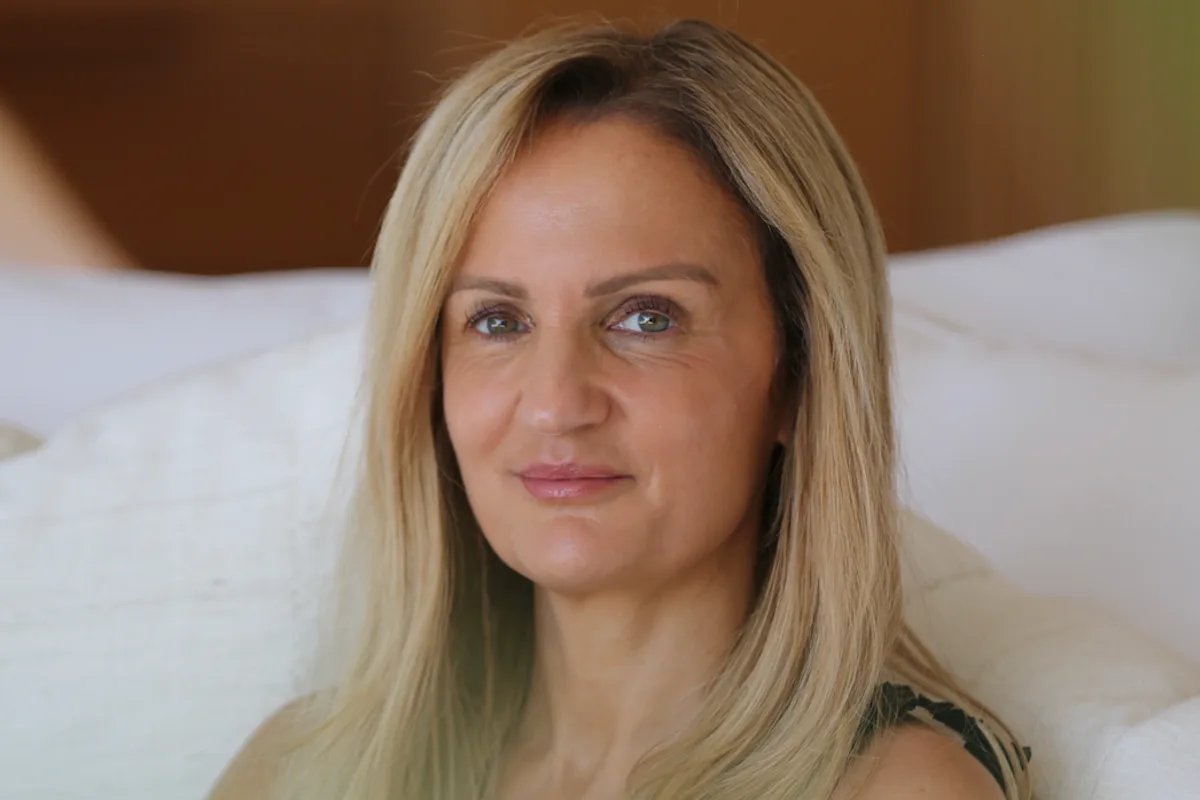
Lucy Goff was 31 when she gave birth to her daughter in 2012 and contracted life-threatening septicemia. After six weeks in intensive care, her life was saved but her body was left exhausted and fragile. Seeking to restore her health, the Selfridges PR executive flew to a clinic in Geneva, where she met longevity expert Professor Paul Clayton. He prescribed pharmaceutical-grade supplements that, within weeks, stopped the shaking that had plagued her for months and restored her wellbeing.
Inspired by her recovery, Goff left her communications career to found Lyma, a supplement, laser and skincare business. Within seven years, the one-person start-up has grown into a global company valued at roughly £171m. Goff, who left school without qualifications, says the brand is just getting started. She remortgaged her house to fund the initial production of 10,000 products after nearly 100 venture capital trusts rejected her business plan.
“All of these men told me I didn’t know what I was talking about because I’d never been in business before,” Goff recalls. “Everybody said that no one would pay £150 a month for a supplement. It was only when we sold out of all the stock in the first week after the launch that I realised we were onto something.” She eventually took a £2m investment from Pembroke, choosing a partner who believed in her from the start.

Goff admires businesswoman Jo Malone for turning a simple candle into a lifestyle statement. Similarly, she wanted Lyma to take supplements out of the kitchen cupboard by packaging them in beautiful hammered copper vessels. However, an early mistake with a copper supplier led to a batch of vessels being discarded due to poor quality. Goff kept one as a reminder that “quality is not a negotiation”.
Despite her success, Goff remains cautious with money. “I don’t invest in stocks and shares,” she says. “I’m the type of person who will be very happy to have a five per cent yield and not risk anything.” She did not see remortgaging her house as a risk, knowing she could sell the stock if necessary. The moment the company was first valued at £100m, she realised she had created something of incredible value, a far cry from her modest upbringing.