When clubs reject monstrous offers for key players on deadline day, they are usually lauded by fans. The Celtic board, however, were lambasted by punters for kicking out an eye-watering £25 million offer from Nottingham Forest. Hoops diehards were left stunned as the under-fire hierarchy rebuffed not one but three bids for Arne Engels in the dying hours of the January transfer window.
A player who has divided opinion since arriving from Augsburg in a club-record £11 million deal in 2024, many supporters believed Celts should have grabbed the cash and run. In their eyes, there was no way Engels would ever command such a gigantic figure again. Understandable, perhaps, when you consider that such astronomical sums are rarely heard of north of the border. Only Kieran Tierney, Jota and Matt O'Riley have fetched fees in that ballpark before.
Yet Parkhead decision-makers, often accused of penny-pinching and hoarding cash, refused to budge. And despite being berated for the decision, that brave stance could be about to pay off big time. As Manchester City close in on a blockbuster £80 million swoop for Elliot Anderson, Nottingham Forest are expected to come back to the table by reinvesting a significant chunk of that windfall on long-term target Engels.

With Premier League rivals Fulham and Sunderland also credited with an interest, alongside Italian powerhouses AC Milan, the Belgian's value is only heading in one direction and a bidding war could erupt. The midfielder remains under contract until 2028, meaning Celtic hold all of the cards and are in no need to rush into a sale. That said, the Scottish champions will also be fully aware that their prized asset's stock may never be higher, and a big-money exit this summer appears inevitable. The only question is for how much?
After making a barnstorming return from injury to play a key role in Celtic's remarkable title triumph, any auction could begin well above Nottingham Forest's unsuccessful £25 million approach six months ago. For all the stinging flak directed at the board over some of their shambolic transfer dealings in recent years, they do deserve credit for resisting January's advances and keeping Engels on board for the defining months of the campaign.
Although he was sidelined for 10 games with an untimely thigh injury between February and April, the playmaker's return provided a major boost in the middle of the park. Alongside Callum McGregor and Ben Nygren, Engels helped drive Celtic to seven league victories on the bounce as Martin O'Neill's side surged to the most dramatic Premiership title and Scottish Cup Double. Outstanding in the make-or-break 3-1 win over Rangers, Engels also netted in the title-clinching victory over Hearts and the Scottish Cup Final.
It was no coincidence that Celtic's incredible winning streak arrived just as Engels returned to the engine room. But his influence extended beyond goals and assists. His relentless off-the-ball work rate often goes unnoticed by supporters caught up in the nerves and anxiety of a title race, but clearly not by O'Neill, who was instrumental in convincing Celtic's money men that Engels was indispensable during such a perilous stage of the campaign. And it's easy to understand why. Engels' running power, technique, delivery from set-pieces and imposing 6ft 2in frame tick plenty of boxes for clubs operating at the highest level. So it's little wonder interest is building from across Europe.
While Celtic's hierarchy deserves recognition for standing their ground in January, Engels should also serve as a reminder that quality often comes at a premium. Hoops chiefs pushed the boat out to land the four-times capped Belgian two years ago and now stand to at least double their money, and possibly treble it, in the coming weeks. Engels will eventually depart with four winners' medals, including back-to-back titles, and Celts will rake in a fortune that should bankroll O'Neill's monumental summer rebuild.

But unlike what happened following the sales of Kyogo and Nicolas Kuhn, Celtic must replace him with genuine like-for-like quality. After three woeful transfer windows which have seen millions squandered on the likes of Michel-Ange Balikwisha, Shin Yamada and Hayato Inamura, the Hoops have little room for error this summer. Rangers and Hearts have already kickstarted their recruitment drives with quality additions, while Celtic have yet to even confirm O'Neill as their permanent manager at the time of writing. Lessons must be learned from previous seasons when the club have been reactive rather than proactive.
The top brass's inability to get deals over the line in time for crucial Champions League qualifiers cost the Parkhead club a £40 million windfall last year, and proved the final straw for a brassed-off Brendan Rodgers, who had seen the same movie before. At 74 years old, O'Neill could easily have ridden off into the sunset to enjoy retirement after an iconic managerial career. Instead, he's agreed to oversee a generational summer overhaul and work his magic for at least another 12 months to ensure a smooth transition into a new era.
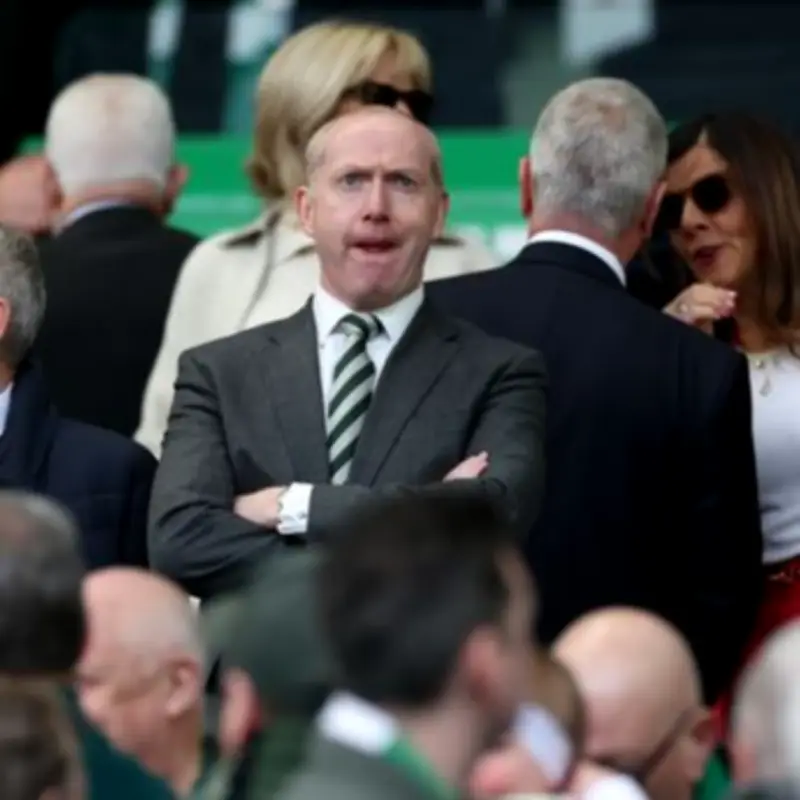
That task becomes significantly easier if the club provide him with the resources required to reshape the squad. Unlike January, when he was forced to scramble around for late loan additions, O'Neill must be backed with a formidable war chest capable of drastically improving a squad many supporters had branded the worst in their lifetimes, yet somehow still ended the campaign as champions. And when Dermot Desmond, Michael Nicholson and Chris McKay bank one of the biggest fees in Scottish football history, it should hammer home a lesson that cannot be ignored. To stay dominant domestically and push on in Europe, they must invest, not just count the cash. Sometimes, you really do have to speculate to accumulate. Engels proves that.