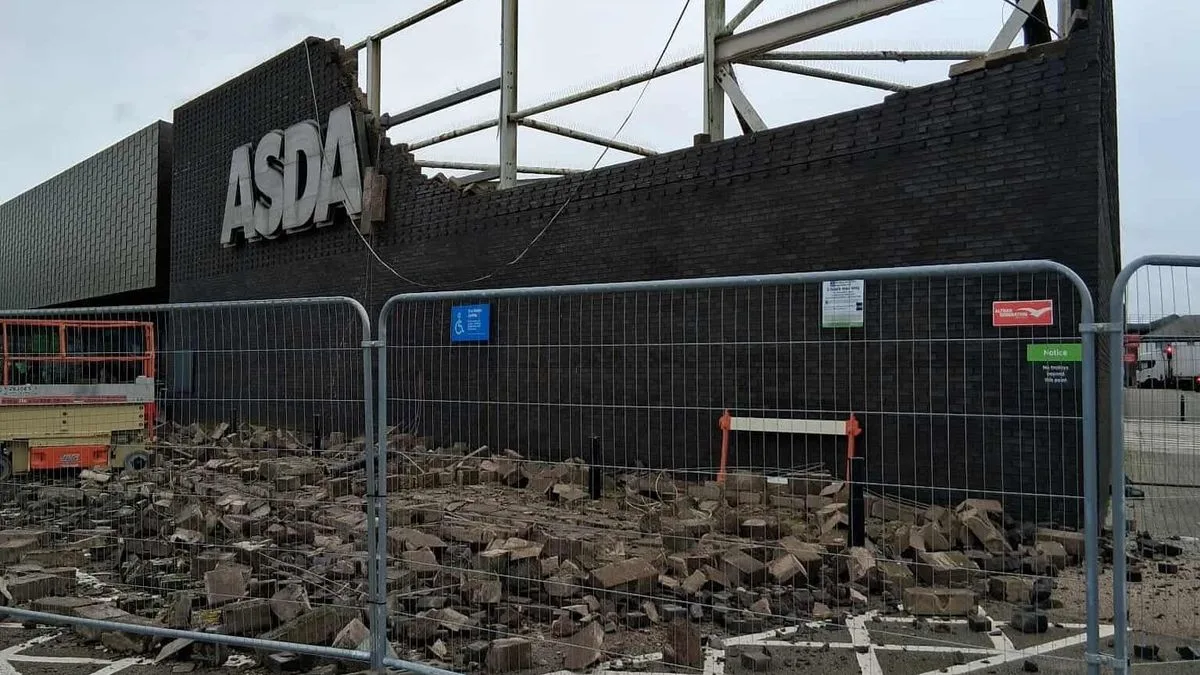
Asda Hayle Store Shut After Wall Collapse in Car Park During Storm
Asda Hayle Store Closed After Wall Collapse in Car Park

A major Asda supermarket in Cornwall has been forced to close its doors after a significant structural failure saw a large portion of an exterior wall collapse into the car park. The incident occurred at the Hayle Harbour store, prompting immediate safety concerns and the temporary shutdown of the retail outlet.

Structural Failure at Hayle Superstore

Photographs from the scene reveal a substantial hole in the upper section of the building's exterior, with bricks and debris scattered across the ground below. The damage was severe enough to necessitate the cordoning off of a small area outside the premises to ensure public safety.

An Asda spokesperson confirmed the closure, stating to local media: "Due to recent adverse weather conditions, we've had to temporarily close our Hayle Harbour store, and a small area outside has been cordoned off for safety. We'd like to thank customers for their understanding and will let them know when we're ready to reopen."

Weather Blamed for Incident

The supermarket chain directly attributed the wall collapse to adverse weather conditions that have recently affected the region. While specific details about the weather event were not provided, such structural failures are often linked to heavy rainfall, strong winds, or other storm-related phenomena that can compromise building integrity.

Customers have been informed that alternative Asda locations in Penzance and Falmouth remain open as usual for those needing to shop. The company has not provided a specific timeline for when the Hayle store might reopen, pending safety assessments and necessary repairs.

Broader Context of Asda Operations

This incident comes amid other significant developments within the Asda business. Last month, the private-equity owned supermarket chain announced plans to outsource delivery operations for its George clothing brand's online orders, a move that would impact approximately 1,200 workers.

The proposal involves shifting distribution for George.com to logistics company DHL starting in January 2027. This transition would see all work for the online clothing arm move from Asda's depots in Lymedale, Staffordshire; Brackmills, Northamptonshire; and Washington, Tyne and Wear to DHL's facility in Derby.

Staff Transfers and Union Concerns

Asda has stated that all affected staff would have the opportunity to transfer to DHL under TUPE regulations, which protect existing pay, pension arrangements, and length of service. The company's distribution sites would remain operational, continuing to deliver to supermarkets for in-store George purchases, with staff working on other parts of the business unaffected.

David Lepley, Asda's chief supply chain officer, explained: "This proposal supports the continued growth of our George.com business as we seek to achieve our ambition for George to become the UK's largest clothing retailer by volume."

However, the GMB trade union has raised concerns about the move, suggesting it "paves the way for a full carve-up of the company" by private equity owners TDR Capital. This follows recent reports of plans to cut 150 jobs as part of an ongoing restructuring at the supermarket.

Nadine Houghton, GMB national officer, commented: "Hardworking families and working-class communities should not see their livelihoods put at risk due to the business decisions of a handful of private equity executives. It is time for TDR Capital to come clean and be honest about their plan for the business – they owe it to every single Asda worker."

Asda executive chairman Allan Leighton has rejected these claims from the union, maintaining that the business decisions are aimed at ensuring long-term growth and sustainability.

The George.com business has expanded significantly in recent years, currently handling more than 16 million online orders annually. The company forecasts this operation will double in size by 2032 and expects to reach full capacity at existing facilities within the next two years, necessitating the proposed distribution changes.