
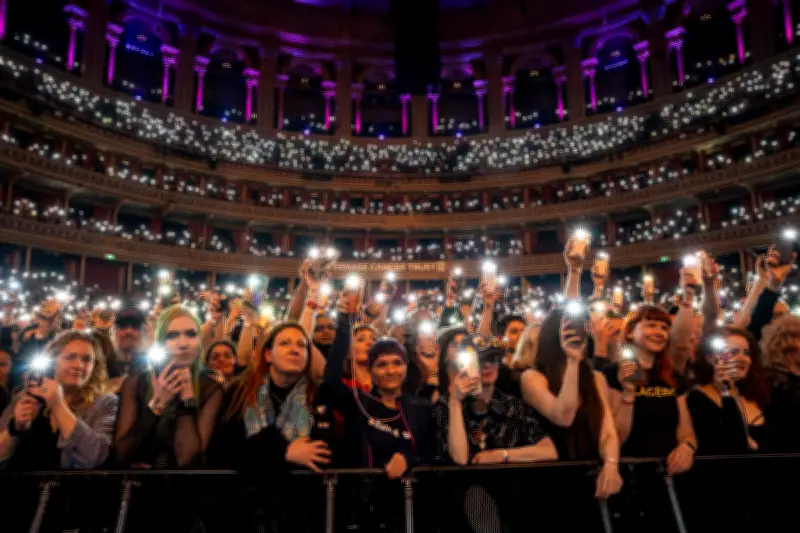
MPs have rejected a bid to revive legislation concerning the Royal Albert Hall, following a blistering attack on the charity’s governance by Labour grandee Dame Emily Thornberry. She accused the renowned London venue of running a "racket" that allows "the most outrageous profiteering".
Historical Anomaly at the Royal Albert Hall
The central London venue, hosting hundreds of events annually, has a historical anomaly: 1,276 of its 5,272 seats are owned by "seat-holders". These can be sold to the Hall’s box office at face value minus 10 per cent, or via third-party platforms like Viagogo, for huge profits at inflated prices.
The House of Lords heard last year that Ed Sheeran tickets worth £200 were being offered on a resale site for £5,899, and tickets for the Last Night of the Proms worth £100 were selling for £1,218.
Conflict of Interest Concerns
The Royal Albert Hall, a charity since 1967, benefits from tax relief and must act for the public good. Yet, its ruling council is largely composed of seat-holders, raising conflict of interest concerns as they make decisions that financially benefit themselves.
Dame Emily said: “Why should these people have the benefit of being able to sell these seats on the black market, undermining the whole thing? If members of the public really thought that the Royal Albert Hall, such a beloved institution, had such a racket going on, they would be outraged, like I was when I first heard.”
She said it was an “obvious and manifest conflict of interest” that people who profit from being a seat-holder at the Royal Albert Hall also run the charity, adding: “It’s scandalous and should be stopped.”
The Royal Albert Hall Bill
The Royal Albert Hall Bill, which is a private Bill put forward by the Hall’s trustees, would make changes to the charity’s constitution, including issues around seat-holders’ access to tickets. Originating in the House of Lords in January 2023, an attempt was made to revive the Bill on Monday.
Supporting its revival was Conservative former Cabinet minister and former Royal Albert Hall trustee Sir John Whittingdale, who said the Bill was “necessary” and “beneficial” to the Hall and all those who enjoy performances there.
Sir John's Defense of the Bill
Sir John said: “It has always been the case that seat-holders agree to forego their tickets for events held in the Hall in something like just over 100 days each year. And by giving up that right, the Hall therefore has the tickets available either to offer to the promoter or to use for its own purposes, and by doing so it is able to attract higher artists, so it is of considerable financial benefit to the Hall that the seat-holders behave in that way.
“However, the practice of agreeing to forego the right of using a seat is not actually covered expressly by the constitution of the Hall. It’s voted on, it’s agreed by the members that they should do that. However, there has been a suggestion of legal challenge from a very small number who do not like the fact that a majority of the seat-holders have voted accordingly to give up the right, and so there is now a legal uncertainty and a risk as to whether or not Hall is able to continue to offer as many tickets as it does to what are called exclusives, in other words all of the tickets are available for use by the Hall.
“Now, that legal uncertainty has resulted in several options for the Hall, none of which are particularly palatable. It could continue to operate on the present basis, but it risks defeat in the courts, should that legal challenge be sustained, and indeed, failure to pass this Bill may actually encourage those seeking to challenge. The alternative is that the Hall could revert to only having exclusive performances to the number which is permitted under the existing constitution. It probably means losing around 40 exclusive lettings in a year, out of perhaps around 150. So the Bill is necessary to allow the existing practice to continue to the benefit of the Hall, and if this Bill does not pass, then the chief executive has calculated that it is likely to cost the Royal Albert Hall around £1.8 million.”
Dame Emily's Opposition
Speaking in opposition to the Bill and its revival, Dame Emily said the legislation as it stands “is simply looking after the interests of a small number of people who are already making a great deal of money out of owning seats in the Royal Albert Hall”. She added: “We should be demanding that the Royal Albert Hall change its governance processes, stop the way in which they sell tickets and get on and deal with themselves in a way which is 21st century.”
In the previous parliamentary session, the House of Lords passed an amendment that would require seat-holders who are trustees to only sell tickets through the Hall’s box office, rather than using third party sites. However, the trustees said this was “unnecessarily restrictive and financially punitive”, and so the Bill that they attempted to revive has replaced that amendment with a requirement for trustees to publish information about profits from resold tickets.
Dame Emily said: “It is the most outrageous profiteering that has led to this Bill. They didn’t ask for that much in the House of Lords. It’s pretty tame, frankly, I think, but it has said that if you are a trustee, then you really should be using the ticket return scheme that the Hall runs, not selling your tickets in backroom deals, while the Hall gets a pittance. To have that amendment struck out and replaced by a commitment for the trustees to be transparent about their profiteering rather than actually ceasing said profiteering, is disappointing, inappropriate to say the least.”
MPs rejected reviving the Bill by 37 votes to 24, majority 13.




