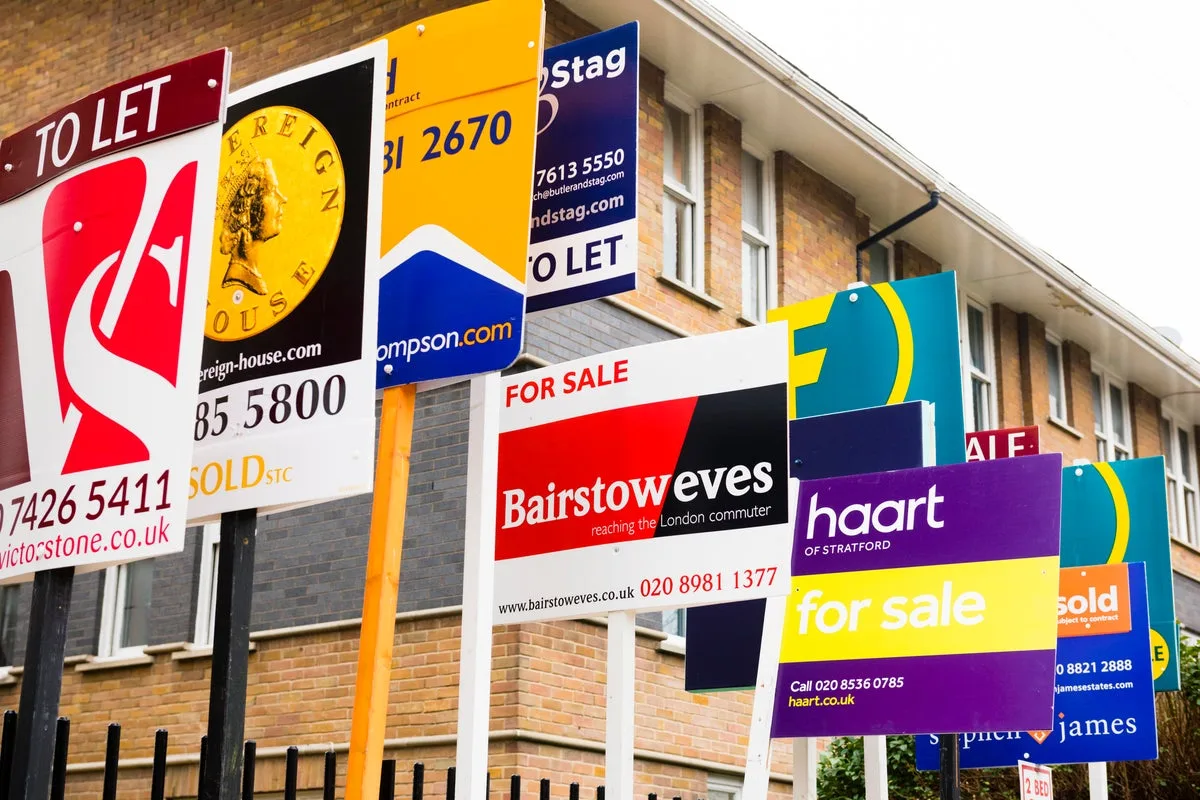
UK House Sales Drop 5% in January, Marking First Significant Dip Since Summer
UK House Sales Fall 5% in January, First Major Dip Since Summer

UK Residential Property Transactions Record First Significant Monthly Decline Since Summer

House sales across the United Kingdom experienced their first "significant" monthly decrease in January 2026 since the previous summer, according to the latest official data from HM Revenue and Customs (HMRC). The seasonally adjusted figures reveal a 5% drop in residential transactions, falling from 99,710 in December 2025 to 94,680 in January 2026.

Market Analysis and Expert Commentary

Nick Leeming, chairman of property firm Jackson-Stops, commented: "January's data indicates the first notable dip in activity since the summer, suggesting a slight cooling in market momentum. Buyers remain cautious following a period of instability towards the end of the fourth quarter of last year, which has tempered confidence across the property market."

Despite the monthly decline, the year-on-year comparison shows only a marginal decrease of less than 1% from January 2025's 95,430 transactions. Property experts suggest this relative stability indicates underlying market resilience.

Regional Variations and Market Dynamics

Leeming noted that while overall transactions dipped, momentum continues to build beneath the surface, particularly in northern markets. "Our Alderley Edge branch saw exchanges double in January, demonstrating that committed buyers are returning to the market," he revealed.

The market remains selective and value-driven, with accurately priced homes attracting competitive interest and progressing to exchange, while properties with over-ambitious pricing are experiencing slower sales processes.

Economic Context and Future Outlook

Ian Futcher, a financial planner at wealth manager Quilter, explained: "Lenders have already been trimming fixed-rate deals in anticipation of Bank of England cuts later this year. If inflation continues to cool, there is a realistic prospect that average mortgage rates could drift lower through spring and summer, gradually improving affordability."

Nicky Stevenson, managing director at Fine & Country, highlighted seasonal patterns: "January is traditionally a quieter period for the market as many buyers and sellers take a breath after Christmas. A 5% monthly fall therefore points more to seasonal patterns than any fundamental loss of confidence."

Industry Perspectives on Market Recovery

Tom Bill, head of UK residential research at Knight Frank, predicted: "Activity should recover in coming months as plans put on hold are reactivated and mortgage rates head lower."

Amy Reynolds, head of sales at London-based estate agency Antony Roberts, observed: "While volumes have been subdued compared to more buoyant years, we're seeing activity pick up as committed buyers re-enter the market. There is clear pent-up demand from those who paused decisions last year."

Jason Tebb, president of OnTheMarket, added: "The increase in sellers bringing their homes to market this spring will keep prices in check to an extent, which will further assist first-time buyers and boost transactions."

Long-Term Market Confidence

Iain McKenzie, chief executive of the Guild of Property Professionals, maintained an optimistic outlook: "While transaction volumes may have softened at the start of the year, the wider economic picture is becoming more supportive. Falling inflation and the prospect of a Bank of England base rate cut next month should ease borrowing costs and improve access to finance."

The consensus among property professionals suggests that despite January's dip, the UK housing market demonstrates underlying stability with positive indicators for gradual recovery throughout 2026 as economic conditions improve and buyer confidence returns.