New York City Mayor's $70 Million Grocery Store Proposal Faces Intense Scrutiny
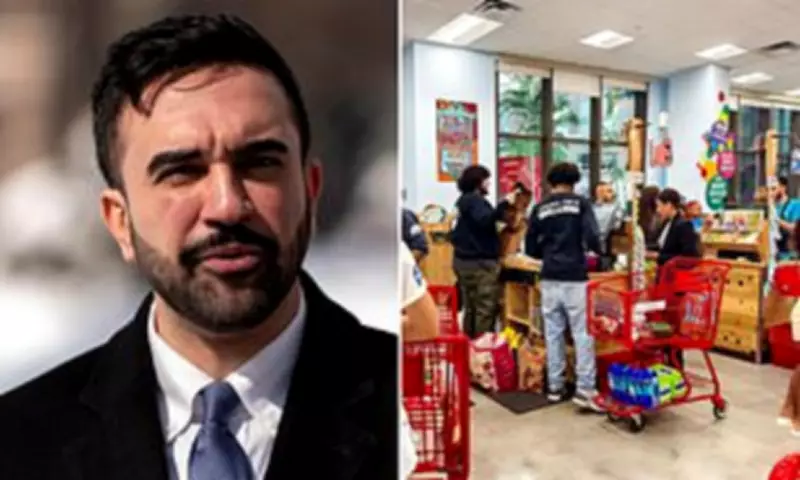
New York City's socialist mayor Zohran Mamdani is reportedly preparing to allocate a substantial $70 million for a comprehensive feasibility study examining the potential launch of government-owned grocery stores across the metropolis. This ambitious initiative, which formed a central pillar of Mamdani's mayoral campaign last year, has ignited significant controversy as the mayor simultaneously threatens widespread tax increases to address what he describes as a severe budgetary shortfall.
Financial Contradictions and Political Backlash
According to sources speaking to the New York Post, Mayor Mamdani intends to direct the $70 million funding to the city's Economic Development Corporation. This agency would be tasked with scouting and evaluating potential locations for municipally operated grocery outlets. This development appears contradictory to Mamdani's previous campaign assertions, where he confidently claimed the entire grocery store project could be implemented for just $60 million in total expenditure.
The mayor has consistently argued that government-run grocery establishments would maintain lower prices for consumers by eliminating property tax obligations and rental costs, operating as non-profit entities rather than commercial ventures. However, the revelation that nearly $70 million would be spent merely to study the proposal's viability, while property taxes face potential increases, has generated substantial public anger and political criticism.

'Textbook Limousine Socialist' Accusations Emerge
Insiders familiar with preliminary budget documents have confirmed the feasibility study's projected $70 million price tag, though they note conspicuous absence of detailed operational plans for the proposed stores' day-to-day management. A Democratic source provided scathing commentary to media outlets, characterizing the expenditure as "a textbook limousine socialist move" that prioritizes bureaucratic analysis over direct public investment.
"Overspending tens of millions of dollars on a study to look at a thing rather than actually spending the money on people is precisely that kind of approach," the source elaborated. "Mamdani appears set to become the first mayor who spends substantial funds studying how to perform his basic duties." Another insider simply described the situation as "ridiculous" in their assessment.
Taxation Strategies and Economic Concerns
Mayor Mamdani's financial challenges have become increasingly apparent since assuming office. The mayor has publicly expressed astonishment upon discovering what he terms a "historic budget gap" of $5.4 billion, which he attributes to the administration of his predecessor, Eric Adams. In response, Mamdani has proposed sweeping property tax increases averaging 9.5 percent across all categories, a move widely interpreted as political pressure on New York Governor Kathy Hochul to endorse his wealth taxation proposals.
The mayor has explicitly warned that without legislative support for taxing seven-figure earners and large corporations, he may be compelled to shift the fiscal burden onto city property owners instead. Governor Hochul has thus far resisted these proposals, particularly with her re-election campaign underway this year.
Real Estate Experts Warn of Broader Consequences
Following Mamdani's property tax threats, real estate professionals have issued stern warnings about potential economic repercussions. Ben Jacobs of Douglas Elliman told Fox News Digital that "even the discussion of a 9.5 percent hike is enough to influence buyer behavior and cause significant irritations in the market." Jacobs noted that some prospective buyers are already considering alternatives including Nassau County, Westchester, Long Island, and even lower-tax states like Florida and Texas due to political disagreements with New York City's direction.

"Higher corporate and wealth taxes can trigger a dangerous chain reaction," Jacobs continued. "Reduced investment and relocation of high earners inevitably shrink the city's tax base, which often indirectly affects middle-class households through economic ripple effects. Even those not directly targeted may experience consequences through diminished affordability, altered property values, and reduced access to essential services over time."
The mayor's office has not provided official comment regarding reports of the expensive feasibility study, leaving numerous questions unanswered about the proposal's specifics and ultimate objectives.