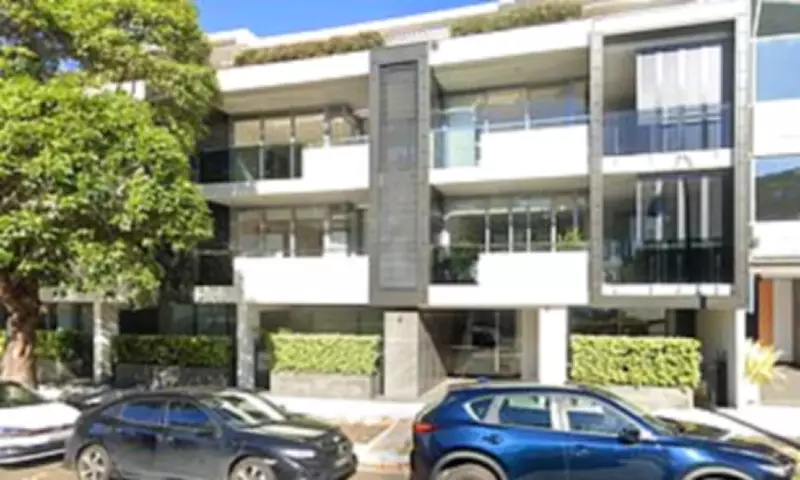
Mosman Apartment Owners Secure Victory in Strata Balcony Repair Dispute
In a significant legal ruling, apartment owners in the affluent Sydney suburb of Mosman have emerged victorious from a protracted battle with their body corporate over responsibility for repairing timber deck balconies. The dispute, which centred on the interpretation of strata by-laws and maintenance obligations, was finally resolved by the New South Wales Civil and Administrative Tribunal after a lengthy saga.
The Core of the Dispute
The legal conflict erupted following a professional report that identified certain timber decks belonging to four applicant lot owners as having fallen into disrepair and requiring complete replacement. The owners, residing in apartments within one of Sydney's most prestigious and sought-after neighbourhoods, contended that the strata committee had breached its statutory duties by failing to properly maintain, renew, or replace these balcony structures.
Specifically, the owners argued that the strata had neglected its obligations under a by-law that explicitly made it responsible for major maintenance and replacement of the timber decks. In response, the body corporate asserted that the timber decks did not constitute common property and that the responsibility for their upkeep rested solely with the individual lot owners.

Tribunal Findings and By-Law Interpretation
The tribunal, which initially ruled in favour of the lot owners in July of last year, noted there was no dispute that the timber decks had been installed and fixed onto concrete slabs when the strata plan was officially registered in August 2013. The central issue revolved around whether the upper surface of the floor was classified as common property or lot property.
A critical point of contention was By-law 26 under the Strata Schemes Management Act 2015. Clause 1 of this by-law states that the owner of a lot shall maintain the timber decking on balconies to keep it in good order. However, Clause 2 stipulates that the owners corporation shall have the timber decking re-oiled annually for aesthetic purposes and shall be responsible for major maintenance and replacement.
The strata committee attempted to argue that By-law 26 was void for uncertainty, but this claim was firmly rejected by the tribunal. The adjudicators found the by-law could be given clear meaning and was not unintelligible. They determined that any difficulty in defining what constitutes major replacement did not render the by-law devoid of meaning. The tribunal clarified that if the obligation on the owners corporation under Clause 2 is not triggered, then the obligation on the lot owner under Clause 1 applies.
Furthermore, the strata submitted that By-law 26 had been varied by a special by-law that absolved the owners corporation from various maintenance responsibilities and claimed it was harsh, unconscionable, or oppressive. These arguments were also dismissed by the tribunal, which found the by-law operated as intended and was legally sound.
Orders and Subsequent Appeal
The tribunal ultimately found in favour of the lot owners and ordered the strata to replace the timber decking. The directive required the work to be completed within six months by appropriately qualified and licensed professionals, in accordance with all applicable laws and standards.
However, the owners' celebration was short-lived as the strata committee promptly appealed the decision. This appeal was mostly dismissed in a subsequent ruling handed down on February 19. The appeal tribunal upheld the order for the repair work to proceed but overturned the initial decision to award costs to the lot owners. The matter was remitted back to the original tribunal for further consideration regarding costs, with parties invited to make submissions on appeal costs.
This case highlights the complexities of strata living and the importance of clear by-law interpretation in property management disputes, particularly in high-value residential areas like Mosman.