

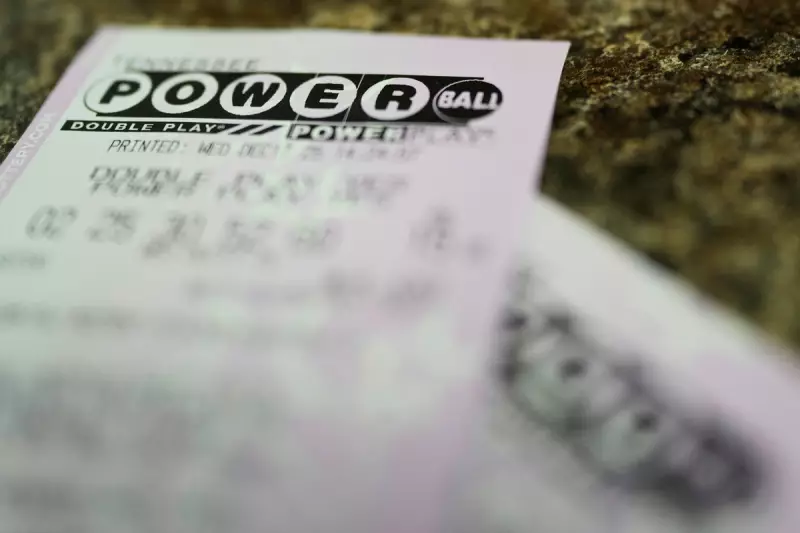
The Powerball lottery has catapulted into the record books, with officials announcing on Sunday that the jackpot has reached a staggering estimated $1.6 billion. This colossal sum secures its place as the fifth-largest lottery prize in United States history.
No Winner in Saturday's Draw Sets Up Mega Prize
The monumental prize was triggered after no ticket managed to match all six numbers in the drawing held on Saturday, 21st December 2025. The winning numbers drawn were white balls 4, 5, 28, 52, 69 and the red Powerball 20. This rollover means the focus now shifts to the next draw scheduled for Monday night, where a single winner could claim one of the most enormous cash windfalls ever seen.
Understanding the Stakes and the Prize Options
For the hopeful participant, the odds of securing Monday's life-changing jackpot are a daunting 1 in 292.2 million. Should someone beat these immense odds, they will face a critical financial decision.

The winner can choose between two payout methods. The first is a lump-sum cash payment estimated at $735.3 million. The alternative is the full, annuitised jackpot of $1.6 billion paid over 30 years. This annuity option provides an immediate payment followed by 29 annual instalments, each increasing by 5% from the last. Powerball officials have emphasised that both prize values are quoted before applicable taxes are deducted.
A Look at Lottery History and Where the Money Goes
This current jackpot now ranks as the fourth-largest in Powerball's own history. The record for the biggest US lottery prize remains the $2.04 billion Powerball jackpot won in 2022. The fortunate ticket holder from California selected the lump-sum option, receiving a monumental $997.6 million.
Powerball is played across 45 states, Washington D.C., Puerto Rico, and the U.S. Virgin Islands. The game is administered by the Multi-State Lottery Association, a nonprofit consortium of state lotteries. Crucially, the profits generated from ticket sales are directed back to the participating states, where they are typically used to fund essential services such as public education programmes.






