

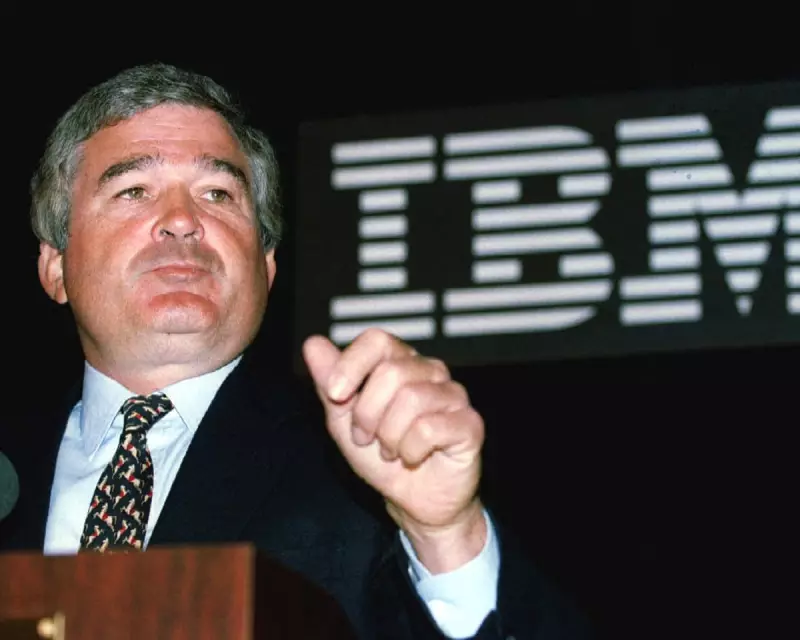
Louis Gerstner, the former chairman and chief executive widely credited with one of the most dramatic corporate rescues in modern history at technology behemoth IBM, has died at the age of 83. His passing was confirmed by his family.
The Outsider Who Transformed a Tech Titan
When Louis Gerstner took the helm at International Business Machines in April 1993, the company was in a state of profound crisis. IBM, once the undisputed king of the computing world, was haemorrhaging money, having posted a then-record US corporate loss of $8.1 billion in 1992. Many industry observers believed the iconic firm was headed for a break-up or even bankruptcy.
Gerstner, a Harvard Business School graduate, was a surprising choice. He was the first outsider ever appointed to lead IBM, arriving from RJR Nabisco with a background that included a successful tenure at American Express. His lack of deep technical experience was seen by some as a liability, but it proved to be a strength.

He famously rejected early calls to split IBM into smaller, independent units. Instead, he championed a strategy of keeping the company together, arguing that its unique value lay in its ability to provide integrated solutions for its customers. This pivotal decision defied the conventional wisdom of the era.
Driving a Historic Corporate Turnaround
Gerstner's leadership was defined by a relentless focus on the market and the customer, a radical shift for IBM's inward-looking culture. He initiated sweeping changes that stabilised the firm and set it on a new path.
He oversaw massive restructuring, including cutting tens of thousands of jobs to reduce a bloated cost structure. More importantly, he reoriented the entire company away from selling isolated mainframe computers and towards providing comprehensive IT services, software, and consulting. This move anticipated the networked computing age and restored IBM to profitability.
Under his command, IBM's fortunes reversed spectacularly. By the time he stepped down as CEO in 2002, handing over to Sam Palmisano, the company's market value had increased by over $180 billion. His legacy is chronicled in his bestselling 2002 book, Who Says Elephants Can't Dance?, which became a seminal text on corporate transformation.
A Legacy Beyond the Balance Sheet
Born on March 1, 1942, in Mineola, New York, Louis Vincent Gerstner Jr.'s impact extended beyond IBM's financial recovery. He is remembered for changing the very culture of the organisation, instilling a greater sense of urgency and customer focus. His work is studied in business schools worldwide as a masterclass in managing change in a giant corporation.
After IBM, Gerstner remained active in business and philanthropy. He served as chairman of the board of the American Museum of Natural History and was deeply involved in educational reform, founding the Gerstner Sloan Kettering Graduate School of Biomedical Sciences. He also led the Carlyle Group, a global investment firm, as chairman from 2003 to 2008.
The news of his death has prompted an outpouring of respect from across the technology and business sectors, with many crediting him not only with saving an iconic institution but also with helping to reshape the entire IT industry for the 21st century. Louis Gerstner is survived by his wife, Elizabeth, and his family.






