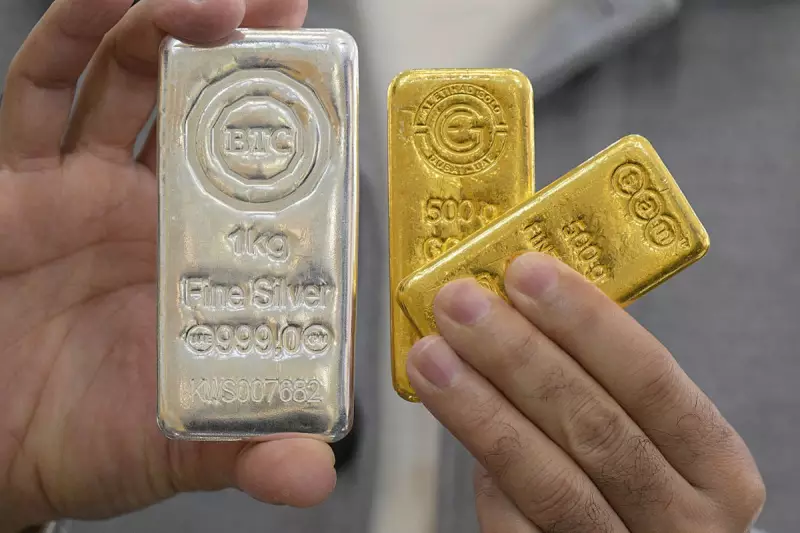
Gold Price Soars to Unprecedented Heights: Navigating the Investment Landscape
The price of gold has surged to a historic peak, breaking through the significant $5,000 per ounce barrier and capturing the attention of investors worldwide. This remarkable rally comes amidst a backdrop of escalating geopolitical tensions and economic uncertainty, prompting many to reconsider their investment strategies.
Current Market Performance and Historical Context
At present, gold is trading at approximately $5,095 per ounce, having briefly touched above $5,100 earlier in the day. This represents a staggering increase of more than 12% in just the past month and an extraordinary 83% surge over the last twelve months. Since the beginning of 2024, gold has consistently climbed at an accelerated pace, setting new record highs with remarkable frequency.
For perspective, the FTSE 100 index has risen by 19% during the same annual period, highlighting gold's exceptional performance relative to traditional equity markets. The recent price acceleration follows geopolitical developments including former US President Donald Trump's tariff threats regarding Greenland, adding to existing uncertainties in global markets.

The Role of Gold in Modern Investment Portfolios
Gold has traditionally been viewed as a safe haven asset, providing investors with a protective buffer during periods of market volatility and economic instability. Unlike government bonds or stock markets, which can experience significant fluctuations during times of geopolitical stress, gold often maintains its value or appreciates as investors seek security.
However, it's crucial to understand that gold differs fundamentally from other investment vehicles. Unlike dividend-paying stocks or interest-bearing bank accounts, gold does not generate regular income. Its value primarily derives from its status as a store of wealth rather than industrial utility, distinguishing it from metals like silver or platinum that have broader manufacturing applications.
Financial experts generally recommend maintaining a balanced approach to gold investment. Most suggest allocating no more than 5-10% of a diversified portfolio to precious metals, though individual circumstances including investment timeframe, risk tolerance, and wealth objectives should guide specific decisions.
Practical Approaches to Gold Investment
For those considering entering the gold market, several accessible options exist beyond purchasing physical bullion, which involves complexities related to storage, insurance, and authentication.
Exchange Traded Commodities (ETCs) offer a streamlined alternative, tracking gold's spot price while avoiding the logistical challenges of physical ownership. Notable examples include:
- The iShares Physical Gold ETC (ticker: SGLN) on the London Stock Exchange
- The Royal Mint Responsibly Sourced Physical Gold ETC (ticker: RMAU)
Holding these instruments within a stocks and shares ISA provides the additional benefit of tax-free gains. Alternative approaches include investing in gold mining companies or broader commodity funds that include precious metals alongside other assets.
Expert Perspectives and Future Projections
Market analysts remain cautiously optimistic about gold's continued potential, though they acknowledge the inherent unpredictability of geopolitical developments.
Susannah Streeter, chief investment strategist at Wealth Club, observes: "In this febrile geopolitical environment, gold for now seems to know no bounds. The pile on into the gilded safe haven is continuing with the precious metal racing up higher. It vaulted over the psychologically important 5,000 mark on a glittering streak, heading sharply higher as trade tensions emanating from the US unnerved investors."
Lale Akoner, global market analyst for eToro, notes a structural shift in investment strategies: "Gold is increasingly being used by investors as a hedge against equity risk, and in many portfolios, it is starting to replace long-duration government bonds as the preferred defensive asset. The shift reflects a structural breakdown in the traditional equity-bond relationship."

Several research firms have established ambitious price targets, with some predicting gold could reach $6,000 by the end of 2026 and potentially approach $10,000 by 2029. These projections reflect ongoing concerns about currency fluctuations, particularly the US dollar's performance, and persistent geopolitical tensions affecting global markets.
As investors navigate this unprecedented gold market, careful consideration of personal financial circumstances and professional advice remains essential for making informed decisions about whether to buy, sell, or maintain current positions in the precious metal.